THE HORRIFYING TRUTH ABOUT THE TINY PARASITES LIVING ON YOUR EYELASHES RIGHT NOW
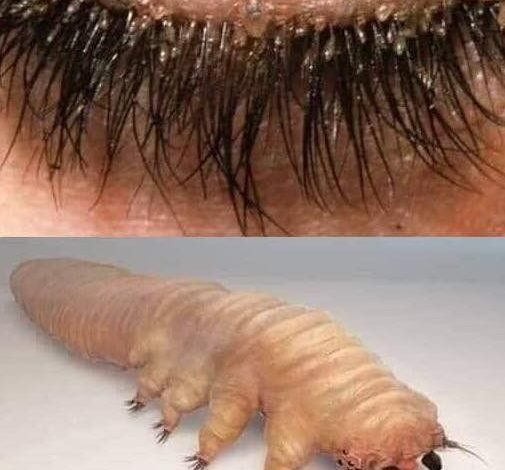
You might believe that your face is perfectly clean, but there is a gruesome reality hiding in your hair follicles that will make your skin crawl. Right now, as you read this, microscopic, eight legged parasites could be crawling across your eyelids, feasting on your oils, and laying eggs in the very roots of your lashes. It sounds like a scene from a low budget horror movie, but it is a biological fact that millions of people are completely unaware of. If you have been waking up with itchy, crusty, or inflamed eyes, the reason is far more disturbing than you ever imagined.
Most people go their entire lives without ever considering the microscopic ecosystem living on their skin. Eyelash mites, as unsettling as they sound, are actually an incredibly common reality for human beings. These tiny creatures, known officially as Demodex mites, reside on almost everyone’s skin to some degree. Before you let the panic take hold and start scrubbing your face with harsh chemicals, it is important to understand that for the vast majority of the human population, these mites are entirely harmless. They go about their lives in our follicles, doing very little to disturb our daily routine or our long term physical health.
However, the trouble begins when their population numbers grow out of control. When the environment on your eyelids changes—due to aging, a compromised immune system, or simple neglect—these mites can experience a population explosion. This overgrowth leads to chronic irritation, persistent inflammation, and a host of other eye-related complications that are often misdiagnosed as simple allergies or fatigue. Understanding the delicate balance of your skin’s microbiome is the first step in managing these uninvited guests before they begin to wreak havoc on your comfort.
To better understand what is happening, we must look at what Demodex mites actually are. They are microscopic, eight legged parasites that thrive within the human hair follicles and the sebaceous oil glands. According to clinical data, there are two primary varieties of these mites that have evolved to interact with the human body. The first is Demodex folliculorum, which prefers to nest deep within the hair follicles, including the very roots of your eyelashes. The second is Demodex brevis, which has a specific affinity for the sebaceous glands where it feeds on the oils your skin naturally produces.
Normally, these mites live in a state of relative peace alongside us. We provide the habitat and the food source, and they perform a minor function by cleaning out dead skin cells and excess oil. It is a symbiotic relationship that has existed for thousands of years. But certain lifestyle factors can disrupt this fragile peace. Aging often changes the composition of our skin oils, making the environment more hospitable for mite reproduction. Weakened immune function can reduce the body’s ability to keep the mite population in check, while poor facial hygiene can create a buildup of debris that serves as an all you can eat buffet for a growing mite colony. When these conditions align, the result is often a condition known as blepharitis, which is the chronic inflammation of the eyelids.
Not every person who carries these mites will experience noticeable symptoms. Many live with a healthy mite population without ever feeling a thing. However, if you are experiencing an overgrowth, the warning signs will eventually become impossible to ignore. Common symptoms include persistent redness of the eyelids, a noticeable swelling, or an itch that just will not go away no matter how much you rub your eyes. Many sufferers describe a gritty, burning sensation, almost as if there is sand stuck behind their lids. You may also notice a strange, crusty residue forming at the base of your eyelashes after a long night of sleep. In more severe, long term cases of overgrowth, some people may even experience the thinning or total loss of their eyelashes as the follicle structure becomes compromised. If you find yourself sensitive to bright light, it is a significant indicator that your ocular health has been affected. If any of these symptoms feel familiar, it is time to consult an eye doctor or a healthcare professional who can provide a proper diagnosis.
The good news is that if you find yourself dealing with an overgrowth of eyelash mites, the solution is usually far simpler than you might expect. It typically does not require high stakes medical intervention or expensive prescription treatments. Management usually comes down to the practice of consistent, high quality facial hygiene. If you can change the environment of your eyelids, you can starve the mite population until it returns to a manageable, healthy level.
The first step in any successful mite management strategy is to clean your face every single day without fail. It is a habit that must be ingrained into your routine, especially around the sensitive area of your eyes. You should choose a gentle, fragrance free cleanser to avoid further irritating the already sensitive skin of the eyelids. Avoid the urge to use harsh soaps or chemical scrubbers that can strip your skin of its natural oils, as this can sometimes cause the skin to overproduce oil, which ironically creates more food for the mites.
Consistency is your most powerful tool. By cleaning the base of your lashes regularly, you remove the dead skin cells and excess oil that these mites depend on for their survival. If you are a fan of heavy eye makeup, it is vital to ensure that you are removing every trace of product before you go to sleep. Sleeping in makeup is a primary driver for mite overgrowth, as it traps dirt, oil, and debris against the skin, creating a perfect incubation chamber for parasites.
If your symptoms persist after improving your daily hygiene, a medical professional may recommend specialized eyelid scrubs or treatments containing tea tree oil, which has been shown to have natural anti mite properties. However, you should never attempt to use essential oils or unregulated home remedies directly in your eyes without the explicit guidance of a doctor, as the delicate tissues of the eye are extremely vulnerable to irritation and damage.
Ultimately, remember that these tiny inhabitants of our bodies are a natural part of being human. They do not signify a moral failing or a lack of cleanliness; they are just a biological reality of living in a world filled with microscopic organisms. The goal is not to eradicate every single mite—which is essentially impossible—but to maintain a healthy balance where they stay in the background, out of sight and out of mind. By keeping your skin clean, staying mindful of your hygiene habits, and listening to the signals your body sends you, you can ensure that these tiny hitchhikers never become a major problem for your health or your happiness. Take care of your eyes, keep your routine simple, and you will have nothing to worry about.