SHOCKING DISCOVERY BENEATH THE SHINGLES THE TERRIFYING SECRET REVEALED DURING A ROUTINE ROOF REPAIR
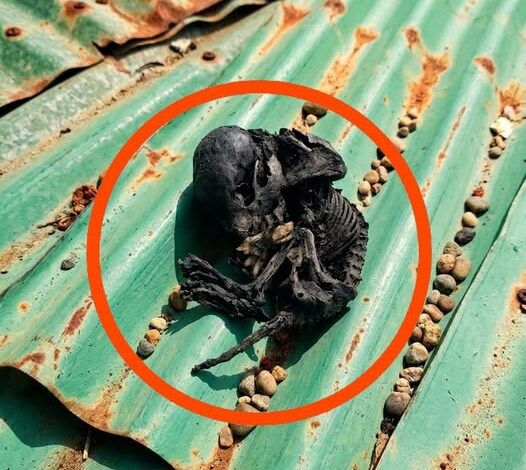
The day started with a mundane task that every homeowner eventually faces but few actually relish. It was a Saturday morning, the kind where the air is thick with the scent of damp earth and the promise of a productive afternoon. The mission was simple: identify and patch a persistent leak that had been weeping into the guest bedroom ceiling for the better part of a week. Armed with a heavy-duty ladder, a bucket of tar, and the false confidence of a weekend warrior, I climbed toward the peak of my sanctuary. I expected to find a cracked shingle, a rusted flashing, or perhaps a stubborn accumulation of autumn leaves. I did not expect to find something that would fundamentally alter my sense of security and leave me questioning the very history of the walls that surround me.
The ascent was steady, and as I reached the edge of the roof, the world below seemed to shrink into insignificance. From this vantage point, you see the neighborhood differently; you see the patterns of life, the interconnectedness of backyards, and the vulnerabilities of architecture. I moved cautiously across the slope, my boots gripping the grit of the asphalt shingles. I found the area directly above the guest room and began to peel back the layers of weather-worn material. It was then that the first wave of unease hit me. It wasn’t a sound or a smell, but a visual dissonance—a shape that didn’t belong in the geometry of a house.
Initially, I tried to rationalize it. The human mind is a master of compartmentalization, especially when faced with the inexplicable. I told myself it was a piece of debris from a storm, a strange growth of fungus, or perhaps a relic left behind by the original builders decades ago. But as I cleared away the rotted plywood and the sodden insulation, my stomach dropped with a cold, visceral thud. One wrong glance at the dark cavity beneath the roofline revealed a strange, organic shape that defied immediate categorization. It was tucked away in a corner of the crawlspace, nestled in a spot that hadn’t seen the light of day since the foundation was poured.
Suddenly, the whole world felt off-kilter. The familiar chirping of birds in the nearby oak tree became a jarring, discordant noise. The sun, which had been a welcome companion moments before, now felt like a spotlight on a crime scene. Your mind races in these moments, spinning out a thousand different scenarios, each one more harrowing than the last. Your skin begins to crawl with a phantom itch, a physical manifestation of the psychological terror taking root. I found myself imagining things I really, really didn’t want to be true. Was this evidence of a previous occupant’s dark secret? Was it something that had been living alongside me, separated only by a few inches of plaster and lath?
The silence of the attic space below seemed to roar in my ears. I felt like an intruder in my own home, a witness to a mystery that had been perfectly content to remain buried. The fear was not just about the object itself, but about the violation of the safe space I had cultivated. We buy houses to keep the world out, to create a perimeter of safety where we can sleep soundly and dream without interruption. Finding something unexplained within that perimeter feels like a betrayal of the highest order. My pulse hammered against my ribs, a rhythmic reminder of my own mortality and the fragility of the peace I took for granted.
I hesitated for what felt like an hour, though it was likely only seconds. Every instinct told me to climb down, pack my bags, and never look back. But curiosity is a persistent and often dangerous companion. It demands resolution. It refuses to let you live with the unknown. I took a deep, shaky breath, the air tasting of dust and ancient secrets, and I leaned closer. I reached for my flashlight, the beam cutting through the gloom of the structural void like a blade.
As the light hit the object, the details sharpened, and the reality of the find began to crystallize. It was wrapped in a material that looked like aged leather but felt more like parchment—brittle, yellowed, and covered in a fine layer of soot. It was shaped like a small trunk or a heavy satchel, but it was the way it was positioned that sent a fresh chill down my spine. It hadn’t been lost; it had been hidden. It was wedged into the support beams with a deliberate, desperate precision, as if someone had gone to great lengths to ensure it would never be found by accident.
When I finally reached out to touch it, the weight of it surprised me. It was dense, far heavier than its size suggested. My fingers brushed against a rusted metal clasp, and the sound of the latch clicking open was like a gunshot in the stillness of the afternoon. As the lid creaked back, revealing the contents within, the racing thoughts in my head finally came to a shattering halt. I wasn’t looking at trash or building materials. I was looking at a collection of items that told a story I wasn’t prepared to hear—a series of photographs, a bundle of letters tied with a mourning ribbon, and a heavy, tarnished key that looked like it belonged to a door that no longer existed in this house.
The photographs weren’t of family vacations or happy milestones. They were candid, grainy shots of the very street I lived on, taken from the same elevated position where I currently stood. They dated back to the late fifties, capturing the mundane movements of neighbors long gone, but with a focus that felt predatory. The letters were even worse—unsent missives filled with a frantic, looping script that spoke of observations, of waiting, and of a secret life conducted in the shadows of the rafters.
The realization washed over me like ice water. This house, my “tiny house” sanctuary, had been used as a literal watchtower. Someone had lived in these walls, or at least spent a significant amount of time in the crawlspace, monitoring the world outside while remaining invisible to it. The “strange shape” I had seen was the makeshift nest of a voyeur who had turned a home into a cage of surveillance.
As I sat there on the edge of the roof, the leak forgotten and the tar drying in the bucket, I looked down at the sidewalk below. I saw a neighbor walking their dog, a car pulling into a driveway, and a child playing on a lawn. I realized that for years, someone had been watching those same scenes from this exact spot, hidden behind the shingles and the vents. The sense of dread didn’t leave; it simply shifted into a permanent part of the house’s foundation. I had set out to fix a roof, but instead, I had dismantled the illusion of my own privacy. Some secrets are meant to stay buried under the shingles, and as I looked at the dark hole in my roof, I realized that some repairs are far more expensive than just the cost of materials. They cost you your peace of mind.