Former AG Pam Bondi diagnosed with cancer weeks after being fired by Trump: report
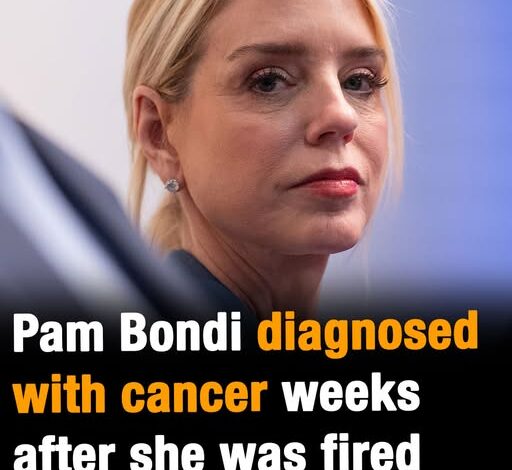
For months, the story surrounding Pam Bondi looked like just another Washington power shuffle. Publicly, her departure from Donald Trump’s inner orbit was described in the usual polished language—mutual decisions, transitions, gratitude for service. But behind the carefully controlled political phrasing, the reality was reportedly far harsher.
According to insiders, Bondi had not quietly stepped aside.
She had been pushed out.
And before the political fallout even settled, another crisis arrived that made the battles of Washington suddenly feel very small by comparison.
Doctors discovered cancer in her neck.
The diagnosis reportedly came only weeks after her abrupt exit from Trump’s administration circles, transforming what already felt like a professional humiliation into something deeply personal and frightening. Suddenly, the woman known for courtroom confidence and aggressive television appearances was no longer navigating political loyalty tests or media speculation.
She was navigating hospitals.
Scans.
Biopsies.
Surgery.
Fear.
For someone so publicly associated with toughness and certainty, the shift was dramatic. While commentators obsessed over whether she had fallen out with Trump or been sidelined strategically, Bondi was privately facing thyroid cancer and the exhausting reality that accompanies it—operations, radiation treatments, recovery periods, and the quiet psychological terror that arrives whenever the word “cancer” enters your life.
Yet even during that period, Donald Trump continued speaking positively about her publicly, praising her loyalty and record on crime. That created another layer of intrigue around her disappearance from the political spotlight. In Washington, silence often fuels speculation more aggressively than open conflict ever could.
Was she forced out?
Was she stepping away voluntarily?
Was illness the real reason all along?
The uncertainty only intensified public fascination.
Meanwhile, people close to Bondi later described her recovery in remarkably blunt terms: she “kicked cancer’s ass.” Behind the scenes, she reportedly endured treatment with the same combative determination that defined her political career. And eventually, the prognosis improved. Doctors characterized her outlook as excellent, offering the possibility not only of survival but of a genuine return to public life.
Now, as recovery continues, Bondi appears poised to step back into a high-profile arena through involvement with the Presidential Council of Advisors on Science and Technology.
That comeback carries symbolism beyond politics itself.
Because regardless of public opinion surrounding her career, surviving cancer changes the emotional texture of a person’s story. Political defeats, media criticism, loyalty disputes—all of it tends to shrink beside the raw reality of confronting mortality directly.
And perhaps that is why this chapter of Bondi’s life feels so striking to observers.
One moment, she was navigating the brutal machinery of Washington power.
The next, she was lying beneath hospital lights confronting something far more frightening than political exile.
Now she reemerges carrying both forms of damage at once: the scars of public betrayal and the quieter scars left behind by illness.
In Washington, reinvention is common.
Survival is harder.
And for Pam Bondi, the narrative unfolding now is no longer only about political loyalty or proximity to power. It has become the story of someone knocked out of one battle only to discover a far more personal war waiting immediately afterward—and somehow finding a way to return anyway.