The Silence That Nearly Stole My Grandson: How One Terrifying Afternoon Changed Everything Forever
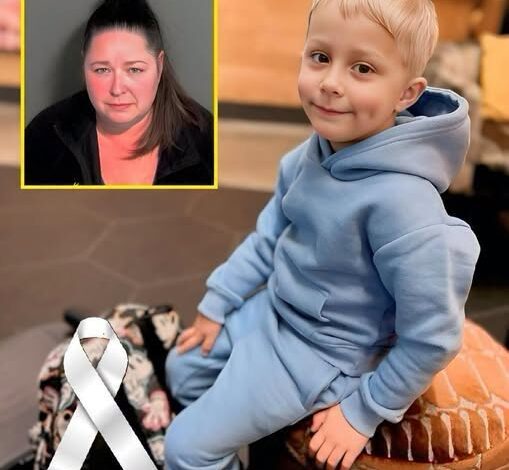
The house was so quiet that I could hear the rhythmic ticking of the wall clock, a sound that suddenly became the loudest thing in my universe. One minute, five-year-old Elliot was laughing, his cheeks full of a snack he had begged for just moments earlier; the next, he was clutching his throat, his face turning a shade of purple that no child should ever wear. I watched as his eyes widened in sheer, wordless terror. There was no sound of choking, just a suffocating, unnatural silence that felt like the earth had stopped spinning. In that heartbeat, I knew the unthinkable was happening.
I have often wondered if I would be a person who freezes in a crisis. I have spent years thinking about how I would handle a fire or an intruder, but I never once considered that the greatest fight of my life would take place in my own living room over a simple afternoon snack. When I saw Elliot stop breathing, every logical thought I possessed vanished, replaced by a primal, vibrating instinct that seemed to bypass my brain entirely. He wasn’t just a child; he was the center of my world, the boy who taught me how to find joy in small things again after so many years of quiet solitude.
My hands, usually prone to the tremors of age, were suddenly steady as I rushed to his side. It felt as though a stranger had taken control of my body. I didn’t think about my hip, which had been aching all morning, or the fragility of my own bones. I hoisted Elliot up, my mind racing through fragments of first-aid posters I had glanced at decades ago in waiting rooms. Every second that passed felt like a lifetime. I could feel his small body stiffening against me, his desperate attempts to inhale meeting an invisible, impenetrable barrier. I was staring into the void, seeing the possibility of a life ending before it had even truly begun.
I managed to clear his airway just as the room began to swim with the encroaching fog of panic. My heart was thundering against my ribs, a chaotic drumbeat that matched the frantic rhythm of my breathing. I dialed emergency services, my voice sounding distant and thin to my own ears, yet I forced the words out with a clarity that surprised me. I relayed our address and the situation with the precision of a trained professional, all while keeping Elliot upright, my eyes never leaving his face. I didn’t let myself look at the clock. I didn’t let myself wonder what would happen if the paramedics didn’t arrive in time. I simply held on.
When the sirens finally wailed into our quiet neighborhood, cutting through the heavy, stagnant air of the afternoon, the tension didn’t release—it shifted. The paramedics burst through the front door, a blur of motion and urgent questions that I answered while cradling Elliot. As they took over, the sheer, crushing weight of the last ten minutes finally settled into my bones. I watched them work on him, their hands moving with the grace of experience, and for the first time, I felt the tears prickling at the back of my eyes. He was breathing. He was going to be okay.
In the aftermath, the news spread through Brookhaven like wildfire. People who had only ever known me as the quiet woman who tended to her garden were suddenly looking at me with a reverence that felt profoundly misplaced. They wanted to call me a hero, to paint the incident in the bright, dramatic colors of a cinematic rescue. But I couldn’t accept the label. To me, heroism implies a choice, a grand gesture made with foresight and intent. What I had done wasn’t a choice; it was a desperate, clawing refusal to let go of what I loved most. It was the frantic, messy, and terrifying work of a grandmother who simply couldn’t conceive of a world where Elliot wasn’t in it.
The incident left a permanent mark on my soul. Now, whenever the house is quiet, I find myself pausing to listen—not for the ticking of the clock, but for the steady, soft inhale and exhale of a sleeping child. We don’t talk about that afternoon much, Elliot and I. He remembers it as a “scary snack,” a blurry moment where Grandma did something loud and confusing. But I remember the precise hue of his fear, and the way the shadows in the room seemed to stretch toward us, reaching for the life that I had been entrusted to protect.
The people of our town used the story as a lesson in preparedness, holding emergency workshops and circulating first-aid tips with a new, sudden urgency. I suppose that is a good thing. If one grandmother’s brush with tragedy can push a community toward better safety, then at least something of value was salvaged from the terror. Yet, I want people to know the reality of that day. Courage isn’t always a roaring fire; often, it is a whisper of “stay calm” repeated until it becomes a prayer. It is the ability to stand in the eye of a hurricane and hold your ground because you have no other option.
I am not a hero. I am just a woman who learned that love is not a passive emotion; it is an active, demanding force. It is the strength that rises when the heart is breaking, the focus that sharpens when the vision blurs, and the quiet, iron-willed resolve to face the terrifying, sudden reality of a world that can change in a heartbeat. I survived that afternoon, and so did Elliot. That is the only victory I care to celebrate. The spotlight of public attention is fleeting, but the warmth of a grandson’s hand in mine is a permanent, living grace that I will spend the rest of my days honoring with every breath I take.