Soccer Star’s Final Family Photo — Then the Earthquake Search Ended
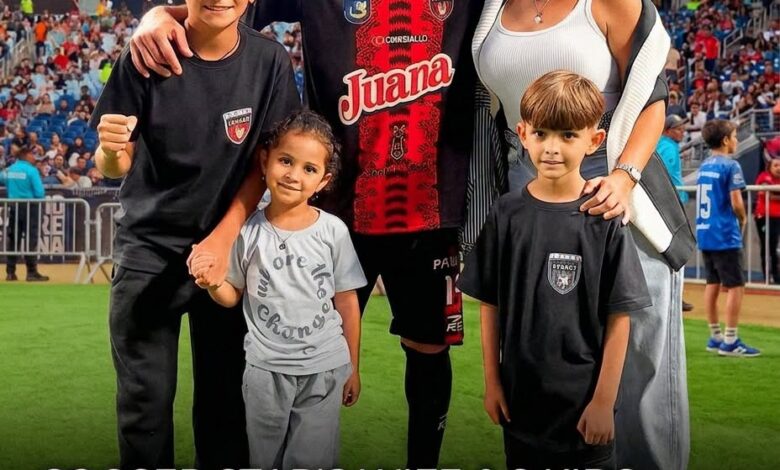
At 6:05 p.m. on June 24, Lucas Trejo was away in Caracas for a soccer match when the first earthquake tore through northern Venezuela. Thirty-nine seconds later, a second, even stronger shock followed, turning ordinary apartment buildings into broken concrete and dust. By the time the Argentine footballer reached La Guaira, the building where his wife and children lived was already on the ground. He stood near the wreckage calling for Yanina, Aarón, and Ainhoa, while rescue crews worked under floodlights and relatives waited for any sound from beneath the debris. His phone would not connect to them. Their car was still believed to be inside the building’s parking area. For nearly three days, Trejo stayed by the rubble, searching for the family he had been posting about only weeks earlier.
Trejo, who played for Sport Marítimo de La Guaira, had built a life in Venezuela with his wife, Yanina Maranella, and their two children. Not long before the disaster, he shared photos from Yanina’s birthday celebration, showing the family smiling around a cake, raising glasses, and sitting together during what looked like a warm, ordinary night out. In one message, he wished her blessings, spoke about their family’s purpose, and wrote that he loved her “yesterday, today and always.” Those words, once simply affectionate, later carried a weight no one could have imagined. As the earthquakes caused major destruction across La Guaira, rescue teams, volunteers, relatives, and international crews moved into the hardest-hit areas. Roads were restricted so emergency vehicles, heavy equipment, and search dogs could get closer to collapsed buildings where families were still missing.
As the hours passed, Trejo used social media to ask for help, information, and more search resources. Supporters in Argentina and Venezuela followed every update, hoping Yanina and the children might still be found alive. During the search, Trejo shared one more family image on his Instagram Story: the four of them seated together during Yanina’s birthday outing, dressed in light colors beneath a glowing restaurant sign. At first glance, it was the kind of photo any father might post while clinging to hope. But as rescuers continued removing debris from the Playa Grande building, that picture became something else entirely. It was the final public glimpse of the family before the news everyone feared arrived.
Authorities later confirmed that Yanina, Aarón, and Ainhoa had been found dead after roughly 72 hours beneath the rubble. For Trejo, the tragedy was not only a public loss followed by teammates, clubs, and fans, but the collapse of a private life built around birthdays, faith, dinners, and small family moments. In the aftermath of a disaster this large, families often face practical burdens no one wants to think about: insurance claims, damaged property, mortgage questions, estate paperwork, legal filings, and sometimes even court proceedings over homes and belongings. An attorney can sort documents, an investment account can be reviewed, and officials can count buildings and casualties, but none of that measures what was taken from a husband and father waiting beside concrete for three days. Clubs across Venezuela shared condolences, while friends asked the public to give Trejo and his loved ones privacy as they began facing the impossible.
The earthquakes left Venezuela grieving on a national scale, with thousands of families searching for names, answers, and someone to blame for the silence that follows disaster. For Lucas Trejo, the most painful reminders may be the simplest ones: a birthday cake, a couch photo, a child smiling at the camera, a message meant for an ordinary celebration. His final posts now show what existed before the ground moved — not headlines, not statistics, but a family with plans, faith, and a future they expected to keep living. The rescue ended in heartbreak, but the photos remain as proof of the love that came before it. Sometimes the last image a person shares becomes more than a memory. It becomes the place where the world finally understands what was lost.