The $35 Million Stumble: How a Forgotten Piece of Metal Destroyed a Man’s Life
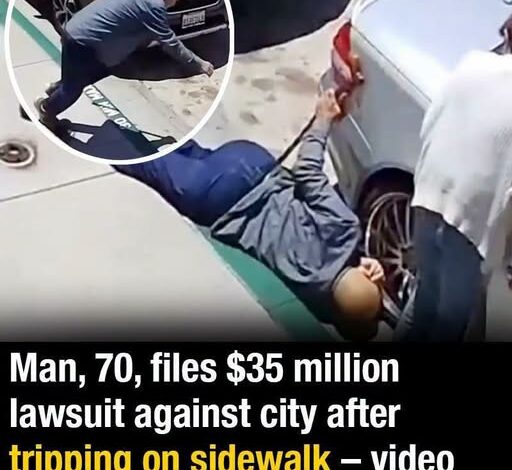
In a split second, a peaceful stroll through a sun-drenched California neighborhood transformed into a horrific life-altering catastrophe. For a 70-year-old man, the simple act of navigating a sidewalk became a deadly trap that would leave him broken, incapacitated, and facing a lifelong recovery. As he moved through the Mission Hills area, he had no way of knowing that a hidden, jagged remnant of municipal negligence was lying in wait, ready to shatter his spine and his future. Now, the city of San Diego is being forced to face the staggering consequences of a $35 million lawsuit that demands accountability for a tragedy that never should have happened.
The incident, which took place on May 11, has sent shockwaves through the community, highlighting the precarious nature of public safety for our most vulnerable citizens. The man, who relies on a mobility aid for his daily independence, was simply going about his day when he caught his foot on an exposed metal parking meter base. This was not a natural obstacle or an unavoidable accident; it was a relic of municipal infrastructure that had been removed months prior. Despite the parking meter being gone, the city had left the dangerous, protruding metal anchor sticking out of the concrete, creating a lethal hazard for any unsuspecting pedestrian passing by.
The violence of the fall was immediate and devastating. As he lost his footing, he did not just hit the ground; he struck his face against his own vehicle with enough force to cause severe, life-altering trauma. According to his attorney, William M. Berman, the results were catastrophic: a broken neck and a broken back. The man who once enjoyed his daily walks now finds himself confined to his home, utterly dependent on round-the-clock medical care for every aspect of his existence. What was once a life defined by independence has been replaced by a grueling, painful reality of rehabilitation and physical loss.
The legal pursuit for justice is built upon a foundation of cold, hard evidence. Security footage recovered from a nearby business captures the horrifying moment of the trip, clearly showing the man’s mobility aid maneuvering past the spot before his foot snags on the jagged, exposed metal base. This footage serves as a stark indictment of the city’s maintenance practices. It demonstrates not just a momentary oversight, but a persistent failure to clear abandoned, hazardous infrastructure from public walkways. The lawsuit argues that the city of San Diego failed in its fundamental duty to maintain safe streets, allowing an obvious, man-made death trap to remain in a high-traffic neighborhood for months after its original purpose had vanished.
Beyond the specific tragedy of this case, the lawsuit raises urgent, broader questions about the safety of our urban environments. If one exposed parking meter base can destroy a man’s life, how many other hidden hazards are lurking on our sidewalks? Residents in the area have long voiced concerns about deteriorating walkways, noting that tree roots, cracked concrete, and abandoned poles have turned simple errands into obstacle courses for the elderly and those with mobility challenges. Many have pointed out that these hazards are often ignored by municipal authorities until a tragedy forces them into the light. This lawsuit is not just about one man’s suffering; it is a desperate appeal for a safer city where citizens do not have to fear that a walk around the block could lead to a permanent disability.
The city of San Diego, as is standard in pending legal matters, has declined to comment on the specific claims or the potential for a settlement. However, the sheer scale of the $35 million demand sends an unmistakable message. It reflects the immense, lifelong cost of the medical care, rehabilitation, and loss of quality of life that the victim now faces. The financial toll is only the beginning; there is also the emotional and psychological weight of a sudden transition from an active, independent senior to a person who requires constant, intensive assistance. Justice in this case is not merely about a monetary payout—it is about demanding that cities prioritize human safety over the inertia of bureaucratic neglect.
For the residents of Mission Hills, this story has become a rallying cry for better infrastructure. It has turned the spotlight on the invisible failures of city management. Neighbors are no longer looking at the sidewalk as just a piece of concrete; they are looking at it as a liability that needs to be addressed before the next person is hurt. It serves as a haunting reminder that in our push for urban progress, we cannot afford to neglect the basic maintenance that protects our most vulnerable. When a city stops caring for its sidewalks, it stops caring for its people.
The tragedy of this 70-year-old man’s experience is a sobering lesson on the fragility of our daily safety. We often assume that the world around us is managed and safe, trusting that the streets we walk are free from man-made hazards. When that trust is shattered by a piece of neglected metal, the results can be permanent. As the legal battle unfolds, the public will be watching closely to see whether the city acknowledges its failure and takes steps to purge its streets of these forgotten, dangerous relics.
In the end, the victim’s life can never be fully restored to what it was before that afternoon in May. No amount of money can truly replace the independence he lost or heal the physical trauma of a broken neck and spine. But by bringing this case to the forefront, he has shone a light on a critical issue that affects us all. The hope is that this lawsuit will not only provide him with the resources he desperately needs but will also spark a city-wide safety initiative that ensures no other person is left broken by a hazard that should have been removed long ago. The streets belong to everyone, and it is time that the city authorities acted like it.