From Rural Limerick to Global Stardom: The Extraordinary Life of Dolores O’Riordan
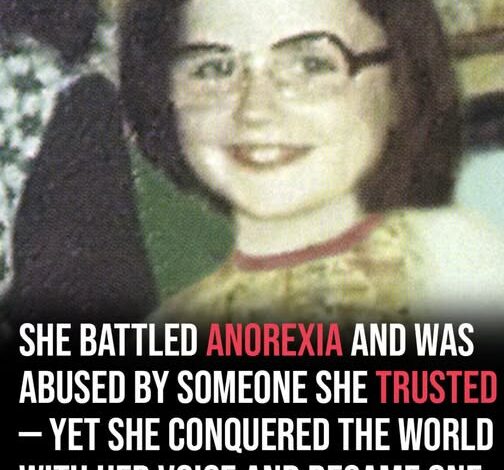
Long before the world knew her voice, Dolores Mary Eileen O’Riordan was a young girl growing up in the quiet countryside of Ballybricken, County Limerick. Born on September 6, 1971, she was raised in a modest, devout Roman Catholic household as the youngest of nine children. Life in rural Ireland was simple, shaped by faith, family, and resilience.
Her father, Terence O’Riordan, lived with permanent brain damage following a motorcycle accident, while her mother, Eileen, worked tirelessly to support their large family. Financial hardship was a constant reality, but creativity filled their home. Music, prayer, and community were not luxuries — they were lifelines.
From a very young age, Dolores discovered something extraordinary within herself: a voice that carried both fragility and strength. Church services became her first stage. Surrounded by hymns and sacred harmonies, she found a place where emotion could be expressed freely.
By the age of five, she was already singing for older students at school. Her confidence was unmistakable. She joined the church choir, studied piano, and immersed herself in music with an intensity rare for someone so young.
Yet her early life was not without darkness. In later interviews, Dolores revealed that she endured childhood sexual abuse beginning around age eight. The trauma would leave deep emotional scars — scars that would later shape her songwriting with haunting honesty.
Music became more than passion; it became survival. She poured her confusion, sorrow, and resilience into melody. Friends often described her as intense, thoughtful, and emotionally complex — a young girl carrying stories too heavy for her years.
At eighteen, she made a life-changing decision. She left Ballybricken and moved to Limerick, stepping into uncertainty with nothing but ambition and her voice. It was a leap of faith — one that would redefine her life.
In 1990, she auditioned for a local band called The Cranberry Saw Us. During that audition, she transformed a rough demo into what would become “Linger.” Her ethereal, Celtic-infused tone stunned the band. They shortened their name to The Cranberries, and a new chapter began.
Their debut album, Everybody Else Is Doing It, So Why Can’t We? (1993), introduced the world to Dolores’s unmistakable sound. Songs like “Dreams” and “Linger” captured audiences globally, blending alternative rock with haunting Irish melody.
But it was 1994’s No Need to Argue that cemented their legacy. “Zombie,” written in response to violence in Northern Ireland, became an anthem of raw emotion and political consciousness. Her powerful delivery transcended borders.
The Cranberries went on to sell over 40 million albums worldwide, becoming one of Ireland’s most successful musical exports of all time. Dolores’s voice — soaring, trembling, defiant — became the band’s heartbeat.
Yet fame came with a cost. The rapid rise to global recognition brought immense pressure. Dolores spoke openly about battling depression, anxiety, and an eating disorder. She admitted that creative highs were often followed by emotional lows.
In 2015, she was diagnosed with bipolar disorder — a revelation that helped explain years of emotional turbulence. Rather than hide it, she spoke about it candidly, helping reduce stigma surrounding mental health.
In 1994, at the height of her fame, she married Don Burton, tour manager for Duran Duran. Together they had three children — Taylor, Molly, and Dakota. Motherhood grounded her in ways fame never could.
Beyond The Cranberries, Dolores explored solo artistry. Her albums Are You Listening? (2007) and No Baggage (2009) showcased her introspective songwriting and willingness to evolve creatively. She later collaborated in the band D.A.R.K., experimenting with darker, electronic influences.
Despite creative success, life continued to test her resilience. In 2014, she faced legal troubles during a highly publicized incident aboard an airplane — an episode later connected to emotional distress and personal upheaval.
Still, she never abandoned honesty. She continued to advocate for openness about mental health and emotional vulnerability.
In her final years, she reunited with The Cranberries to record Something Else (2017), an acoustic reimagining of their classics. Though health challenges, including chronic back pain, forced tour cancellations, she remained creatively active.
On January 15, 2018, Dolores O’Riordan was found unresponsive in a London hotel room at age 46. Her death was ruled accidental drowning due to alcohol intoxication. The news shocked millions around the world.
Her passing left a void in music — but not silence. In 2019, The Cranberries released In the End, featuring her final recorded vocals. The album served as both tribute and farewell.
Dolores’s legacy extends far beyond awards and record sales. Her voice continues to resonate across generations. Songs like “Zombie,” “Linger,” and “Dreams” remain timeless expressions of longing, anger, love, and survival.
She did not hide her pain — she transformed it. She did not mask vulnerability — she sang it.
From the fields of Ballybricken to the world’s grandest stages, Dolores O’Riordan carried her truth in every note. Her voice still comforts. Her music still connects.
And her legacy remains a testament to courage, creativity, and the power of authenticity.