My Parents Labeled My Husband a ‘Poor Loser’ and Tried to Force Me Into an Arranged Marriage—Then I Opened a Locked Box and My World Came Crashing Down
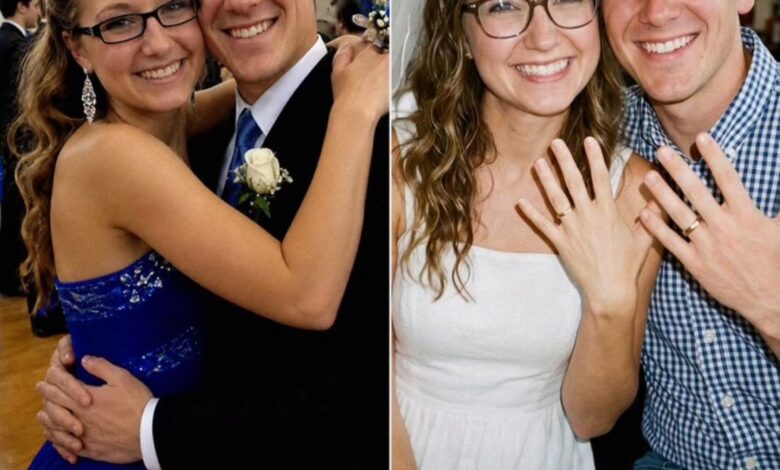
They called Graham a parasite. They called him a dead-end street with no future, a man who would drain me dry. My parents, pillars of our high-society circle, were relentless. They paraded wealthy suitors like Carl in front of me, sneering at Graham’s modest life and his double shifts at the local hardware store. I stood by my man, ignoring the vitriol, even as they threatened to disown me. But on our wedding night, a small, unassuming cardboard box surfaced, containing a truth so dark and calculated that it turned my entire existence into a lie. My parents weren’t protecting me—they were burying their own sins.
The air in our apartment usually smelled like the chamomile tea Graham brewed for me before his early morning shifts. For ten years, he had been my anchor. He was the man who left handwritten notes under my mug and bought grocery-store carnations every Saturday because he remembered a fleeting childhood comment I’d made. To my parents, these gestures were signs of poverty. To me, they were the language of devotion. They didn’t see the man who spent every extra cent on his mother’s chemotherapy. They only saw a man who didn’t fit into their pristine, gold-plated vision of success.
The tension escalated when they introduced Carl. He was the son of a powerful dealership owner, a man with a shiny Lexus and an even shinier pedigree. “Graham is a liability,” my mother insisted, her voice dripping with cold, calculated venom. “Carl is the kind of man who protects a family. Graham is the kind of man who destroys one.” I often wondered why their hatred felt so personal, so jagged, but I suppressed my doubts, desperate to believe that my parents were merely misguided snobs rather than something far more sinister.
When Graham proposed, the line in the sand became a fortress. My father issued a final ultimatum: marry Graham and be cast out, or join the family at the dinner table with Carl and save my inheritance. I chose Graham. I walked out of that house with my head held high, leaving behind a legacy of judgment and cold-blooded expectation. Our wedding was modest, intimate, and filled with a genuine, aching love that no amount of money could buy. But the night didn’t end in bliss.
Over a celebratory pepperoni pizza, Graham’s demeanor shifted. He reached beneath the table and produced a small, weathered cardboard box. He had kept it hidden for months, waiting for the right moment. Inside were documents that turned my stomach. There were photographs of my father and Graham’s late father, Daniel, shaking hands outside a law office two decades ago. As I combed through the files, the realization hit me like a physical blow: Graham’s father had been the primary cosigner on the massive loan that had launched my father’s business empire.
When Daniel passed away, my father and his associate—Carl’s father—didn’t just neglect to pay their share; they conspired to bury the debt. They funneled the liability onto Graham’s grieving mother while they climbed the ladder of success. The “financial struggles” Graham and I had navigated for years were directly caused by the men who had raised me. My parents hadn’t been protecting me from a “poor loser”; they had been desperately trying to marry me off to the son of their co-conspirator to ensure that the silence remained unbroken.
The confrontation that followed was nothing short of a detonation. I arrived at my childhood home in my wedding dress, the box of evidence tucked under my arm. My father’s arrogance shattered the moment he saw the loan records. He tried to frame it as “business complexity” and “protecting the family,” but his words were hollow. He had built his reputation on the back of a dead man and the suffering of a widow. My mother, usually so composed, could only offer weak, trembling justifications.
I didn’t care about their excuses. I gave them a singular choice: restore every cent owed to Graham’s family, including the interest and the medical expenses, or face a public legal battle that would burn their reputation to the ground. They chose to pay. They signed the checks with shaking hands, finally forced to look into the eyes of the woman they had left to suffer in silence. When Graham’s mother offered them the mercy of her forgiveness, I realized that I had finally broken the cycle of greed and secrecy.
We didn’t walk away with a fortune, but we walked away with our integrity. My parents sent one final, biting message, disowning me for choosing “the boy” over “blood.” I set the phone down, feeling the heavy burden of their toxic approval finally lift. Life didn’t return to the way it was before; it became something better. We moved into a small house where the air felt lighter, and for the first time in a decade, I didn’t feel like a pawn in their elaborate game.
On the porch, I kept a vase of those familiar carnations. They were no longer symbols of what I couldn’t afford; they were symbols of a love that had survived the weight of deception. Graham joined me as the sun dipped behind the horizon, his hand finding mine with the same steady, quiet assurance he had shown me since we were seventeen. Looking at him—at the man who had protected me from the truth until I was strong enough to handle it—I realized I wasn’t the one who had lost a family. I was the one who had finally built one. For the first time in my life, the path ahead was completely, beautifully mine.