My Family Refused to Pick Me Up After My Husband’s Funeral — By Nightfall, Their Texts Were on the News
Water was already spilling beneath my front door when the neighbor finally called 911. Less than a day earlier, I had landed in Portland after burying my husband in Singapore and asked my family for a ride home. My brother told me to take an Uber, my mother said I should have planned better, and my father warned only that rain was coming. I returned to a freezing house, unopened mail, spoiled food, and pipes that had burst after no one turned on the heat as promised. When I slipped in the flooded basement, an electrical shock threw me against the stairs, and a carbon-monoxide alarm began sounding while I lay barely conscious on the sofa. Firefighters broke through the door after my neighbor saw water spreading across the porch. By that evening, the headline on local television read: Widow Returns to Disaster After Family Refuses to Help.
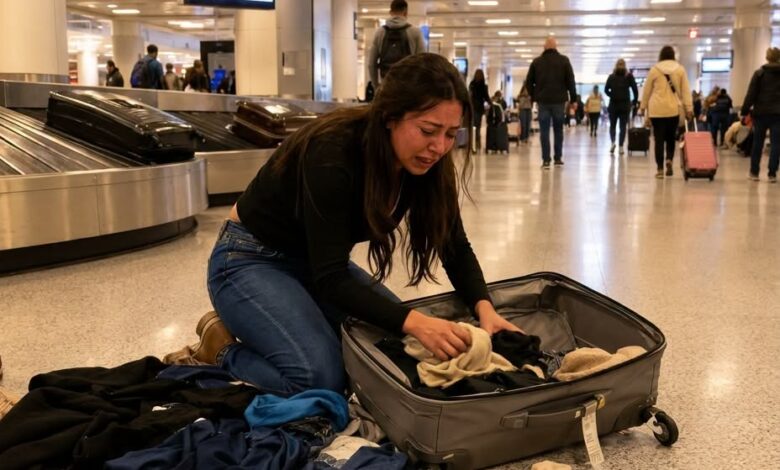
My name is Amelia Henderson, and James had been my husband for ten years before a sudden brain aneurysm took him at thirty-seven. We had built an ordinary, hopeful life around a Portland home, Thursday game nights, a vegetable garden, and plans for children we thought we had time to make. When a six-month engineering contract sent him to Singapore, we treated the separation as temporary. Instead, I flew across the world to sit beside him in a coma, navigate foreign medical paperwork, arrange a funeral, and watch him buried without a single relative beside me. My parents said airfare was too expensive on short notice, while my brother cited work obligations. At the airport, strangers showed more care than my family: Gloria, an employee, helped gather James’s belongings when my suitcase burst open, and a driver named Paul carried everything to my porch and asked whether I was safe.
The flood destroyed ceilings, floors, and part of the electrical system, but the greater shock came in the hospital. A reporter covering the winter storm verified the family messages found on my phone and interviewed Diane, the neighbor who saved me. The story spread quickly, and only then did my relatives appear—worried less about my concussion, hypothermia, electrical burn, and carbon-monoxide exposure than about the damage to their reputations. My brother demanded a public statement calling everything a misunderstanding, while my mother announced that I would recover at her house so the family could “fix this mess.” A social worker explained that a hotel had offered a suite, a restoration company had volunteered repairs, and local services were arranging meals and transportation. When I chose the strangers who had shown up, my mother accused me of humiliating the family—and I finally understood that the news had not created the truth; it had simply made their private indifference impossible to hide.
My homeowner’s insurance covered part of the structural damage, while legal advocates helped document the electrical failure, emergency response, and repair costs. The donated accommodation gave me time to heal, and a hospital social worker coordinated follow-up treatment, grief counseling, and a safe discharge plan. Months later, I used James’s life-insurance benefit to establish the James Henderson Memorial Scholarship, a professionally administered fund providing emergency travel assistance to families of students working or studying abroad. The first award went to a young woman leaving for Japan whose parents could never have afforded a last-minute flight during a crisis. Diane became a regular presence in my life, along with Nurse Sarah, Gloria from the airport, and others who had helped without asking what they would receive in return. My father eventually wrote a letter acknowledging his failure without excuses, and we began meeting carefully, with boundaries; my mother and brother remained distant.
One year after James died, I stood again at Portland International Airport preparing to visit his grave. This time, I was not waiting for relatives to decide whether I was worth the inconvenience. My phone filled immediately with messages from the people who had become my chosen family, asking for my flight number, promising to track the trip, and reminding me to call when I landed. I still carried a small scar from the fall and another from the life I had lost, but neither felt like evidence of weakness anymore. James had loved me in a way that never required me to become smaller, quieter, or easier to ignore. The family I was born into had treated care as an optional favor. The family I found afterward understood it differently: love was not what people claimed when others were watching—it was who noticed the water under the door and came running.