The homeless old man went to the police station and asked them to take a shower, but the police officers completely transformed him!
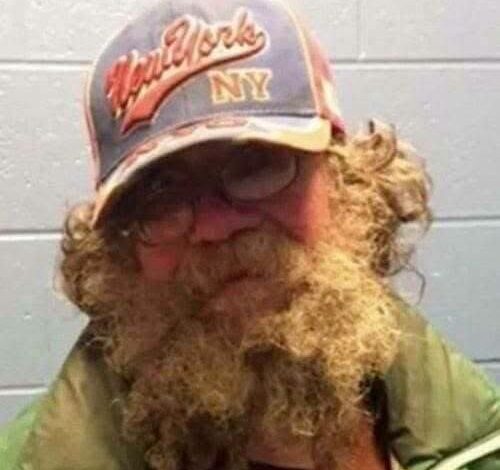
The elderly man didn’t ask for money. He didn’t ask for food, a place to sleep, or a second chance. He walked quietly into a New York police station wearing worn-out clothes, carrying little more than exhaustion in his eyes and one simple request: “Could I please take a shower?” His voice was soft, almost apologetic, as though he expected to be turned away before he even finished speaking. For a brief moment, the officers looked at one another, unsure of what to do. Then one of them made a choice that would change not only the old man’s day, but the way everyone in that room would remember it.
The man introduced himself as Bobby. He wasn’t there to report a crime or confess to one. He wasn’t running from anyone or asking for special treatment. Life on the streets had slowly stripped away nearly everything he once had, and after days of sleeping outside, wearing the same clothes, and feeling invisible to thousands of people passing by, all he wanted was the chance to feel clean again. It was such a small request, yet one that many people had likely ignored countless times before.
Officer Aaron Page noticed something others might have overlooked. Beyond the tangled hair, weathered face, and dirty clothes, he saw a man who had simply reached the end of his strength. There was no anger in Bobby’s voice, only quiet dignity mixed with overwhelming fatigue. Instead of responding with routine procedures or sending him elsewhere, Officer Page decided to respond with compassion.
Without hesitation, he welcomed Bobby inside—not as a suspect, but as a guest.
Word quietly spread throughout the station. Other officers soon learned about the elderly man’s request, and without anyone giving formal instructions, they each began contributing in their own way. One officer searched for electric clippers. Another located clean towels. Someone else found fresh clothes that would fit him. What had started as one simple request gradually became a team effort fueled entirely by kindness.
A small bathroom inside the station quickly transformed into something completely unexpected. Clippers buzzed gently as Bobby received his first haircut in what had likely been a very long time. Warm water washed away layers of dirt gathered from weeks or months spent surviving outdoors. Fresh soap, clean towels, and simple conversation replaced the loneliness that had become part of his everyday life. Nobody rushed him. Nobody treated him like an inconvenience. For the first time in a long while, he was simply treated like another human being.
As the transformation continued, something remarkable happened. The man hidden beneath the dirt slowly began reappearing. His freshly trimmed hair framed a face that suddenly looked years younger. Clean clothes replaced worn layers that had endured countless nights on city streets. The physical change alone was striking, but those present noticed something even more meaningful.
His posture changed.
The weight he carried in his shoulders seemed to lift little by little. His eyes, once filled with exhaustion, began showing traces of hope. Even the way he spoke became more confident. It wasn’t merely a haircut or a shower that had changed him—it was the feeling that someone still believed he mattered.
When Bobby finally looked into the mirror, he paused.
For several quiet moments, he simply stared at his own reflection. It had likely been a long time since he had truly recognized the person looking back at him. The face in the mirror wasn’t defined by homelessness or hardship. It was the face of a man whose dignity had been gently returned through a handful of ordinary acts performed by people who chose compassion over convenience.
Those officers never expected headlines or public praise. They simply saw an opportunity to help someone who had almost nothing left. In a profession often remembered only during moments of crisis, they quietly demonstrated another side of policing—one built on empathy, humanity, and recognizing that sometimes the smallest gestures create the greatest impact.
Life on the streets can slowly convince people that they have become invisible. Day after day, strangers walk past without making eye contact. Conversations become rare. Basic comforts that many people take for granted—a hot shower, clean clothes, a haircut—gradually become distant luxuries instead of everyday necessities. Over time, it becomes easy to believe that nobody notices anymore.
That day, Bobby discovered someone still did.
The officers couldn’t erase every hardship he had experienced. They couldn’t instantly solve homelessness or undo the struggles that had brought him to their station. But they could give him something equally valuable: a reminder that his life still carried worth, that kindness still existed, and that compassion sometimes appears when it is needed most.
Stories like Bobby’s remind us that dignity often begins with the simplest acts. A warm shower. A clean shirt. A fresh haircut. A conversation without judgment. None of those gestures require extraordinary resources, yet together they can restore something far deeper than appearance—they can restore hope.
In a city where millions of people hurry past one another every day, a handful of officers chose to stop. They looked beyond worn clothes and difficult circumstances to see the person standing in front of them. Their decision transformed far more than an elderly man’s appearance. It reminded everyone involved that humanity is often revealed not through grand gestures, but through quiet moments when compassion becomes more important than routine.
For Bobby, it may have started with a simple request for a shower. By the time he walked back out of that station, he carried something much greater: the feeling that, despite everything life had taken from him, he was still seen, still respected, and still worthy of kindness.