Immigration Enforcement Operations Spark Renewed National Debate
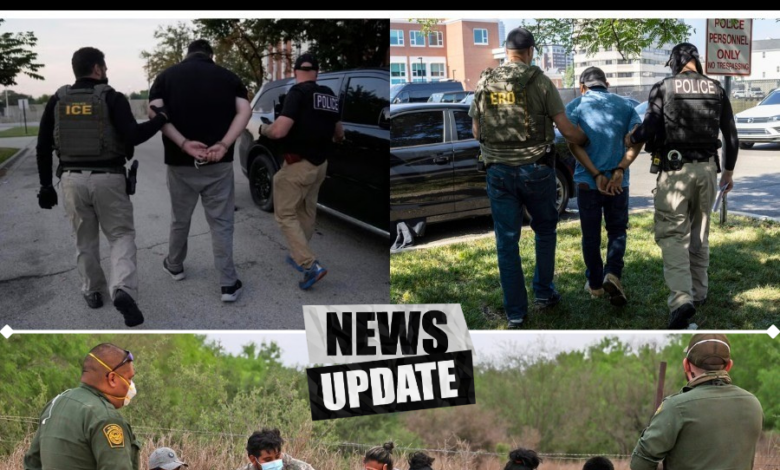
Images circulating online showing Immigration and Customs Enforcement (ICE) agents detaining individuals have reignited one of the most heated political debates in the United States: how immigration laws should be enforced inside American cities.
The photos, which appear to show federal agents working alongside other law enforcement personnel, have fueled discussion across social media platforms. Some view the images as proof that immigration laws are being upheld. Others see them as a sign of aggressive enforcement tactics.
What ICE Enforcement Actually Involves
ICE is the federal agency tasked with enforcing immigration laws within the United States. Its responsibilities include investigating immigration violations, arresting individuals who are unlawfully present, and executing removal orders issued by immigration courts.
Contrary to viral headlines that suggest mass operations in “every city,” enforcement actions are typically targeted. ICE often acts based on court-issued removal orders, criminal records, or ongoing investigations.
These operations are carried out under federal authority and are subject to constitutional due process protections.
The Policy Divide
Immigration enforcement remains deeply polarizing.
Supporters argue that enforcing immigration law is essential for national security and public safety. They maintain that individuals with outstanding deportation orders or criminal convictions should be prioritized for removal.
Critics argue that broad enforcement actions can disrupt families and communities, particularly when individuals have long-established ties in the U.S.
The debate often centers around priorities: Should ICE focus exclusively on individuals with criminal convictions? Or should enforcement apply broadly to all undocumented residents?
Sanctuary Cities and Federal Authority
Another layer of complexity involves sanctuary city policies. Some municipalities limit cooperation with federal immigration authorities, arguing that local law enforcement should focus on community policing rather than immigration status.
Others believe that local and federal authorities should coordinate fully to ensure consistent enforcement of federal law.
The tension between state, local, and federal authority has shaped immigration politics for years.
Legal Framework
It is important to note that deportation is not immediate or arbitrary. Removal typically follows legal proceedings in immigration court. Individuals have the right to hearings and, in many cases, the ability to appeal decisions.
However, immigration courts face significant backlogs, which has made enforcement timelines a major policy issue.
Public Reaction
The images currently circulating online are powerful because they reduce a complex legal and policy issue into a visual moment.
For some viewers, they symbolize law and order.
For others, they raise humanitarian concerns.
The strong reactions underscore how immigration remains one of the defining political issues in modern American life.
The Bigger Picture
Immigration enforcement policy has shifted across different administrations, reflecting changing priorities in Washington.
As national elections approach, immigration will likely remain at the forefront of campaign debates.
The core question remains: How should the United States balance border security, humanitarian concerns, economic needs, and constitutional protections?
The answer depends largely on political perspective — and on voters.