Vintage kitchen tool baffles online users
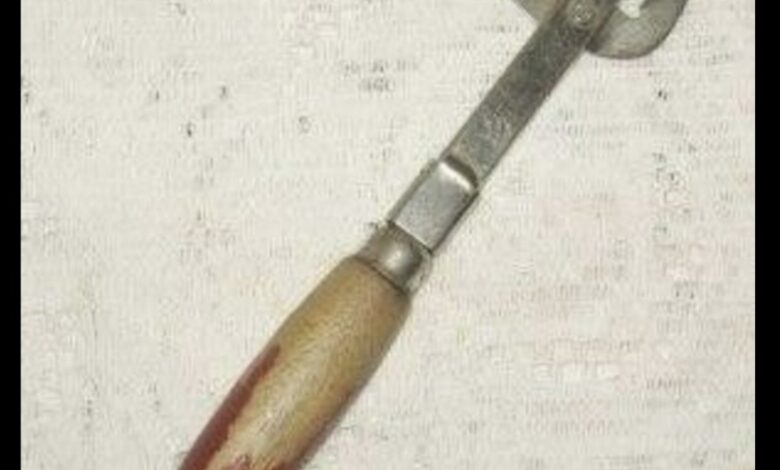
In the age of smart appliances and touch-screen refrigerators, it is often the simplest—and sharpest—relics of the past that cause the biggest stir. Recently, a digital treasure hunt was ignited when a Reddit user posted a photo of a metallic curiosity unearthed during a clean-out of their grandmother’s home. The item, looking less like a culinary aid and more like a tactical implement, left a new generation of home cooks scratching their heads while sending a shiver of nostalgia (and phantom pain) down the spines of older generations.
“Found it while cleaning out grandma’s house,” the user wrote, presenting the intricate yet rugged tool to the internet’s collective hive mind. “She had it in her kitchen; we assume it is some sort of can opener multitool but have no idea how it would be used.”
The response was immediate. Within hours, the post became a virtual town square for historians, hobbyists, and survivors of the tool’s notorious learning curve.
A Legacy of ‘Jagged Edges and Battle Wounds’
While some netizens speculated the item was a 19th-century camping implement or even a primitive fishing tool, those who grew up with the device were quick to identify it—and recount the scars it left behind.
“Old school can opener,” one user explained, detailing the mechanical brutality of the process. “Puncture into can and lever forward one step at a time to cut the top off. Makes great jagged edges you can cut yourself on and get tiny metal shards into the contents.”
The comment section soon read like a medical ledger. “Still have a scar where it slipped and embedded in my arm when younger!” one person shared. Another added a chillingly vivid memory: “I’ll never forget [when] this went right through my hand trying to open a tin.”
The consensus was clear: this was the “primitive” ancestor of the modern kitchen, a lever-type opener that demanded respect, skill, and perhaps a nearby first-aid kit.
The Evolution of the Humble Opener
To understand how such a “dangerous” tool ended up in Grandma’s drawer, one must look at the surprisingly slow evolution of food preservation. Historically, the tin can was a marvel of engineering that lacked a logical conclusion; for decades, cans were invented before anyone devised a specialized way to open them. Early adopters often resorted to hammers, chisels, or bayonets.
- 1858: The Ezra Warner Era – The American inventor patented the first dedicated opener. It featured a curved blade and a guard, but its clunky nature meant it was largely relegated to Civil War battlefields rather than domestic kitchens.
- 1870: The Lyman Revolution – William Lyman introduced the rotating cutting wheel. While it required a pivot point in the center of the can, it laid the technical foundation for the smooth-rotation tools we use today.
- The 20th Century Shift – By the 1900s, “keyed” cans became popular for sardines and meats. The 1930s saw the birth of the electric opener, followed by the ergonomic, gear-driven handheld versions of the 1950s that define the modern standard.
A Divisive Classic
Despite the documented risks of “jagged edges,” the vintage lever-style opener still maintains a cult following. For some, its lack of moving parts makes it the ultimate survival tool; for others, it is a piece of indestructible Americana.
“Wanted to buy a new one, you cannot find them now,” complained one Facebook user, lamenting the shift toward plastic-heavy modern designs. Another enthusiast was even more direct: “Still the best can opener!”
However, the warnings remained a common thread. As one veteran cook noted, “I still have one and use it on occasion. Dangerous bugger if not used properly.”
In a world of planned obsolescence, this “weapon-like” kitchen relic serves as a reminder that the tools of the past were built to last—even if they took a bit of skin with them.