If you have found this insect in your home, it’s a sign that you need to…
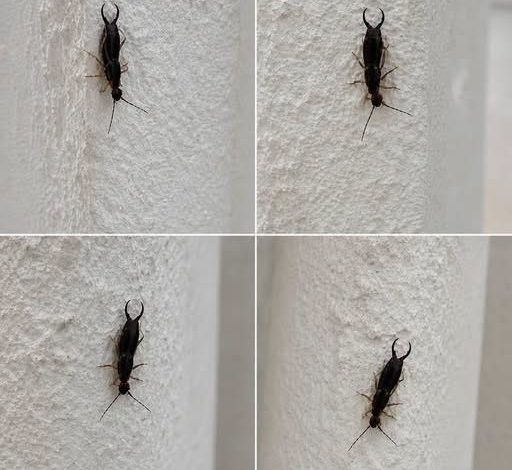
Finding that one strange bug crawling across your wall can feel like a threat. Your heart jumps, your mind races, and suddenly every dark corner of the room looks suspicious. A tiny movement that would normally mean nothing can instantly make you wonder whether something much bigger is happening somewhere you cannot see. Is it harmless—or could it be a sign of something quietly spreading behind your walls, under your floors, or inside forgotten corners of the house?
Before you panic, grab the strongest chemical spray you can find, or start tearing apart the room, there’s one crucial step most people skip: figure out exactly what you’re looking at.
The real story behind a single insect in your home is usually less about fear and more about information. That “one bug” could be a scout searching for food, a harmless drifter that accidentally wandered inside, or a symptom of conditions that are attracting more insects than you realize. Those possibilities can look almost identical if you simply see a small creature crawling across the wall.
Proper identification tells you which one you’re dealing with.
That matters because not every insect means the same thing. Some species are naturally drawn indoors by warmth or light. Others may enter through an open window, a gap beneath a door, or a tiny crack around a pipe. Some are attracted to moisture, while others follow food sources, crumbs, standing water, clutter, or organic material that has been left undisturbed.
A single insect may have no larger meaning at all.
But sometimes it is a clue.
That is why the first reaction should not be panic. Take a closer look. If it is safe to do so, get a clear photograph and try to identify the species. Pay attention to where you found it, what time of day it appeared, and whether there are any obvious conditions nearby that might attract it.
The location can be just as useful as the insect itself.
Finding one near a kitchen sink could point you toward moisture or food. Finding one around a bathroom may suggest humidity or a leak. Discovering one near a window could simply mean it came inside from outdoors. Seeing the same type of insect repeatedly in a dark, undisturbed area may tell a very different story.
Once you know what you’re dealing with, the power shifts back to you.
Instead of reacting blindly, you can address the reason the insect may have appeared in the first place. Cleaning up crumbs and food residue removes easy sources of nourishment. Storing food in sealed containers makes your kitchen less inviting. Taking out trash regularly can eliminate another attraction.
Moisture is another major factor.
Fixing a dripping faucet, repairing a small leak, improving ventilation, and reducing unnecessary humidity can make a home considerably less attractive to insects that depend on damp environments. Sometimes the most effective pest-control measure isn’t a chemical at all.
It is removing the condition that invited the pest inside.
The same principle applies to clutter. Cardboard boxes, piles of paper, rarely disturbed storage areas, and other hidden spaces can provide shelter for insects. You don’t need to turn your house upside down, but keeping areas clean, dry, and accessible makes it easier to notice problems before they become established.
And this is where the difference between one insect and many becomes important.
One bug may simply be passing through.
Repeated sightings are different.
If you begin seeing multiple insects of the same type, especially in the same area, that is your signal to look deeper. Check nearby food sources, moisture, cracks, storage areas, and possible entry points. Look for additional signs rather than assuming the first insect was an isolated visitor.
You may discover nothing.
And that is good news.
But if you find evidence of repeated activity, addressing it early is usually far easier than waiting until the problem becomes obvious.
The biggest mistake is allowing fear to replace observation.
When people see an unfamiliar insect, the natural reaction is often to eliminate it immediately and forget about it. But if you never identify what it was, you lose potentially useful information. You may kill the only visible clue and then remain confused when more insects appear days later.
Knowledge gives you a better starting point.
You don’t need to memorize every species that can enter a house. You simply need to develop the habit of asking a few basic questions: What is it? Where did I find it? What might have attracted it? Have I seen another one?
Those questions can turn a frightening discovery into a manageable investigation.
And if the sightings continue, you don’t have to solve everything yourself. A qualified pest professional can inspect the property, identify the source, and determine whether treatment is actually necessary. Getting professional help doesn’t mean your home is infested. Sometimes it simply means you want a trained set of eyes to determine what you are dealing with before a minor issue becomes a major one.
Most importantly, don’t assume that every stray insect means your home is dirty.
Insects can enter even clean, well-maintained houses. Doors open. Windows get left uncovered. Tiny gaps appear around pipes and foundations. Outdoor insects are attracted to lights. Weather changes can push creatures into sheltered spaces.
Sometimes, a bug is simply a bug.
Other times, it is your home’s way of pointing toward something that needs attention.
The difference is not always visible at first glance.
That’s why you don’t need to live in fear of every strange insect you see crawling across the wall. You need a calm eye, a little knowledge, and the willingness to act on what your home is trying to tell you.
Identify first.
Investigate second.
Act when the evidence tells you to.
Because that tiny insect may not be the beginning of a nightmare at all.
It may simply be a small piece of information—and once you understand what it is telling you, you can decide exactly what to do next.