For years, fans couldn’t believe these two actors were actually different people. They looked almost identical!
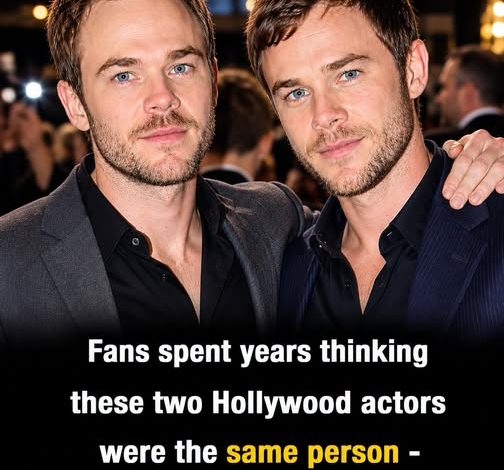
For many television and movie viewers, there may have been a surprisingly simple explanation for years of confusion surrounding two very familiar faces. The actor playing Jimmy Olsen in Smallville was not the same person who appeared as Bobby Drake, better known as Iceman, in the X-Men films. Those roles belonged to two different actors: identical twin brothers Aaron and Shawn Ashmore. Because the brothers look remarkably similar and have both spent decades working in film and television, it is easy to understand why some viewers assumed they were watching the same performer moving from one franchise to another.
Aaron and Shawn Ashmore were born on October 7, 1979, in Richmond, British Columbia, Canada. Aaron was born shortly before Shawn, making him the older twin by only a very small amount of time. Their physical resemblance was obvious from childhood, and that similarity would eventually become both an advantage and an unusual complication once the brothers began auditioning professionally. Even casting directors sometimes had difficulty choosing between them.
Their first experiences in entertainment came while they were still children. According to accounts from the brothers, they became involved in commercials after a talent scout or casting representative made contact through an organization associated with families of multiple births. Their mother became involved in taking the boys to auditions, opening a path that neither family nor children could have known would eventually lead to decades-long acting careers.
At that age, acting was much less about building a carefully planned career and much more about trying something new. Commercial work gave the twins an opportunity to appear in front of cameras while they were still young. Because Aaron and Shawn were identical and both comfortable auditioning, casting directors regularly encountered an unusual problem. Sometimes both brothers performed well enough that there was no obvious professional reason to select one over the other.
Shawn later described one particularly memorable solution to that problem. When he and Aaron were both called back for commercials, casting directors sometimes explained that they liked both boys equally but could hire only one. Rather than making the decision appear personal, they would flip a coin in front of the twins. According to Shawn, this happened several times during their early careers.
The unusual system might sound harsh from an adult perspective. Acting is already a competitive profession, and losing a job because of a coin toss could easily be frustrating. But Shawn has explained that the approach actually helped the brothers understand rejection differently. Neither child needed to believe the other had been selected because he was considered more talented or more attractive. The message was essentially that both had done well, but only one position existed.
That experience may have helped prevent acting competition from becoming a serious source of conflict between them. Identical twins working in the same industry could easily have been compared constantly, particularly as children. The coin toss removed at least some of that comparison. It transformed the decision into chance rather than a judgment about which brother was “better.”
One early commercial story also demonstrated how interchangeable they could appear to people working with them. Aaron initially won one role, but he became ill before filming. Shawn was able to step into the situation instead. Moments like that naturally reinforced the perception that the brothers could be substituted for one another, even though they would eventually establish very different professional résumés.
As they grew older, their careers began moving along separate tracks. The resemblance remained, but each brother accumulated his own roles, professional relationships and acting identity. Shawn would become particularly associated with major superhero films, while Aaron developed a strong television career that repeatedly returned him to science-fiction and genre programming.
Shawn gained early recognition through television before his X-Men breakthrough. One of his notable roles was Jake Berenson in the television adaptation of Animorphs. The series was based on the popular young-adult science-fiction book franchise and gave Shawn a prominent role before superhero films would make his face internationally recognizable.
His career changed substantially when he was cast as Bobby Drake in the first X-Men film, released in 2000. Bobby Drake is the mutant known as Iceman, a character with the ability to manipulate cold and ice. Shawn’s initial role in the first movie was relatively limited compared with later appearances, but the character became much more significant as the film franchise expanded.
Shawn returned as Iceman in X2: X-Men United in 2003. His role became considerably larger, and audiences learned more about Bobby’s personal life and experiences as a mutant. The film gave Shawn far greater visibility and helped establish him as one of the recognizable younger actors in the franchise.
He returned again for X-Men: The Last Stand in 2006. By then, Iceman had become one of the continuing characters connecting the younger generation of mutants with established figures such as Wolverine, Professor Xavier, Storm and Magneto. Shawn’s association with the character became strong enough that many viewers would continue identifying him with Iceman long after the initial trilogy ended.
Years later, he returned once again for X-Men: Days of Future Past in 2014. That film brought together performers from different eras of the franchise, allowing Shawn to reprise the role more than a decade after his first appearance. His lengthy connection with X-Men made Iceman one of the defining roles of his career.
Shawn’s work did not remain limited to superhero movies. He appeared in horror and thriller films including The Ruins and Frozen. The latter should not be confused with Disney’s animated movie of the same name. The 2010 thriller follows people trapped high above the ground on a ski lift, placing Shawn in a very different type of survival story from the superhero productions for which he was already known.
Television continued playing a major role in his career as well. Shawn starred as FBI agent Mike Weston in the crime thriller The Following, appearing opposite Kevin Bacon. The series ran for three seasons and gave Shawn another prominent role that had nothing to do with mutant powers or comic-book mythology.
He later appeared in The Boys as Lamplighter, another project connected with the superhero genre but very different in tone from X-Men. The series is known for presenting a darker and more cynical interpretation of superheroes. Shawn’s involvement continued the curious pattern of his career repeatedly returning to genre entertainment.
He also expanded into interactive entertainment and video games. Shawn performed the lead role of Jack Joyce in Quantum Break, a project combining video-game storytelling with live-action television-style sequences. He later appeared in other narrative games, demonstrating how performance-capture technology allowed actors to work across entertainment formats that once would have been considered entirely separate industries.
More recently, television viewers have become familiar with Shawn through ABC’s The Rookie. He plays Wesley Evers, an attorney whose relationship with Detective Angela Lopez became an important part of the series. Wesley is very different from Iceman and from many of Shawn’s earlier genre roles, giving viewers another chance to see him in a long-running contemporary television drama.
Meanwhile, Aaron Ashmore was building a similarly substantial but separate career. One of his early notable roles came in Prom Queen: The Marc Hall Story, a Canadian television film based on a real legal dispute involving a teenager who fought to attend his Catholic high-school prom with his boyfriend. The role helped Aaron establish an identity apart from his brother.
Aaron also appeared on Veronica Mars as Troy Vandegraff. The teen mystery series developed a devoted audience, and his recurring appearance added another recognizable credit before the role that would make him especially familiar to superhero television fans.
That breakthrough came with Smallville. Beginning in the show’s sixth season, Aaron joined the series as photographer Jimmy Olsen. The character was already deeply established in Superman mythology as one of Clark Kent’s closest friends and a colleague at the Daily Planet. Taking on such a recognizable comic-book character placed Aaron in a major franchise much as X-Men had done for Shawn.
For viewers who already knew Shawn as Iceman, Aaron’s arrival on Smallville could be deeply confusing. The identical appearance made it easy to assume the same actor had simply joined another superhero production. In reality, the brothers were now working in two separate branches of comic-book entertainment.
The situation becomes even more amusing because Shawn himself had appeared on Smallville before Aaron joined the cast. Shawn guest-starred as Eric Summers, a teenager who temporarily gains Clark Kent’s powers following an unusual accident. He first played the character during the show’s early years and later returned.
Several seasons after Shawn’s appearances, Aaron arrived as Jimmy Olsen. Anyone unaware of the existence of the Ashmore twins could understandably believe the show had brought the same actor back in an entirely unrelated role. In reality, Smallville had employed both brothers at different points in its run.
Aaron’s Jimmy Olsen became a recurring and then regular presence in the series. His character developed relationships with Chloe Sullivan and other central characters while working around the Daily Planet. The role gave Aaron one of his most visible television identities.
The Smallville storyline eventually introduced an unusual twist regarding Jimmy’s identity, and Aaron later returned for the series finale in another connected appearance. The show’s complicated treatment of the Olsen character has been discussed extensively among fans, but Aaron’s connection with Smallville remained firmly established.
After Smallville, Aaron continued finding substantial work within science-fiction television. He joined Warehouse 13 as Steve Jinks, an ATF agent who becomes part of the team responsible for dealing with mysterious historical artifacts. The series blended science fiction, fantasy, humor and adventure, placing Aaron in another production likely to attract many of the same viewers who had watched Smallville.
His character possessed an unusual ability to detect when someone was lying. Steve Jinks became an important part of the show’s ensemble and gave Aaron another recognizable genre role. For fans who continued confusing him with Shawn, the growing collection of similar science-fiction projects probably did little to make identification easier.
Aaron later became one of the principal actors in Killjoys. He played John Jaqobis in the Canadian science-fiction series, joining Hannah John-Kamen and Luke Macfarlane as part of a trio of bounty hunters operating in a complex interplanetary society. The series ran for five seasons.
Aaron has spoken about enjoying science fiction and fantasy, while also acknowledging that an actor cannot completely control the direction of a career. Opportunities, casting decisions and luck all influence which projects become available. In his case, those circumstances produced a particularly strong association with science-fiction television.
The similarities between the brothers’ careers therefore extend beyond their faces. Both have appeared in superhero stories. Both have worked extensively in science fiction. Both have appeared in thrillers and television dramas. Both began acting at a young age. And both continued working steadily for decades.
That combination makes the confusion much more understandable than it would be if one brother worked exclusively in comedy while the other appeared only in historical dramas. Viewers encountering Aaron and Shawn across overlapping genres could repeatedly assume they were following one unusually busy actor.
Their names can create another layer of difficulty. Aaron Ashmore and Shawn Ashmore are similar enough names that casual viewers may remember only the surname. Someone seeing “Ashmore” in the credits might not necessarily stop to determine which twin appeared in the program.
Physical resemblance obviously remains the strongest factor. As identical twins, Aaron and Shawn can look remarkably alike, especially when photographed from certain angles. Hairstyle, facial hair, costume and character styling can make the similarity even stronger or sometimes help distinguish them.
Longtime fans often insist that the differences become easier to recognize after watching both actors for years. Their voices are not exactly the same, and subtle differences in facial structure, expressions and mannerisms can become noticeable. But those distinctions may be difficult for someone encountering one twin only occasionally.
The confusion entered a new phase when Aaron appeared on Netflix’s Ginny & Georgia. He plays Gil Timmins, the father of Austin Miller and an important figure connected to Georgia’s past. Aaron first appeared physically as Gil during the second season and continued in the role afterward.
Gil is a very different character from Shawn’s Wesley Evers on The Rookie. Yet viewers who watched both shows began experiencing the same confusion that superhero fans had encountered years earlier. Some believed Shawn had moved directly between The Rookie and Ginny & Georgia.
Netflix itself identifies Aaron Ashmore as the actor playing Gil. ABC, meanwhile, identifies Shawn Ashmore as Wesley Evers on The Rookie. The two roles therefore provide one of the clearest modern examples of why audiences continue mixing the brothers up decades after their careers began.
Online discussions show that the confusion is not hypothetical. In June 2025, a Reddit discussion among Ginny & Georgia viewers attracted hundreds of reactions after one viewer realized the actor playing Gil was not Shawn from The Rookie. Several commenters admitted they had made exactly the same assumption.
One viewer wrote that they had believed they were watching Shawn Ashmore from The Rookie. Another said they had only just discovered that Gil actor Aaron had a twin and had assumed the same performer was appearing in both shows. A third commenter said they already knew twins existed but had still believed the actor playing Wesley was the same person playing Gil.
The discussion became popular enough to receive coverage beyond Reddit. Entertainment publications highlighted the amusing realization among viewers, noting that Aaron plays Gil while Shawn plays Wesley. The fact that audiences were still making the mistake in 2025 shows how effectively the brothers’ resemblance has continued confusing people after more than three decades of acting.
Some comments went even further. Viewers said they had spent episodes wondering how the same actor could appear subtly different between the two shows. Others initially credited what they thought was one actor’s remarkable ability to transform himself physically between characters before discovering that they were actually watching two people.
That reaction is particularly amusing because Gil and Wesley have such different personalities. Wesley is generally portrayed as a supportive husband and attorney, while Gil occupies a far more antagonistic role in Ginny & Georgia. A viewer assuming Shawn played both could reasonably interpret the contrast as an especially dramatic acting transformation.
Instead, the transformation comes partly from casting two different men who happen to share almost identical genetics. Each actor still creates his own character, but the physical similarity provides an unintended illusion for viewers unfamiliar with the family connection.
Modern streaming may actually make the confusion more common. Audiences now watch multiple series from different networks and eras within the same week. Someone can watch The Rookie on one service and immediately begin Ginny & Georgia on another. The visual memory of Shawn as Wesley may still be fresh when Aaron appears as Gil.
The same phenomenon can happen with older projects. A viewer discovering Smallville through streaming may see Aaron as Jimmy Olsen only days after watching Shawn in an X-Men movie. Without checking the credits, assuming they are the same actor is perfectly understandable.
Streaming also gives older productions new audiences who may have no memory of publicity surrounding the twins when those shows originally aired. Someone watching Smallville for the first time in 2026 may be encountering Aaron without any knowledge of interviews from the 2000s. The discovery that Iceman has an identical twin can therefore feel entirely new.
Ironically, Smallville itself contains perhaps the best example of why checking credits matters. Shawn’s earlier appearances as Eric Summers and Aaron’s later tenure as Jimmy Olsen mean that both twins exist within the same television universe as completely unrelated characters.
For a viewer unaware of the twins, this could look like one of the strangest recasting decisions imaginable. Why would producers bring the actor who played Eric back several seasons later and pretend he was now Jimmy Olsen? The answer, of course, is that they did not.
Shawn and Aaron simply looked similar enough to create that impression.
Their individual filmographies become much easier to follow once viewers know the basic division. Shawn is the Ashmore associated most strongly with Iceman, The Following, The Rookie, The Boys and several interactive games. Aaron is the Ashmore associated strongly with Jimmy Olsen, Warehouse 13, Killjoys, Locke & Key and Ginny & Georgia.
That summary is not exhaustive. Both actors have accumulated many additional film and television credits over decades. But those roles provide useful reference points for viewers trying to remember which brother they are watching.
Aaron’s appearance in Netflix’s Locke & Key added yet another genre production to his résumé. He played Duncan Locke, connecting him with another fantasy series involving supernatural events and family mysteries. Again, the role sits comfortably within the same broad genre landscape that has often surrounded both brothers.
Shawn’s work in The Boys similarly brought him back into superhero storytelling after his years with X-Men. However, The Boys presented the genre through a much darker and more violent lens. His character Lamplighter was dramatically different from the heroic Bobby Drake.
Their ability to move between projects while remaining recognizable has helped both brothers sustain long careers. Neither became simply “the other Ashmore.” Each accumulated enough important roles to develop a substantial independent professional identity.
Still, public confusion has followed them.
For most actors, being mistaken for another performer occasionally is simply part of fame. For Aaron and Shawn, the comparison is built into their biology and career histories. They are identical twins working in the same profession, frequently within overlapping genres.
It would almost be more surprising if audiences never confused them.
The brothers themselves have dealt with that reality since childhood. The commercial auditions decided by coin toss demonstrate that even professionals casting them could sometimes see equally suitable performers when they looked at Aaron and Shawn. The difference between those childhood experiences and today’s fan confusion is mostly scale.
As children, the question was which twin would receive one commercial.
As adults, the question for viewers became whether Iceman, Jimmy Olsen, Wesley Evers and Gil Timmins were somehow all being played by one extraordinarily productive actor.
The answer is no.
Shawn Ashmore played Iceman.
Aaron Ashmore played Jimmy Olsen.
Shawn plays Wesley Evers.
Aaron plays Gil Timmins.
Once those four roles are separated, much of the mystery disappears.
The similarity does not mean their careers have been identical. Shawn’s X-Men work gave him a major presence in theatrical superhero films at a time when that genre was beginning its transformation into one of Hollywood’s dominant forms of entertainment.
Aaron’s career became more strongly associated with long-running genre television, where characters could develop across multiple seasons. Smallville, Warehouse 13 and Killjoys gave him sustained opportunities to work within established fictional worlds.
Shawn also built substantial television experience, particularly with The Following and The Rookie. That means even this distinction is not absolute. Their careers repeatedly overlap in broad categories while remaining distinct in individual roles.
That overlap is what keeps the mistaken-identity story alive.
If Shawn had stopped acting after X-Men, viewers might eventually have learned the difference easily.
If Aaron had moved completely away from genre television, the distinction might also have become obvious.
Instead, both kept appearing.
Often in productions watched by similar audiences.
Sometimes within the same general superhero and science-fiction ecosystem.
This created decades of opportunities for somebody to stop a movie or television episode and ask, “Wasn’t that guy in the other show?”
Sometimes the answer was yes.
Sometimes it was his twin.
Their career origin makes the situation even more fitting. They began as children competing for some of the same commercial jobs because they looked almost interchangeable to casting directors. Decades later, audiences still perform their own version of that casting-room confusion.
The major difference is that Aaron and Shawn are no longer boys waiting to see which side of a coin will determine a commercial.
They are experienced actors with independent careers that have survived far longer than most childhood acting careers.
Shawn’s professional history spans early television, major Hollywood films, network dramas, streaming productions and performance-capture games.
Aaron’s spans Canadian and American television, superhero drama, science fiction, fantasy, streaming series and independent film.
Both built careers that would be substantial even without the twin connection.
That point matters because the novelty of identical actors can sometimes overshadow their actual work. The interesting fact is not merely that they look alike. It is that both independently managed to remain working actors for decades.
Child performers do not automatically become successful adult performers. Many leave the profession completely. Aaron and Shawn both transitioned from commercials and youth roles into adult careers.
They also did so without becoming a permanent twin act.
Hollywood has sometimes marketed identical siblings together as a novelty. Aaron and Shawn largely built separate professional identities instead.
They auditioned for individual roles.
They played unrelated characters.
They worked on different productions.
Their careers crossed visually rather than literally.
The coin-toss story provides an unusual window into how that independence started. Casting directors were sometimes confronted with two boys who could both perform what was needed and were almost impossible to distinguish physically.
Rather than make one child feel rejected, they occasionally left the final choice to luck.
Shawn has said that the approach helped them understand that neither brother was necessarily being preferred.
That perspective may have been valuable later as their careers developed at different speeds.
Acting success is rarely evenly distributed, even between siblings.
One brother may book a major film while another is between jobs.
One may have a long-running television series while the other is auditioning.
Comparisons are inevitable.
Yet Aaron and Shawn continued in the same profession without turning their shared identity into a public rivalry.
Instead, they became an unusual example of two genetically identical performers building separate résumés in parallel.
The distinction became increasingly important as each accumulated iconic genre roles.
For Shawn, Bobby Drake remains one of the easiest reference points.
For Aaron, Jimmy Olsen remains one of the easiest.
Anyone who watched superhero entertainment during the 2000s could therefore encounter both faces without realizing there were two men behind them.
That era is particularly important because X-Men and Smallville were major parts of the superhero landscape before the Marvel Cinematic Universe transformed the genre.
X-Men helped demonstrate that comic-book properties could become major modern movie franchises.
Smallville introduced Superman mythology to a generation of television viewers through a long-form coming-of-age story.
The Ashmore twins were therefore present in two influential superhero productions at roughly overlapping periods.
Shawn was freezing enemies as Iceman.
Aaron was photographing events around Clark Kent as Jimmy Olsen.
And because their faces were almost identical, audiences could be forgiven for combining the credits mentally.
The fact that Shawn had already appeared in Smallville makes the story even more unusual.
His Eric Summers character appeared long before Aaron became Jimmy Olsen.
That means devoted viewers who eventually learned the truth could look back and realize the series had featured both brothers without making their twin relationship part of the plot.
For fans interested in television trivia, that detail can be more surprising than simply discovering that the actors are twins.
It also demonstrates how subtle differences between them become visible once viewers know what to look for.
Longtime fans sometimes say their voices are one of the easiest clues.
Others focus on facial structure or expressions.
Still others admit they have known about the twins for years and continue checking credits anyway.
There is no requirement to become an expert at identifying them.
Their similarity is the entire reason the confusion exists.
Even recent Reddit discussions show that knowing twins exist does not necessarily solve the problem.
One viewer explicitly said they knew there were twins but still had assigned The Rookie and Ginny & Georgia to the wrong brothers.
That may be the funniest version of the mix-up.
The person has already discovered the secret.
They simply cannot remember which Ashmore belongs to which show.
Fortunately, the modern roles provide a convenient rule.
Wesley on The Rookie is Shawn.
Gil on Ginny & Georgia is Aaron.
For superhero fans, another rule works just as well.
Iceman is Shawn.
Jimmy Olsen is Aaron.
And if the viewer sees Eric Summers in an early episode of Smallville, that one is Shawn again.
That final detail may require an extra moment of concentration.
The brothers’ story is ultimately more interesting than a simple celebrity look-alike comparison because they actually share the same genetic background and profession.
They were born on the same day.
They entered entertainment together.
They sometimes auditioned for the same jobs.
Casting decisions were occasionally made by chance.
Then they grew into separate adult careers.
Each developed recognizable roles.
Each found long-term success.
And audiences continued mixing them up anyway.
The recent Ginny & Georgia discussion proves that the story has not disappeared with time.
Aaron’s Gil reached a generation of Netflix viewers who may never have watched Smallville when it originally aired.
Shawn’s Wesley reached viewers who may know nothing about his early career or X-Men.
When those audiences overlap, the old Ashmore mystery is recreated from the beginning.
A viewer recognizes a familiar face.
Something seems slightly different.
The voice may not sound exactly right.
The credits are checked.
And suddenly the viewer discovers there are two of them.
That cycle has probably happened thousands of times over the brothers’ careers.
Social media simply makes those individual moments visible.
Before online forums, someone might have realized the mistake privately.
Today they can immediately post the discovery and learn that hundreds of other viewers made exactly the same error.
That collective realization explains why stories about the twins continue resurfacing even though Aaron and Shawn have been public actors for decades.
The information itself is not new.
The audience discovering it is.
Every new streaming generation creates new opportunities for confusion.
Someone discovering X-Men through streaming can meet Shawn.
Someone watching Smallville afterward can encounter Aaron.
Someone watching The Rookie may recognize Shawn again.
Then Ginny & Georgia introduces Aaron.
Without checking names carefully, the filmography can look almost impossible.
One man would apparently need to have been filming multiple major shows simultaneously while subtly changing his appearance and voice.
The actual explanation is much simpler.
There are two Ashmores.
That fact may sound obvious once learned, but the Reddit reactions show how surprising it can be in the moment.
The brothers appear amused rather than offended by the continuing confusion.
After all, they have dealt with it since childhood.
Casting professionals once needed coin flips.
Viewers today need search engines and cast lists.
The underlying problem has barely changed.
Two talented performers look extremely similar.
Fortunately, the brothers’ careers contain enough distinctive work that each can be appreciated separately once the viewer knows who is who.
Shawn Ashmore’s career includes Iceman, Mike Weston, Wesley Evers, Lamplighter and major performance-capture roles.
Aaron Ashmore’s includes Jimmy Olsen, Steve Jinks, John Jaqobis, Duncan Locke and Gil Timmins.
Those are not interchangeable careers.
They are two substantial bodies of work created by two different performers.
The identical faces simply make the boundary unusually easy to miss.
That may ultimately be the most enjoyable part of the story.
There was never a secret recasting conspiracy.
No actor was somehow working around the clock across every science-fiction series.
Smallville did not quietly transform Iceman into Jimmy Olsen.
Ginny & Georgia did not turn Wesley Evers into Gil Timmins.
Fans were simply watching identical twins.
Aaron and Shawn Ashmore entered acting together as children and eventually found separate paths through the same unpredictable profession.
The casting directors who once flipped coins probably could not have imagined that decades later audiences would still struggle with exactly the same question they faced.
Which Ashmore is this?
For viewers, the answer depends on the role.
For the brothers, that ongoing confusion has become one of the more unusual side stories of two remarkably durable acting careers.