Remembering a Life Through a 1931 to 2026 Portrait and the Passage of Time
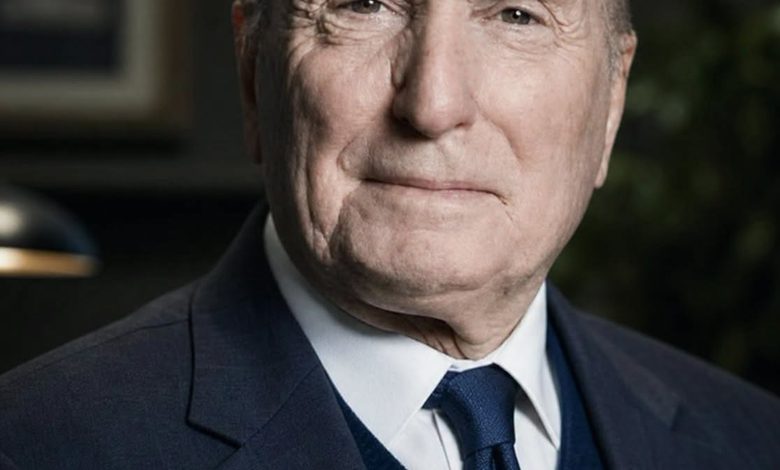
A black and white portrait shows an elderly man beside two dates, 1931 and 2026. His name, occupation, and personal history are not given. There is only a face and the narrow span of numbers used to represent nearly a century. The simplicity gives the image its weight because it asks viewers to imagine everything the dates cannot hold.
Someone born in 1931 entered a world profoundly different from the one he left. His childhood would have unfolded before television became ordinary in many homes, before commercial jet travel connected distant countries, and before a phone could carry photographs, maps, letters, and news in a pocket. He would have watched technology change from something mechanical and visible into a constant digital presence.
The same lifetime passed through war, reconstruction, economic upheaval, medical advances, political changes, and cultural revolutions. Letters that once took days or weeks became instant messages. Family photographs moved from carefully developed prints to thousands of images stored on screens. Music arrived first through radios and records, then tapes, discs, downloads, and streams. Each transition would have seemed astonishing before it became normal.
Yet a person’s deepest memories are rarely arranged around inventions or headlines. They are more likely to be the sound of a parent’s voice, the first home shared with someone loved, a child falling asleep on a shoulder, an argument later regretted, or a familiar seat at the dinner table. Public history explains the world around a life, but private moments explain why that life mattered.
The unknown man’s face therefore invites questions without providing answers. Who knew his laugh? Whose number did he remember without looking it up? What work made his hands tired? Which song carried him back to youth? What ordinary ritual did his family expect every morning? A photograph preserves appearance, but the people who lived beside him would remember movement, habits, humor, worries, and kindnesses no camera could capture.
Two dates can also disguise how uneven time feels. Childhood summers may seem endless, while later decades appear to pass quickly. A life of 95 years is not experienced as one long, smooth line. It is lived one morning at a time, through periods of waiting, celebration, grief, routine, illness, renewal, and surprise.
When someone dies, the public record becomes smaller just as the family’s emotional world becomes larger. Official documents may list a name, dates, and relationships. Those who remain carry far more: phrases the person repeated, recipes never measured, stories heard many times, and the sudden instinct to call before remembering there will be no answer.
The portrait does not need a dramatic biography to create that recognition. Looking at an unfamiliar face, people often think about their own parents, grandparents, partners, and friends. The image becomes a mirror for the fear that an entire inner world can eventually be reduced to a few lines. It also expresses the hope that love will preserve something richer than those lines.
Remembering a life does not require turning every day into a grand achievement. Most human value is created quietly, through being present, keeping promises, teaching, listening, caring, and returning to the same people year after year. Those acts seldom appear in historical timelines, but they form the stories families repeat.
Between 1931 and 2026 stood a person who saw the world reinvent itself and still lived through the intimate details common to every generation. The dates mark his arrival and departure. They do not contain him. Whatever his name, the serious face reminds us to look beyond the numbers and notice the voices, hands, memories, and relationships that make a lifetime impossible to summarize.