Rest in peace Died after father took his baby in his arms Civil Police Reconstruct the Fatal Fall
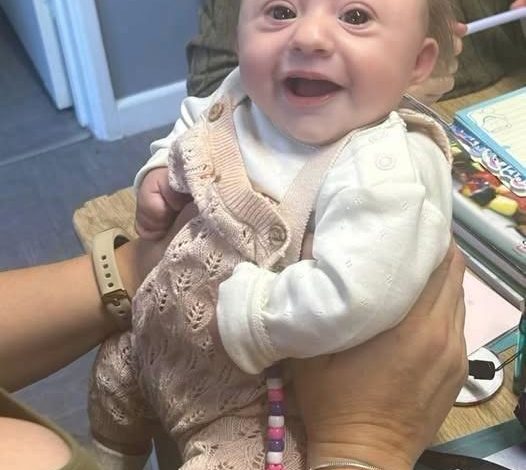
Neighbors woke to sirens and whispers, watching from behind curtains as the ambulance left without urgency, its lights still but its mission already over. Inside the modest home, a father faced the unthinkable: his baby gone after slipping from the very arms meant to protect him. Between shock and guilt, his version of events is now being dissected by investigators who must balance empathy with duty.
The questions now facing investigators cannot be answered by the strength of anyone’s grief. A father’s account must be considered alongside what relatives and other potential witnesses can establish. The Civil Police’s task is to determine what happened, including the circumstances before the child fell and the sequence that followed. Until that work is complete, a description of an investigation should not be mistaken for a finding about responsibility.
The loss itself is already certain within the family’s experience, even while its circumstances remain under examination. The contrast is painfully sharp. Investigators need an orderly account, with each recollection placed in relation to the others. Relatives are confronting an event that does not arrive in orderly pieces. Shock, sorrow, and the effort to understand can exist together without providing immediate answers to the questions officials must ask.
A baby depends on adults for protection in the most ordinary moments. That dependence makes the reported fall especially difficult to comprehend. The arms described as holding the child were also the place from which the child reportedly slipped. It is a detail that explains the anguish surrounding the case, but it cannot by itself establish why the fall happened. Exhaustion, an accident, and other possible circumstances must not be substituted for conclusions that investigators have not announced.
The report does not provide a completed official reconstruction. It does not establish that a particular theory has been proved, nor does it supply a final decision by authorities. That absence matters. People reading about the case may naturally search for an explanation that makes a devastating event feel understandable. Yet certainty supplied by speculation would do nothing to clarify the child’s death or the family’s situation.
As relatives and potential witnesses are heard, their information may help establish the sequence investigators are trying to understand. The purpose of that process is not to make grief smaller; no account of events can undo the loss. It is to separate what can be established from what remains a question. The family must live with the absence while that distinction is being worked out.
What remains is the death of a very young child and a father whose account is being examined. The case should not be turned into an accusation beyond what the investigation supports. The need for answers is real, but so is the need to wait for answers that rest on evidence rather than assumptions about a household already facing an irreversible loss.
As the Civil Police hear relatives and potential witnesses, the story is being rebuilt minute by painful minute. Was it an exhausted parent overwhelmed by responsibility, or were there overlooked details that changed everything? Official answers may take time, but the emotional verdict has already fallen on the family. In that house, every corner now echoes with absence, and a brief, fragile life has turned into a permanent, unanswered why.