Just Before His Final Goodbye, the Dog Did Something That Touched Everyone’s Heart
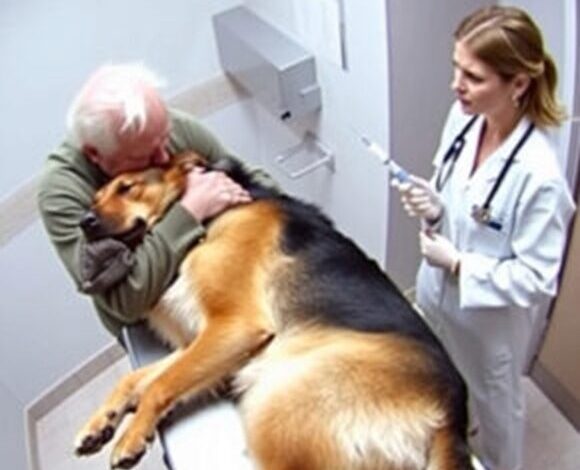
Leo’s chest rose and fell in shallow, uneven motions, each breath separated by a pause just long enough to make Artem’s heart stop.
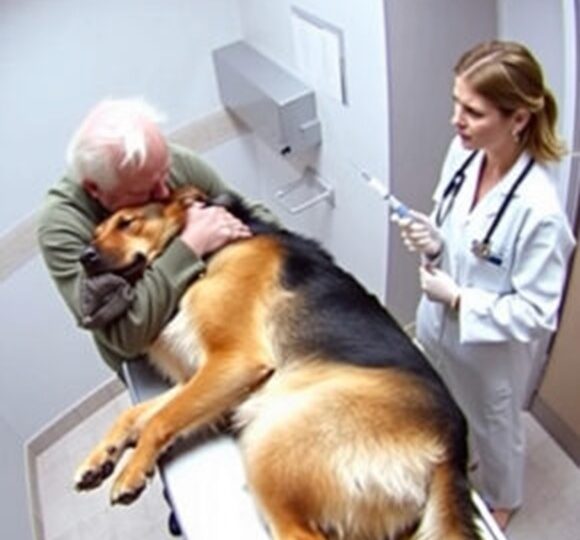
The small veterinary clinic was quiet except for the faint hum of fluorescent lights and the soft, rhythmic beeping of a monitor positioned near the stainless-steel examination table.
The scent of antiseptic lingered in the air, sharp and clean, contrasting painfully with the heaviness in the room. Leo lay on his side, a once-strong body now fragile beneath thinning golden fur. His muzzle, which had once been dark and vibrant, had faded to white over the years.
Arthritis had stiffened his joints. Illness had taken weight from his frame. Yet even in weakness, there was something unmistakably dignified about him.

Artem stood beside the table, one hand resting gently on Leo’s ribcage, feeling each fragile breath. For over twelve years, this dog had been his constant.
Through career changes, through the end of a long relationship, through quiet nights and long road trips, Leo had always been there. A steady presence. A living reminder that loyalty does not ask questions and love does not keep score.
The veterinarian, Dr. Elena Markovic, stood across from them, reviewing the chart one last time. She had explained the prognosis gently but clearly.
Leo’s condition—advanced heart failure complicated by age-related complications—had reached a point where treatment could no longer provide comfort. The goal now was dignity. Relief from suffering. A peaceful passing surrounded by the person he loved most.
Artem had nodded through her explanation, though the words had blurred together. He had known this day was coming. Leo had slowed noticeably over the past year.
Walks became shorter. Stairs became impossible. Food lost its appeal. But knowing something is inevitable does not make it easier when it arrives.
Dr. Markovic prepared the syringe with careful precision. The medication was designed to work quickly and painlessly. She had performed this procedure many times before. It was never easy, but it was often an act of compassion.
“Take your time,” she said softly. “You can talk to him.”
Artem leaned closer, his fingers brushing through Leo’s fur, tracing the familiar spot behind his ear that always made him relax. His voice trembled.
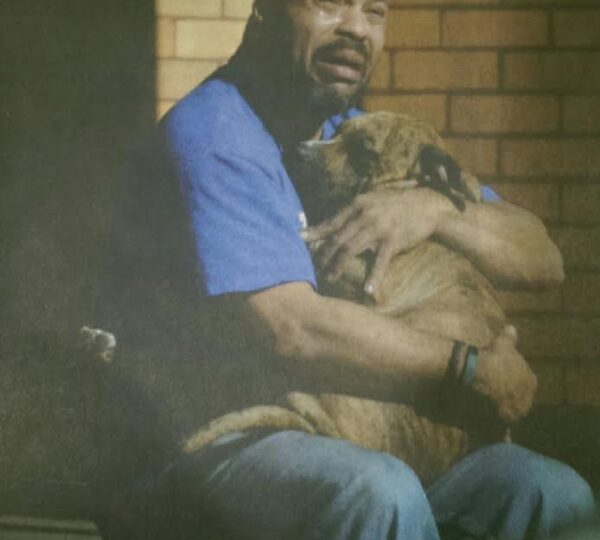
“You’ve been the best friend I ever had,” he whispered. “You know that, right?”
Leo’s breathing remained shallow, but his ears twitched faintly at the sound of Artem’s voice. Even now, he responded to it.
The veterinary assistant, Mia, stood quietly near the door, offering tissues and silent support. The room felt smaller than usual, as if grief itself had weight and mass.
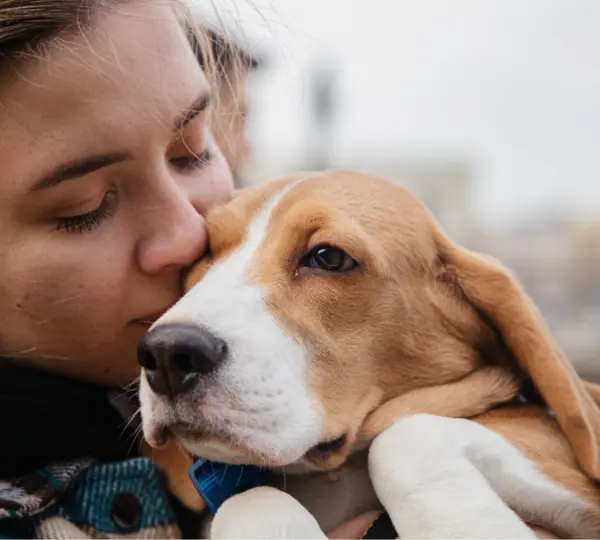
Artem bent down and pressed his forehead gently against Leo’s. “Thank you for every day,” he murmured. “For every morning you waited by the door. For every time you knew I needed you before I even said it.”
Dr. Markovic stepped forward slowly, syringe in hand. She reached for Leo’s catheter line.
And then something changed.
Leo’s next breath was deeper.
Not the fragile gasp they had grown used to over the past hour, but a full inhale that expanded his ribcage noticeably beneath Artem’s palm. Another breath followed—steadier. More rhythmic.
Dr. Markovic paused.
The monitor’s beeping shifted slightly, stabilizing instead of slowing.
Artem lifted his head. “Did you see that?” he asked, barely above a whisper.
Leo’s trembling stopped. The tension in his limbs softened, but not in the way of surrender. It was more like release—like a body finally settling after discomfort.
Then Leo opened his eyes.
They had been clouded for days, dulled by medication and exhaustion. Now they cleared, focusing with surprising sharpness. They found Artem’s face and held it.
The tail that had lain motionless gave a small, deliberate wag.
It was not strong. It did not thump loudly against the table. But it was unmistakable.
Mia took a step closer, her hand covering her mouth. “Oh my goodness,” she whispered.
Dr. Markovic quickly placed her stethoscope against Leo’s chest. She expected irregular weakness. Instead, she heard a steady heartbeat—slow but firm.
She checked his gums. Better color than before.
His breathing continued in a calm, even pattern.
“This is… unexpected,” she said carefully.
Veterinary medicine is grounded in science, in measurable indicators and clinical data. There are explanations for most physiological shifts.
Sometimes, animals experience temporary stabilization. Adrenaline can surge. The presence of a trusted person can reduce stress. Pain medication can take effect fully after a delay.
But this felt different.
Leo lifted his head slightly, something he had not done on his own in days.
Artem’s hands shook as he supported him. “Hey,” he said softly, tears streaming down his face. “You’re still with me.”
Leo’s eyes did not look distant. They looked present. Alert. Connected.
Dr. Markovic slowly lowered the syringe.
“I’m not going to proceed right now,” she said. “Let’s reassess.”
The heaviness in the room shifted. It did not disappear, but it transformed. Where there had been finality, there was now uncertainty—and with uncertainty came possibility.
Artem sank into the chair beside the table, gently guiding Leo’s head into his lap. He stroked his ears slowly, feeling warmth there. Real warmth.
Minutes passed.
Leo’s breathing remained steady.
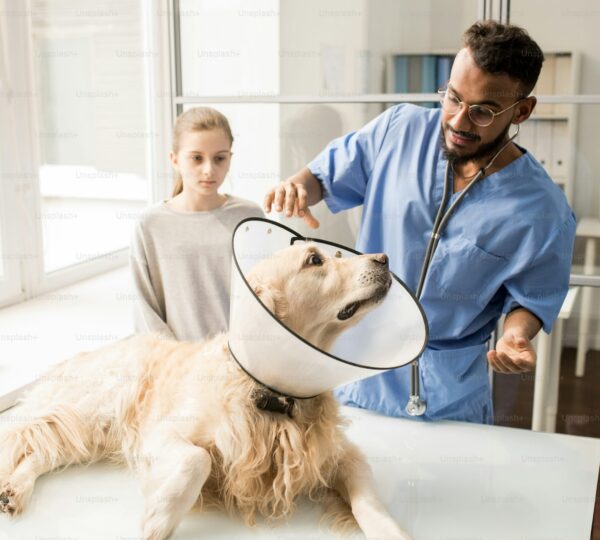
Dr. Markovic checked his vitals again. Heart rate stronger than an hour earlier. Oxygenation improved slightly.
“I can’t promise this means long-term recovery,” she said honestly. “But he’s not in immediate distress right now.”
Artem nodded, unable to speak.
For weeks, he had wrestled with guilt. Was he waiting too long? Was he holding on for himself instead of Leo? He had feared prolonging suffering. He had wanted to do the right thing.
Now, Leo seemed to be answering in his own way.
Not with dramatic strength. Not with sudden youth restored.
But with presence.
With clarity.
With one more look that said, “I’m here.”
Dr. Markovic removed the unused syringe and set it aside. “Let’s give him some time,” she said. “We can provide supportive care and see how he does over the next few hours.”
Mia dimmed the lights slightly, creating a softer atmosphere. The clinic, once poised for farewell, became quiet in a different way. Not the silence of ending, but the hush of careful observation.
Artem whispered memories as he stroked Leo’s fur.
“Remember the lake?” he said softly. “You hated the water at first. Then you wouldn’t come out.”
He laughed through tears.
“And the time you stole the turkey off the counter? I told everyone it was my fault.”
Leo’s tail gave another faint wag.
Perhaps it was coincidence. Perhaps it was reflex.
Or perhaps it was response.
The bond between a human and a dog is built over thousands of small moments—shared routines, silent understandings, comfort offered without words. Science can measure heart rate and oxygen levels. It cannot fully measure connection.
After an hour, Leo remained stable.
Dr. Markovic recommended bringing him home with adjusted medication and strict monitoring. “Sometimes,” she said gently, “animals rally. It can last hours. Sometimes days. Occasionally longer.”
Artem understood the subtext. This was not a guaranteed recovery. It was borrowed time.
But borrowed time is still time.
He carefully wrapped Leo in his favorite blanket and carried him to the car. The air outside felt different—cooler, sharper, alive.
At home, Leo rested in his familiar spot near the living room window. The place where he used to watch birds. Where he waited for Artem to return from work.
Over the next few days, Leo remained unexpectedly stable. He ate small amounts. He drank water. He even stood briefly with assistance.
There were still signs of illness. Fatigue lingered. His movements were slow. But the immediate crisis had passed.
Artem did not take a single moment for granted.
He worked from home. He slept on the floor beside Leo. He played soft music in the evenings. He spoke constantly—words of gratitude, of love, of thanks for every extra hour.
Eventually, as Dr. Markovic had warned, Leo’s condition began to decline again. This time, there was no sudden rally.
But there was something different.
When the final day came, it was peaceful.
Leo lay in his own bed, surrounded by familiar scents and sounds. Artem held him close. Dr. Markovic came to the house, providing comfort in a setting that felt safe.
There was no shock this time. No uncertainty.
There was readiness.
When Leo’s breathing finally slowed and stopped, it was gentle.
Artem wept, but his grief carried a different weight. It was no longer filled with doubt or unfinished words. He had been given a gift—the chance to move from desperation to gratitude. The chance to say goodbye without panic.
In the weeks that followed, Artem often thought back to that moment in the clinic. The deep breath. The clear eyes. The soft wag.
There are medical explanations for temporary stabilization at the end of life. The body can rally briefly. Stress hormones can surge. Familiar voices can calm a struggling heart.
But explanations do not diminish meaning.
What happened in that room was not magic. It was not a defiance of science.
It was a reminder that life, even near its end, can still hold surprise.
Leo did not return from death. He returned from the edge long enough to give his best friend something invaluable: time.
Time to shift from fear to acceptance.
Time to transform goodbye into gratitude.
Years later, Artem would still speak of Leo—not with the sharp pain of that first day at the clinic, but with warmth. He would remember the lake, the stolen turkey, the quiet mornings.
And he would remember that breath.
That steady rhythm that changed everything.
Sometimes love does not stop loss.
But sometimes, just before goodbye, it creates space.
Space for peace.
Space for presence.
Space for one final look that says everything words cannot.
And in that space, even grief feels softer.
Even endings carry grace.
Because sometimes, love is not about preventing goodbye.
It is about making sure it is filled with meaning.