A tragic accident claims 9 lives, including our dearly loved singer…
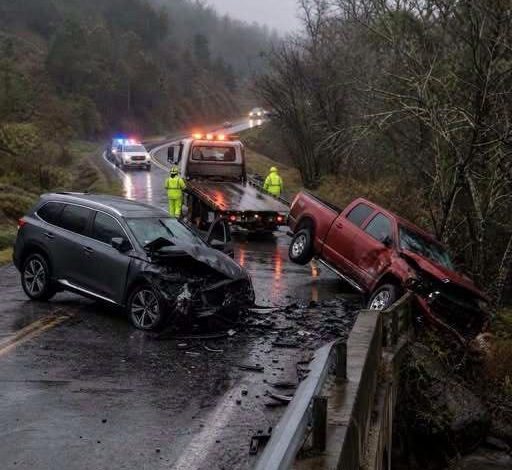
The screams were swallowed by the darkness. On a remote stretch of BR-251, a van carrying workers home collided head-on with a heavy truck, and within seconds, families were torn apart. Nine people, including a child, would never make it home. What began as an ordinary journey ended in twisted metal, rain, darkness, and a desperate rescue operation that continued under some of the most difficult conditions imaginable.
At kilometer 446 of BR-251, near the rural community of Barrocão in Grão Mogol, a van carrying workers back toward Ceará collided violently with an empty heavy-haul truck traveling in the opposite direction toward Rio Grande do Sul. The force of the impact sent both vehicles off the roadway and into difficult terrain, making an already devastating crash even harder for rescuers to reach.
The darkness and rain turned the scene into a race against time. Firefighters, SAMU emergency medical teams, federal highway police, and forensic personnel worked together to reach the victims trapped inside the crushed vehicles. With twisted metal blocking access, rescuers relied on hydraulic tools to carefully cut through the wreckage, trying to free those who were still alive while recovering those who had died.
The scale of the tragedy quickly became clear.
Nine people inside the van died at the scene, including a child. Eight others were injured, among them another child and a man whose condition was considered critical. The two occupants of the heavy truck survived with minor injuries, but the devastation surrounding them was immense.
For the rescuers, every minute mattered. They had to navigate the damaged vehicles, difficult terrain, darkness, and rain while trying to determine the safest way to reach those trapped inside. The sound of emergency equipment cutting through metal replaced the voices that had filled the road only moments earlier.
As the rescue operation continued, investigators began the difficult task of determining exactly what caused the collision. Tire marks, weather conditions, the condition of the roadway, and its design would all become part of the investigation. Every detail could potentially help explain how two vehicles ended up meeting in such a catastrophic way.
But for the families involved, explanations cannot undo what happened.
The crash once again draws attention to the dangerous reputation of BR-251, a highway that has become associated with the grim nickname “road of death.” Heavy traffic, dangerous curves, fragile infrastructure, and long-standing concerns over improvements have contributed to fears about safety along parts of the route. Political delays and infrastructure problems can seem distant when discussed in reports, but on a night like this, their consequences become painfully human.
Behind every number in the accident report is a person who had a home, a family, plans for the future, and someone waiting for them to return.
For nine families, that wait ended in devastating news.
For the injured, recovery may bring a long road of its own. For the children who survived, the memory of that night may remain for years. And for the rescuers who worked through the darkness, the images of twisted metal and desperate efforts to save lives will not easily disappear.
The investigation may eventually provide answers about how the collision happened. But the families left behind are waiting for something more than answers.
They are waiting for a reason to believe that the next journey along BR-251 will not end the same way.
Because statistics can describe a dangerous highway.
They cannot describe the empty seats waiting at home.