She Thought It Was Just a Sore Throat Five Days Later Her Life Was Gone
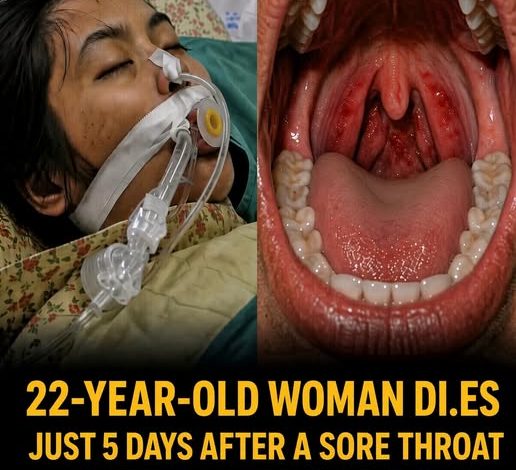
What first appeared to be an ordinary sore throat became a devastating medical emergency within only five days. The 22-year-old at the center of the story initially experienced symptoms that many people would connect with a cold or a routine throat infection. There was soreness, discomfort when swallowing and the expectation that rest would make it pass.
Instead of improving, her condition worsened rapidly. The pain intensified, her energy disappeared and the illness began affecting far more than her throat. By the time it became clear that this was not a minor infection, the situation had already become critical. Despite efforts to save her, she lost her life only days after the first symptoms appeared.
The speed of the decline shocked everyone around her. Sore throats are extremely common and are often caused by viral illnesses that resolve without serious treatment. That familiarity can make it difficult to recognize the rare occasion when a similar symptom is the beginning of a dangerous infection or complication.
A severe bacterial infection can sometimes spread beyond its original location. In unusual cases, inflammation and swelling can interfere with breathing or swallowing, while an infection entering the bloodstream can trigger a life-threatening response throughout the body. Conditions that start with familiar discomfort may therefore demand urgent attention when they change quickly or are accompanied by more serious signs.
The important detail in this case was not simply that her throat hurt. It was that the symptoms became severe and continued getting worse over a very short period. Difficulty breathing, an inability to swallow, drooling because swallowing is impossible, a high-pitched sound while breathing or signs of severe dehydration should never be treated as routine. A very high fever, confusion, dizziness, extreme weakness or rapidly increasing swelling can also indicate that immediate medical assessment is needed.
Friends and relatives may be tempted to encourage someone to sleep, drink warm fluids or wait another day. Those measures can bring comfort during a mild illness, but they are not substitutes for emergency care when breathing, swallowing or consciousness is affected. A sudden decline is itself a warning sign.
Her death left a community struggling to understand how a symptom associated with so many harmless illnesses could lead to such a terrible outcome. The tragedy is not a reason to panic over every scratchy throat. It is a reason to pay attention to the full pattern of an illness rather than the name of its first symptom.
Most sore throats do not become life-threatening. Still, the body can signal when something is moving beyond the ordinary. Pain that becomes unbearable, swelling that progresses, breathing or swallowing trouble, unusual drowsiness or confusion, and severe symptoms that worsen quickly deserve immediate action.
Only five days separated the first discomfort from an unimaginable loss. Her story remains a painful reminder that rapid deterioration should never be ignored and that seeking help early can matter when a seemingly simple illness begins behaving in a frightening way.
Listening to those changes is crucial, especially when the illness no longer follows the course anyone expected.