My toddler woke up with these tiny red bumps clustered all around his ankles The nurse line is completely busy and he keeps scratching them What is this
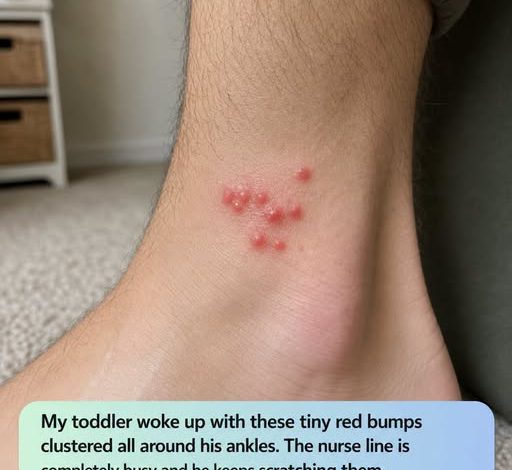
When a toddler wakes with clusters of angry red bumps circling the ankles, it is rarely random. Fleas love low targets: bare feet, thin socks, loose pajama cuffs. That tight grouping of tiny, intensely itchy spots—often in 2s and 3s—paired with any pet or carpet exposure makes flea bites a very realistic suspect. The good news: they are usually more dramatic than dangerous, and you can start helping tonight.
Begin with comfort and protection: gentle washing, cool compresses, short nails, and a doctor-approved anti-itch cream on intact skin. Then shift quickly to the source. Comb pets over a white towel, vacuum daily for a bit, and wash bedding on hot. If the rash spreads strangely, your child seems unwell, or the story simply does not fit, trust that instinct and call a clinician. You are not overreacting; you are making sure a simple bite story is not hiding something more.
A photograph or a short description cannot confirm flea bites. Similar-looking bumps can have different causes, and the child’s overall condition matters as much as their location. The suggestion in the opening paragraphs is a possibility, not a diagnosis. If you cannot reach the usual nurse line, use another local medical advice service or urgent care rather than relying on a social-media comparison.
While arranging advice, note when the marks first appeared and whether more are developing. Tell the clinician about fever, pain, swelling, recent travel, new skin products, and any exposure you have actually observed. A clear photograph can help document changes, but it should support a conversation with a professional rather than replace one. Avoid assuming a pet is responsible simply because the spots are near the ankles.
NHS guidance advises seeking further help when symptoms worsen or signs of infection develop. A pharmacist or clinician can advise which products are suitable for the child’s age. Do not apply an adult treatment or use several creams together just because the itching is distressing. Follow the instructions for the particular product and the advice you receive.
Breathing difficulty, sudden swelling of the mouth or throat, fainting, or a child becoming limp or unusually unresponsive require emergency help. Do not wait for a callback in that situation. If the child otherwise seems well, gentle washing and a cool compress may offer comfort while you obtain appropriate advice. Try to limit scratching, which can damage the skin.
Household observations can be useful, but they are not a reason to spray insecticide around a child without proper instructions. Keep any pest-control products away from skin, bedding, and belongings unless the label specifically permits that use. A suspected environmental cause should be investigated separately from the child’s immediate care.
The goal is not to identify every possible rash at home. It is to keep the child comfortable, recognize when help is urgent, and give a clinician enough information to assess the problem. Online articles can explain possibilities; they cannot examine your child or guarantee that a rash is harmless.
When in doubt, describe the symptoms to a qualified health professional.