Taylor Swift admits that she tested positive for See more beauty
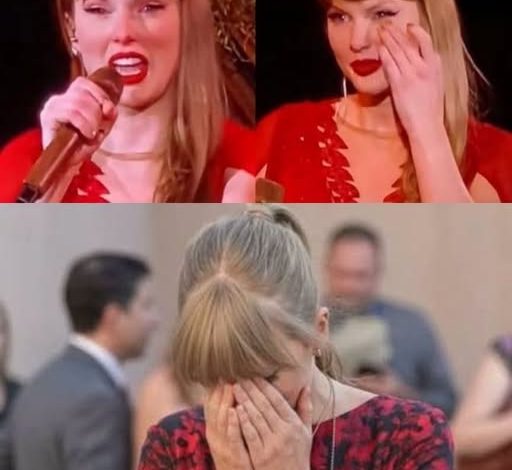
Taylor Swift admits that she tested positive for… See more…
Why Are Fans Suddenly Concerned? The Story Continues to Unfold
Fans Await Answers as Unverified Claims About Taylor Swift Spark Widespread Concern
A wave of concern has swept across social media after posts circulating online claimed that people close to Taylor Swift had shared a troubling message about the singer’s well-being. Within a short period of time, the story attracted enormous attention, prompting fans around the world to ask the same question: What exactly is going on?
The answer, at least for now, remains unclear.
While the circulating posts have generated emotional reactions and widespread speculation, the specific health claims at the center of the discussion have not been broadly verified through authoritative public statements. That distinction is important, especially when dealing with sensitive information involving someone’s health.
What is undeniable, however, is the scale of the reaction.
From longtime fans sharing supportive messages to social media users urging others not to spread unconfirmed information, the situation has become another example of how quickly a few lines of text can turn into a global conversation.
Important note: The claims discussed in this article originated from material circulating online and should not be treated as confirmation that Taylor Swift has experienced a medical emergency or serious health problem. This article examines the public reaction, the spread of the claims, and why verification matters when stories about a celebrity’s health begin circulating.
A Short Message Can Create a Huge Reaction
The controversy began when posts referencing an alleged statement from people described as being close to Swift started gaining attention online.
The wording presented in those posts was relatively limited. Rather than offering detailed information about a diagnosis, treatment, or specific medical event, the material reportedly focused on themes such as care, privacy, stability, and recovery.
That lack of detail may actually have contributed to the intense reaction.
When people receive only a small amount of information about someone they care about, they naturally try to fill in the missing pieces. In the age of social media, however, those attempts can happen publicly and at enormous scale.
One person asks a question. Another offers a theory. Someone else repeats that theory without its original context. Within hours, speculation can begin to resemble established fact even though no new evidence has appeared.
That pattern appears to be a major reason the story attracted so much attention.
Fans encountering the posts were left with far more questions than answers. Was the statement authentic? What situation was it referring to? Was there actually a health issue? Was the wording being interpreted correctly? Had any representative confirmed it?
Without reliable answers, uncertainty quickly became the dominant theme of the conversation.
Why Taylor Swift News Travels So Quickly
Taylor Swift is not simply a successful recording artist. She is one of the most recognizable figures in global popular culture, with an enormous international fan community that follows everything from her music releases and performances to interviews and public appearances.
That level of visibility means even a vague rumor can attract extraordinary attention.
For devoted fans, the relationship with an artist can extend far beyond listening to songs. Music often becomes attached to memories: a first relationship, a difficult breakup, a family experience, a period of personal growth, or an important transition in someone’s life.
As a result, news suggesting that a beloved artist might be experiencing a difficult situation can feel surprisingly personal to fans.
This helps explain why so many reactions to the circulating posts were emotional.
Some people immediately expressed concern. Others shared messages wishing Swift well. Many fans reminded one another to respect her privacy. And another group focused on a different issue entirely: whether the story should be shared at all before its central claims were independently verified.
Those competing reactions quickly turned the original story into a broader discussion about celebrity, privacy, social media, and misinformation.
Online Reactions Intensify
As the discussion expanded, posts about Swift appeared across multiple online communities.
Some fans shared simple messages of encouragement. Others wrote about what her music had meant to them over the years. Many expressed hope that she was surrounded by people she trusted, regardless of what the actual circumstances might be.
The emotional tone was understandable. When a public figure has been present in popular culture for years, fans can develop a strong sense of familiarity with that person.
But alongside those supportive reactions came repeated calls for caution.
Users began reminding others that screenshots, reposts, cropped images, anonymous accounts, and unattributed statements are not necessarily reliable evidence.
That message became increasingly important as different versions of the story circulated.
How Uncertainty Turns Into Speculation
Stories involving celebrity health are particularly vulnerable to misinformation because they combine three powerful ingredients: public interest, emotion, and incomplete information.
When those ingredients come together, speculation can spread faster than verification.
Imagine that an original post simply says someone is “receiving care.” One user may interpret that as meaning the person is sick. Another may assume hospitalization. A third may attach an unrelated photograph. By the time the information reaches thousands of additional people, the version being shared can look dramatically different from the original claim.
This doesn’t necessarily mean everyone sharing the story intends to mislead others.
Often, people simply repeat information because they believe someone else has already verified it.
But repetition does not transform a claim into evidence.
A rumor seen 100,000 times remains a rumor unless reliable information supports it.
That is especially important when discussing health. Medical information is deeply personal, and even celebrities do not owe the public immediate explanations about every aspect of their private lives.
The Difference Between Concern and Confirmation
There is nothing unusual about fans feeling worried when they encounter alarming information about someone they admire.
Concern is an emotional response.
Confirmation, however, requires evidence.
Keeping those two ideas separate is one of the most important ways to navigate viral stories responsibly.
Someone can say, “I hope Taylor is okay,” without asserting that something terrible has happened. Likewise, a fan can express support while acknowledging that the underlying reports remain unverified.
This approach allows people to respond with empathy without unintentionally amplifying misinformation.
👉 Please click the Continue Reading button below to keep reading.
CONTINUE READING
📖
Recently Viewed
Taylor Swift admits that she tested positive for… See more…
⏱️ Just read
Jennifer Lopez’s Emotional Family Journey: A Mother’s Love Through Every Challenge
⏱️ 1 hours ago
Which Couple Is The Happiest? Your Choice Reveals Your True Personality
⏱️ 1 hours ago
Sad Black Girl Married to a 70-Year-Old Man—10 Days Later She Uncovered a Hidden Truth That Changed Everything
⏱️ 1 hours ago
Love Beyond Expectations: The Unusual Couple Challenging Society’s Assumptions
⏱️ 1 hours ago