Communities Stay Alert as Severe Weather Concerns and Other Major News Events Draw Public Attention
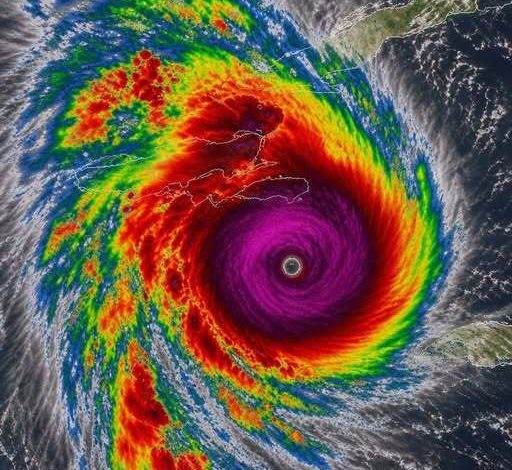
Communities are being tested on all fronts, and nothing feels entirely safe anymore.
A monster storm spins closer as families watch its projected path shift across glowing screens. A school bus never completes an ordinary journey home. And somewhere behind sealed doors, diplomats weigh words that could preserve a fragile peace—or send another region spiraling back toward violence.
Sirens rise.
Phones vibrate.
Televisions remain on long after midnight.
And families hover over every update, knowing that sometimes one warning, one phone call, or one decision can change everything.
Along the coastline, preparation has become a quiet choreography of fear and determination.
Families tape windows, move patio furniture indoors, charge flashlights, fill containers with water, and pack medications into emergency bags. Parents check evacuation routes while children watch the adults around them for clues about how frightened they should be.
Everyone hopes for the same thing.
A turn.
A weakening.
A last-minute shift that sends the worst of the storm somewhere else.
But waiting carries its own exhaustion.
Every new forecast brings another calculation: stay or leave, prepare or evacuate, sleep or keep watching.
Hundreds of miles away, another community has already experienced the moment everyone fears.
In Talladega County, an ordinary day fractured into a permanent before and after when a school bus journey ended in catastrophe.
What had begun as routine became twisted metal, flashing emergency lights, frantic phone calls, and hospital corridors.
For families, minutes stretched into hours.
Names had to be confirmed.
Parents waited for information.
Doctors and emergency crews worked while loved ones clung to whatever hope remained.
And amid the shock came that complicated emotion disaster so often leaves behind—the enormous relief that some lives were spared, existing beside unbearable grief for what could not be undone.
Yet tragedy rarely belongs only to the people directly involved.
It spreads through communities.
Neighbors appear with food.
Churches open their doors.
Casseroles arrive on porches.
Blankets are folded in waiting rooms.
Someone brings coffee to a family that hasn’t slept.
Someone else quietly places a hand on a shaking shoulder because there are moments when language simply isn’t enough.
Meanwhile, half a world away, another kind of emergency unfolds without sirens.
Negotiators sit inside secure rooms, bending over documents and arguing over individual words.
Borders.
Guarantees.
Prisoners.
Weapons.
Timelines.
Ceasefires.
The language can sound technical and distant, but the consequences are anything but abstract.
One agreement can mean families sleeping without explosions outside their windows.
One collapse can mean another night spent underground.
The people making those decisions may never meet the civilians whose lives depend on them, yet every sentence can ripple outward into homes, hospitals, schools, and shelters.
That is what makes moments like these feel so overwhelming.
The threats are different, but the uncertainty is familiar.
A storm doesn’t negotiate.
An accident doesn’t wait.
And peace can sometimes depend on people agreeing before patience disappears.
Still, beneath the fear, something else continues to surface.
People help.
They open homes.
They donate supplies.
They sit beside hospital beds.
They check on elderly neighbors.
They call relatives they haven’t spoken to in months.
They keep watching, hoping, preparing, and caring even when the constant stream of bad news makes caring feel exhausting.
Perhaps that is the part no breaking-news banner can fully capture.
Disaster reveals vulnerability, but it also reveals connection.
Between storms, accidents, hospital rooms, and fragile ceasefires, people keep reaching for one another.
Not because they know everything will be okay.
Sometimes it won’t be.
They do it because when circumstances become frightening and unpredictable, community becomes one of the few things people can still control.
The screens will keep glowing.
The forecasts will change.
Negotiations will continue.
Families will wait for calls they desperately hope bring good news.
And through all that uncertainty, one quiet promise remains: