BARRETT “BEAR” WALSH WAS ONLY 2 — BEHIND THE MURDER CASE IS A JOYFUL LITTLE BOY WHO NEVER GOT THE CHANCE TO GROW UP
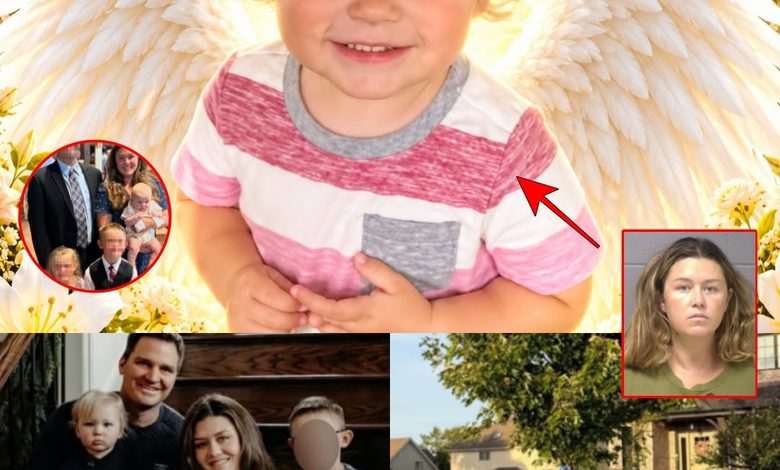
Barrett Mark Walsh was only two years old when his life ended inside the home where he should have been safest. To the public, his name would soon become attached to a deeply disturbing murder case involving his own mother, but to the people who loved him, he was simply “Bear,” a joyful toddler with a smile that could brighten a room. He loved singing, dancing, playing with his siblings and turning ordinary moments into the kind of memories his family never imagined would become so precious.
Barrett was born on March 26, 2024, and had barely begun discovering the world around him when he died on September 1, 2026. His obituary remembers him not through the circumstances of his death, but as a “joyful, funny, entertaining, rambunctious 2-year-old” who brought energy everywhere he went. Those words offer a very different picture from the grim court documents that would later describe the final hours of his life.
On the afternoon of September 1, police were called to the Walsh family home in Frankfort, Illinois, shortly after 4 p.m. following a report of an unresponsive child. Inside the residence, authorities encountered a scene that would quickly become the focus of a homicide investigation. Barrett had been discovered in the basement, where prosecutors say he had been suspended from a rafter with a ligature around his neck.
A neighbor had reportedly found Barrett and immediately tried to save him, removing the ligature and beginning CPR while emergency help was summoned. When police officers arrived, they continued lifesaving efforts before the little boy was transported to a hospital. Despite those desperate attempts, Barrett could not be revived and was pronounced dead.
The medical findings would later provide a devastating explanation for how the toddler died. According to the criminal complaint, Barrett’s cause of death was asphyxia due to ligature compression of the neck. Prosecutors subsequently accused his mother, Corie A. Walsh, of intentionally causing the injuries that killed him.
Corie was charged with three counts of first-degree murder, all arising from Barrett’s single death but reflecting different legal theories under Illinois law. The charges are accusations, and Corie is entitled to the presumption of innocence unless prosecutors prove the case against her in court. But the allegations presented during the early proceedings have revealed a disturbing account of what investigators believe happened inside the Walsh home.
Authorities said Corie was found elsewhere in the residence after Barrett was discovered. Prosecutors alleged that she was in the master bathroom, fully clothed in a bathtub, and had injuries that authorities believed were self-inflicted. She was taken for medical treatment before eventually being transferred into custody as investigators continued piecing together the events surrounding her son’s death.
Court proceedings have focused not only on what allegedly happened to Barrett but also on Corie’s mental state before and during the incident. Prosecutors have alleged that she made disturbing statements indicating that she believed Barrett was the “devil” or “anti-Christ.” Her defense attorneys, however, have argued that those statements were evidence that she was experiencing a severe psychotic episode rather than thinking rationally.
That issue is likely to become one of the most closely examined aspects of the case as the criminal proceedings continue. A defense assertion that someone experienced psychosis is not itself a judicial finding, nor does it automatically determine criminal responsibility under Illinois law. Ultimately, the court process will have to address the evidence surrounding both Barrett’s death and Corie’s mental condition at the relevant time.
Investigators also learned that Corie had reportedly been closely following another nationally publicized criminal case in the hours before Barrett died. Prosecutors said witnesses described her as being “very invested” in the Lindsay Clancy trial, involving a Massachusetts mother accused of killing her children. According to court reporting, Corie had been discussing that case with friends in group messages earlier on the same day Barrett was found.
Those details attracted considerable public attention because Corie’s defense later raised claims involving psychosis. But another defendant’s criminal case cannot by itself explain why Barrett died or establish Corie’s mental state when her son was killed. The evidence in Barrett’s case must ultimately stand on its own, based on witness statements, medical findings, digital records, expert testimony and whatever additional evidence prosecutors and defense attorneys present.
At a September 8 detention hearing, Will County Judge Amy Bertani was asked to decide whether Corie should remain in custody while the case moved forward. After considering the evidence presented at that stage, Bertani ordered her detained, finding that prosecutors had met the legal standard required for pretrial detention. The judge also cited concerns about potential danger to Corie’s husband and surviving children.
The ruling did not determine whether Corie was guilty of murdering Barrett. Pretrial detention proceedings address whether a defendant should remain in custody while awaiting further court proceedings, not whether prosecutors have proved guilt beyond a reasonable doubt. The criminal case therefore continues, with the most consequential legal questions still unresolved.
Yet behind every court filing, hearing and argument over mental state is a two-year-old child whose identity risks being overshadowed by the circumstances of his death. Barrett was not merely the victim named in a murder complaint. His obituary describes a little boy with favorite songs, favorite games, siblings he adored and an unmistakable personality already emerging during his short life.
His family affectionately called him “Bear.” The nickname accompanied a toddler remembered as energetic, playful and endlessly entertaining, the kind of child whose presence could transform an ordinary family room into his own stage. He apparently needed little encouragement to sing, dance or find another game to play.
Music was one of the things that brought Barrett joy. His obituary says he loved singing and dancing along to Super Simple Songs and watching Ms. Rachel, familiar favorites for countless toddlers learning words, movements and melodies. Those simple childhood routines are now among the memories his relatives are left to preserve.
Barrett was also learning his colors with Pinkfong and Hogi. At two years old, every new word and every newly recognized color represented another tiny milestone in a childhood that was still unfolding. His family should have had years to watch those small achievements grow into bigger ones.
He loved kicking a soccer ball with his friends, an activity that captured the restless energy described in his obituary. There was no way to know whether soccer would remain one of his passions as he grew older or simply become one of countless interests explored during childhood. Barrett never received enough time for his family to find out.
He was beginning to count aloud through “Five Little Duckies,” turning another children’s song into an opportunity to learn and entertain the people around him. He also loved bedtime stories, one of those ordinary rituals that rarely feels extraordinary until the child waiting to hear the story is suddenly gone. The books remain, but the little boy who listened to them is no longer there.
Barrett apparently had a generous relationship with Oscar as well, especially when treats were involved. His obituary jokes that Bear enjoyed feeding Oscar perhaps a few too many treats, a tiny detail that reveals far more about his personality than any court document could. It is the sort of family memory that might once have produced laughter and now carries an entirely different emotional weight.
Then there was “Ready, Set, Go,” a game Barrett loved playing with his older siblings, Grady and Anna. For a two-year-old, older siblings can be playmates, teachers, protectors and the people a toddler tries endlessly to follow around the house. Barrett’s death means Grady and Anna must now grow up carrying memories of a little brother who was supposed to grow alongside them.
Barrett was also a big brother himself. His family described him as the caring older brother of baby Cormick, affectionately known as “Baby Mickey.” At only two, Bear had already occupied both roles in the family — the younger sibling looking up to Grady and Anna and the older brother with a baby beneath him.
Those relationships make the scale of the loss impossible to capture through the language of criminal proceedings. A murder complaint can describe an alleged act, an autopsy can establish a cause of death and a judge can rule on detention, but none of those documents can measure what happens when one child’s place in a family suddenly becomes empty. His siblings will experience birthdays, holidays and milestones that Barrett should have shared with them.
His extended family faces that absence as well. Barrett was a grandson, nephew and cousin surrounded by relatives who expected to watch him move through childhood, adolescence and eventually adulthood. Instead, their memories of him stop permanently at age two.
One of the most personal details included in Barrett’s obituary is his “good-bye dance.” His family said Bear performed that dance with joyous perfection, transforming even the simple act of saying goodbye into something memorable. No one watching him perform it could have imagined how painfully significant the idea of goodbye would soon become.
After Barrett’s death, his family was forced to do something no family expects to do for a two-year-old: plan a funeral. Instead of choosing preschool activities, buying new clothes as he grew or preparing for another birthday, they had to make arrangements to lay him to rest. Barrett’s funeral services gave relatives and loved ones an opportunity to say a permanent goodbye to a child who had barely begun his life.
His family requested that memorial donations be made in Barrett’s name to Make-A-Wish Illinois. The choice created a way for Bear’s memory to be connected with efforts to bring joy to other children and families facing extraordinarily difficult circumstances. It also shifted attention, even briefly, away from the violence surrounding his death and back toward the child his relatives wanted people to remember.
That distinction matters because Barrett’s story has understandably become dominated by the criminal allegations against his mother. Headlines focus on murder charges, disturbing statements, the basement scene and questions about Corie’s mental state. Those are important parts of the legal case, but they are not the entirety of Barrett’s life.
He had existed before the police cars arrived outside his home. He had danced to children’s songs, kicked soccer balls, listened to bedtime stories and played games with his brother and sister. He had learned colors, practiced counting and developed the funny little routines that families assume they will have years to watch evolve.
Then, in a matter of hours, his life became the subject of an investigation. Detectives began collecting evidence, prosecutors prepared allegations and attorneys began debating how the law should interpret the events inside the Walsh home. Barrett himself could no longer tell anyone what happened.
That responsibility now belongs to investigators, medical experts and the courts. Prosecutors must prove their allegations with evidence, while Corie’s defense attorneys have the right to challenge the state’s case and present evidence concerning her mental condition. The eventual legal outcome must be determined through that process rather than through public reaction to the disturbing allegations.
The distinction is especially important because the case involves claims of severe mental illness. Defense attorneys have described Corie as experiencing a psychotic episode, while prosecutors have presented statements and circumstances they say support the murder charges and continued detention. Determining the legal significance of any psychiatric evidence will require professional evaluations and judicial proceedings, not speculation based solely on the unusual statements attributed to her.
None of that uncertainty changes what has already been medically established about Barrett. He died from asphyxia caused by ligature compression of his neck, and his death resulted in his mother being charged with first-degree murder. What remains for the justice system to determine is criminal responsibility under the evidence and applicable law.
For Barrett’s surviving siblings, however, the legal process cannot provide the one outcome they would want most. No verdict can return Bear to the games he played with Grady and Anna or allow him to grow into his role as Baby Mickey’s big brother. Whatever happens in court, their family structure has been permanently changed.
The same is true for Barrett’s father and extended relatives. They must mourn a child while simultaneously watching intimate and painful details surrounding his death become part of a public criminal proceeding. The boy they knew through laughter, songs and everyday family life is now known to strangers largely because of the worst thing that ever happened to him.
That is why Barrett’s obituary carries particular importance. It restores details that cannot be found in charging documents and reminds readers that the victim at the center of the case had a personality entirely separate from the allegations against his mother. Bear was described not by how he died, but by how enthusiastically he lived during the short time he was here.
He was joyful. He was funny. He was entertaining and rambunctious, a toddler whose smiling face could light up a room and whose “good-bye dance” apparently became one of his signature performances.
Those memories will have to carry his family through years Barrett himself never received. His older siblings will continue growing, Baby Mickey will eventually become older than the big brother he may know largely through photographs and stories, and his parents and relatives will mark birthdays that should have represented another year of Bear’s life. Time will continue moving even though Barrett’s childhood stopped permanently in September 2026.
The criminal case against Corie Walsh will continue moving as well. Future hearings may provide additional evidence about the hours preceding Barrett’s death, Corie’s behavior, her communications and the mental-health arguments raised by her defense. Some questions that currently remain disputed may eventually receive answers in court.
But even the most detailed trial cannot reconstruct the future Barrett lost. It cannot show what he would have looked like on his first day of school, what sports he might have loved, what music he would have listened to as a teenager or what relationship he would have developed with his brothers and sister. Those possibilities disappeared with a little boy who had lived for only two years.
That may ultimately be the most devastating part of Barrett Walsh’s story. The public knows how his life ended because court documents describe the scene in painful detail, yet his family is left imagining everything that should have happened afterward. Every ordinary childhood milestone that most families take for granted became something Bear would never experience.
As prosecutors pursue the murder case and defense attorneys prepare their response, Barrett deserves to remain at the center of the story. He was not merely evidence in a criminal proceeding, nor simply the two-year-old victim described in headlines about his mother. He was Barrett Mark Walsh — “Bear” — a little brother, a big brother, a grandson, nephew, cousin and deeply loved child.
He loved Super Simple Songs and Ms. Rachel, learned colors with Pinkfong and Hogi, kicked soccer balls and listened to bedtime stories. He counted along to “Five Little Duckies,” apparently spoiled Oscar with treats and raced into “Ready, Set, Go” with his siblings. And when it was time to leave, Bear had his own joyful way of saying goodbye.
This time, however, the goodbye became permanent. Barrett’s family laid him to rest carrying memories of a smiling, dancing, rambunctious two-year-old whose life ended before almost all of it had the chance to happen. As the courts determine what justice means in the case surrounding his death, the people who loved Bear are left holding onto the little moments that remind them who he was before tragedy made his name known to the world.