The Whole Neighborhood Warned Us About the Father Raising 7 Kids Alone—But We Had No Idea Why
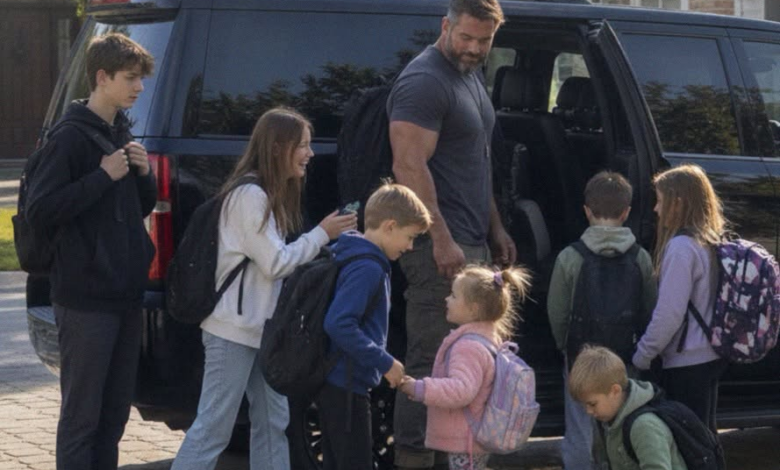
Every morning at exactly 5 a.m., a silver whistle echoed through our neighborhood.
Then seven children would line up in their backyard.
Their father, David, would inspect them before assigning chores.
Laundry. Cooking. Repairs. Cleaning.
No arguing. No laughing.
Just silence.
The neighbors warned us about him.
“He runs that house like a prison.”
“He never hugs those kids.”
“He’s raising them like soldiers.”
I believed them.
Then one afternoon, David collapsed.
What happened next changed everything.
The children immediately followed a plan.
One called 911.
Another grabbed an emergency medical kit.
Another unlocked the gate.
The oldest girl, Emma, checked her father’s breathing.
Nobody panicked.
Nobody asked what to do.
They already knew.
When paramedics arrived, one of them looked at Emma.
“You’ve done this before?”
She nodded.
“Three times.”
Then I saw the medical folder she was carrying.
Inside were emergency plans, medication lists—and David’s diagnosis.
Stage IV pancreatic cancer.
He had been diagnosed nine months earlier.
Suddenly, all those strange routines made sense.
The whistles.
The chores.
The emergency drills.
The lessons about cooking, bills, medicine, and calling 911.
David wasn’t training his children to obey him.
He was preparing them for a life without him.
That evening, he showed me a black notebook.
It wasn’t a diary.
It was a lesson plan.
“Emma cooks dinner alone — passed.”
“Noah changes a flat tire — practice again.”
“Lily calls emergency services without crying — passed.”
“Ben remembers our address — passed.”
Then I reached the final page.
Only one sentence was written:
“The goal isn’t to make them need me forever. It’s to make sure they won’t need anyone when I’m gone.”
I couldn’t stop crying.
David looked toward his seven children.
“I’ve spent nine months trying to replace myself.”
Then he whispered:
“I forgot to teach them they wouldn’t be alone.”
That was the moment the neighborhood changed.
The electrician started teaching the boys repairs.
A nurse began helping with medical needs.
A retired accountant taught Emma about money.
A teacher helped with homework.
Neighbors quietly started bringing meals.
Nobody called it charity.
They simply became the support system David had been trying to build before his time ran out.
Weeks later, David passed away.
At his funeral, the entire neighborhood showed up.
Afterward, his seven children returned home together.
The house was silent.
Then the youngest asked:
“Who’s going to blow the whistle now?”
Emma reached into their father’s old jacket.
She pulled out the silver whistle.
She blew one short note.
Every child turned toward her.
Not out of fear.
Out of trust.
They began preparing dinner together without being told.
And that’s when I finally understood what we’d been watching all those months.
The whistle had never been the sound of control.
It was the sound of a father racing against time to teach his children how to survive—and how to stay together—long after he was gone.