Elon Musk’s Remark About Jesus Fuels Speculation About What’s Next
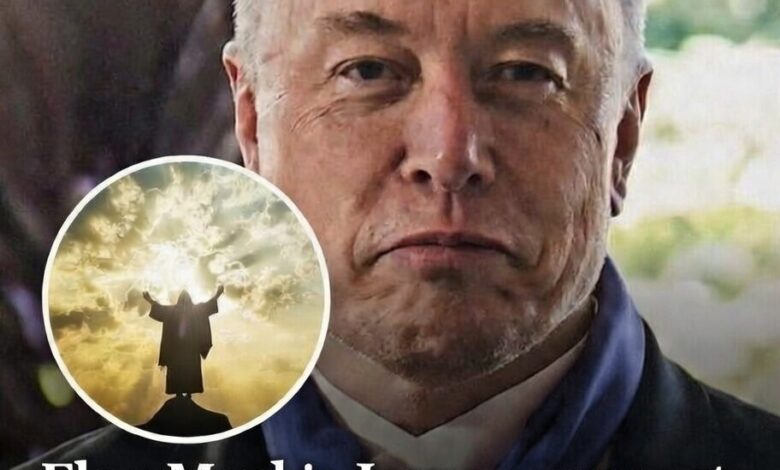
Elon Musk, a man more frequently associated with the cold logic of rocketry and the disruption of digital town squares, has once again managed to commandeer the cultural conversation. This time, however, the catalyst was not a technological breakthrough or a corporate acquisition, but a rare and cryptic pivot toward the spiritual.
When pressed on the question of who might eventually “evangelize” him, the billionaire technologist offered a succinct, provocative response: “I agree with the teachings of Jesus.”
The remark, though brief, acted as a lightning rod across social media platforms. In a matter of hours, it had been dissected and debated, drawing a predictable yet fascinating spectrum of curiosity, praise, and skepticism. In the hyper-reactive ecosystem of the 2026 media landscape, the interpretation of Musk’s spiritual leanings has seemingly become more significant than the words themselves.
A Philosophical Evolution
To understand the weight of Musk’s latest comment, one must look at the trajectory of his public relationship with religion. As a teenager, Musk was famously a seeker of a different sort. By the age of 14, he was openly wrestling with the “big questions”—the problem of suffering, the mechanics of existence, and the vastness of the universe. During those formative years, he often identified as an atheist or an agnostic, leaning into the empirical over the ecclesiastical.
Yet, recent years have seen a subtle shift in his rhetoric. While he remains distanced from traditional religious institutions, Musk has increasingly expressed a profound respect for the ethical framework of Jesus Christ. He has specifically highlighted the virtues of forgiveness, compassion, and the “turning of the other cheek” as essential principles for a functioning society.
Behavior vs. Belief: The Distinction of “Cultural Christianity”
Musk’s current stance appears to be one of “behavior over belief.” His reflections rarely touch on theology or the supernatural; instead, he frames spirituality as a practical guide for human conduct. It is a philosophy that prioritizes the moral utility of sacred teachings over the adherence to specific doctrines or denominations.
This distinction has fueled a vigorous debate among theologians and cultural critics alike:
- The Traditionalist View: Argues that faith is an inseparable package of worship, theology, and historical truth.
- The Philosophical View: Suggests that the ethical foundations of religion can—and perhaps should—stand independently of their miraculous origins.
Musk appears to be engaging with these ideas through an evidence-focused, philosophical lens, treating the Sermon on the Mount as a set of optimized social algorithms rather than a divine mandate.
The Greater Question: Values vs. Identity
The public reaction to Musk’s statement highlights just how sensitive the intersection of faith and public life remains. Whether his comment signals a genuine internal transformation or a strategic acknowledgment of a core Western value system remains a point of contention.
However, the “Musk Gospel” raises a broader, more universal question for the modern age: Can an individual find deep value in sacred teachings without adopting a formal religious identity?
In the end, as with any influential figure, the weight of the statement will likely be measured by the actions that follow. The true test of Musk’s alignment with these ancient principles will be seen in how they shape his conduct, his vast influence, and his sense of global responsibility in the years to come.