A Woman’s Sister Stole the Name of Her Stillborn Daughter — Then Her Husband Revealed the Secret That Silenced Everyone
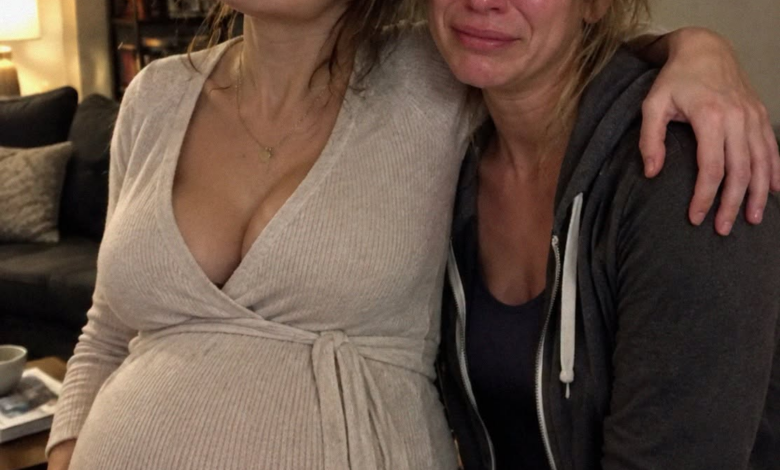
Lauren was still grieving the loss of her stillborn daughter, Elsie-Rose, when her sister Becky made an announcement that shattered what little peace she had left: she planned to give her own baby the exact same name.
The cruel announcement came at Elsie-Rose’s funeral. When Lauren begged her sister to choose another name, their mother accused her of being jealous. Instead of comforting Lauren, the family expected her to celebrate while she was still mourning her child.
The pain had begun even before the funeral. When Lauren returned home from the hospital, she discovered Becky throwing away her baby’s clothes, blankets, and tiny pink shoes, claiming she was only trying to help. Lauren was devastated. Her husband, Daniel, immediately stepped in and brought everything back inside.
After six years of fertility struggles and the heartbreaking loss of their daughter at 37 weeks, Lauren and Daniel needed time to grieve. But their mother continued pressuring Lauren to try again, while sending her photographs of gifts purchased for Becky’s baby, who was also going to be named Elsie-Rose.
Three months later, Becky invited the family to dinner, supposedly to make peace. Lauren arrived with a gift for her unborn niece, hoping they could finally move forward.
For a while, the evening seemed peaceful. Then Becky brought out a pink blanket embroidered with the name Elsie-Rose and made a cruel remark, suggesting that at least the name would now belong to a baby who could actually use it.
Lauren was crushed. When she reminded Becky that the name belonged to her daughter, her sister accused her of jealousy.
That was when Becky’s husband, Todd, finally stood up.
“Tell them the truth, Becky.”
The room fell silent.
Todd revealed that Becky had been hiding a serious medical condition throughout her pregnancy. She had antiphospholipid syndrome, a disorder that can increase the risk of blood clots and pregnancy complications. To manage the risks, she had been taking daily blood-thinning injections under medical supervision.
The bruises on her stomach were from those injections.
Becky had known about the high-risk pregnancy for months, but she had pretended everything was perfect. Terrified that something might happen to her baby, she had tried to convince herself that everything would be fine.
Then Lauren finally understood why her sister had been so determined to use Elsie-Rose’s name.
Becky had hoped it would bring her good luck, as though giving the name a different ending could protect her own child.
But Lauren confronted her with the truth: her daughter’s death was not a sad ending that Becky needed to fix, and her grief was not something to use as a source of reassurance.
Becky broke down and apologized. She admitted that seeing Lauren’s loss had frightened her, and that she had been desperate to believe her own pregnancy would have a happy outcome.
Their mother was also forced to confront the damage caused by years of judgment and pressure. She had repeatedly made Lauren feel that infertility and pregnancy loss were personal failures, while Becky had hidden her fears because she was afraid of being judged too.
Lauren finally told her mother that she had hurt both daughters by making them feel they had failed as women.
Then Becky made another decision.
She picked up the pink blanket and announced that she wanted to choose a different name for her baby. She and Todd had once considered the name Grace, and now she wanted to use it.
Two months later, Becky gave birth a little early, but her baby was healthy.
Todd sent Lauren a photograph with a simple message: “Meet Grace.”
Lauren and Becky still weren’t as close as they had once been, and Lauren kept some distance from her mother. But the experience taught her something important: she could love her niece and be grateful that the baby was healthy without ever forgetting the daughter she had lost.
One feeling did not cancel the other.