A Woman’s Neighbor Kept Touching Her in the Elevator and Calling It an Accident — Then Four Women Came Forward, and His Own Words Exposed Him
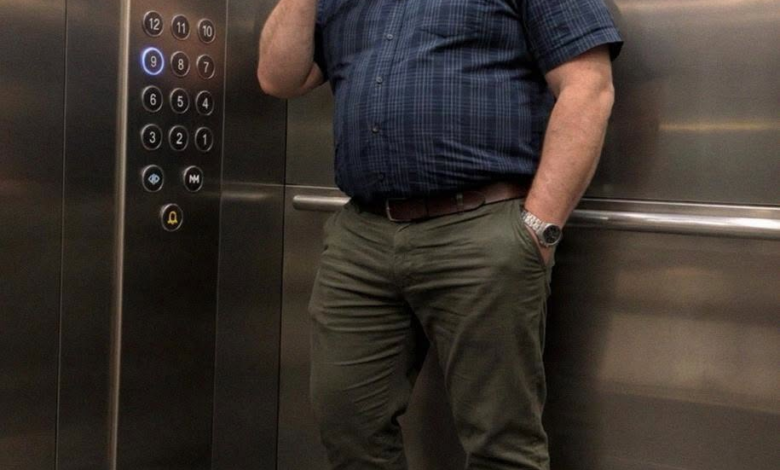
For months, I changed my daily routine to avoid one man in my apartment building. Mr. Carter always stood too close in the elevator, and whenever his hand touched me inappropriately, he laughed and blamed the tight space.
The first time, I tried to ignore it. The second time, I turned around and told him firmly, “Don’t touch me.”
He raised his hands and smirked.
“Relax. It was an accident. If men make you this nervous, take the stairs.”
I lived on the ninth floor. Yet somehow, I was the one rearranging my life while he carried on as if nothing had happened.
Then I spoke to my neighbor Julie.
Her expression changed immediately.
“He did it to you too?”
Within two days, four women in our building had shared similar experiences. The same man, the same elevator, and the same excuse. One of them was Maya, an 18-year-old college student who admitted she had started avoiding coming home after dark because of him.
That was when I decided we couldn’t keep living in fear.
I called my brother Dan and arranged a plan. On Friday, I deliberately stepped into the elevator with Carter. When he touched me again, he laughed and repeated his familiar excuse.
“Tight space.”
I smiled.
At the ninth floor, the doors opened to reveal Dan and five of his friends standing outside. They stepped into the elevator, filling the space around Carter.
His confidence disappeared.
“What the hell did you do?” he demanded.
I stepped out and looked back at him.
“Tight space, huh?”
The doors closed, leaving him with the uncomfortable feeling he had so often forced on others.
At first, I thought the plan had worked. But the following morning, two police officers knocked on my door. Carter was in the hospital with a fractured wrist and bruises, and he claimed I had arranged for the men to assault him.
I admitted that I had organized the encounter, but Dan insisted that none of them had touched Carter. They had simply ridden downstairs and gone to a diner.
Then Carter contacted me with an offer that made my stomach turn.
He said he could tell the police he might have been mistaken about the assault — but only if I agreed to have dinner alone with him.
I refused to accept his version of events without evidence. Instead, I recorded the call and contacted the police.
Then I discovered a nearby dry cleaner had a security camera facing the parking area outside our building.
The owner agreed to show us the footage.
What we saw changed everything.
The video showed Dan and his friends crossing the street to the diner. A few minutes later, Carter came outside alone. He walked toward the parked bicycles, kicked one, then grabbed another and pulled at it until it tipped over onto him, trapping his arm and injuring his wrist.
He had apparently caused his own injury — then accused us of attacking him.
I gave the footage and the recording of his call to the police. I also made a formal complaint about the unwanted touching and told investigators that other women had experienced the same behavior.
One by one, the women came forward and gave their own statements.
Carter denied deliberately touching anyone and claimed we had invented the accusations together. But we refused to let fear silence us.
Maya was especially frightened. She worried about facing him in court and feared that one wrong answer might make people doubt her.
I understood. I was frightened too.
So I promised we would face the process together.
Months later, we found ourselves in court. Carter’s lawyer questioned me about the crowded elevators and my decision to arrange the encounter with Dan and his friends. I admitted I had wanted Carter to experience the discomfort he had repeatedly dismissed when we complained.
But I also described what had happened during those earlier elevator rides.
“I can tell you what happened,” I explained. “I turned around and told him not to touch me. He laughed and told me to take the stairs.”
Then the recording of Carter’s call was played in court. Everyone heard him offer to change his account in exchange for a private dinner with me.
This time, I didn’t have to convince anyone how uncomfortable that conversation had made me. His own words spoke for themselves.
When the verdicts were finally read, I heard the guilty finding on the charge involving me. Then came another finding involving one of the other women.
Julie squeezed my hand.
Outside the courtroom, Maya caught my sleeve, her eyes filling with tears.
“They believed us,” she whispered.
“Yes,” I said. “They did.”
At sentencing several weeks later, Carter received jail time for the unwanted touching, along with additional penalties relating to the false report and the damage to the bicycle. He offered no apology.
But the biggest change came afterward.
I stopped checking the lobby before using the elevator. I stopped planning my day around the possibility of seeing him.
One evening, the doors opened, and I simply walked inside.
Maya entered a moment later, her backpack hanging from one shoulder. I held the door for her, and she pressed her floor button.
Neither of us hesitated.
For months, one man’s behavior had made us feel as though we didn’t belong in our own home.
Now, we could finally ride the elevator without wondering whether we should wait for another one.