Abandoned and abused: How a broken childhood shaped a global star
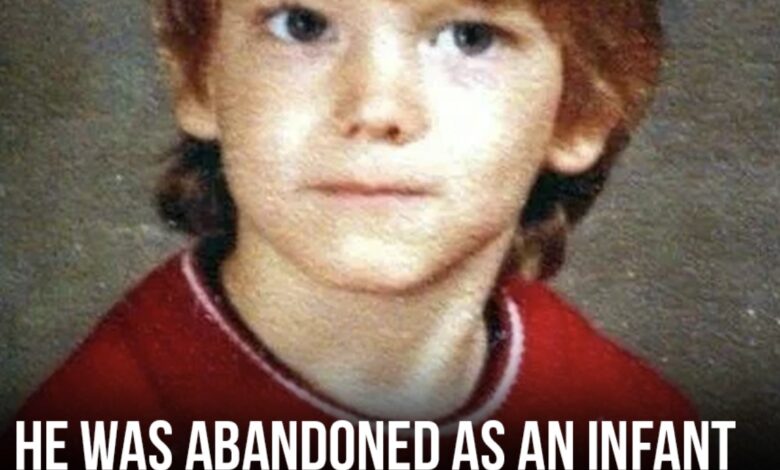
The arc of a human life is often traced back to the silent, formative tremors of childhood, where the foundation is laid long before the world ever learns a name. For most, these early years provide a scaffold of support; for others, they are a gauntlet of survival. In the case of Marshall Mathers—the man the world knows as Eminem—the gauntlet was forged in the fire of abandonment, systemic neglect, and a domestic reality that most would find unimaginable. Today, he stands as a global titan of the industry, a lyrical pioneer whose name is etched into the pantheon of musical greats. Yet, the road to that summit was paved with the debris of a broken home.
The Architect of a Broken Foundation
Childhood is the silent arbiter of our future. While the specifics of every memory may fade into the static of time, the emotional bar is set in those initial years. The prerequisites for a functional life—respect, politeness, responsibility—are lessons traditionally handed down from parent to child. It is a sacred stewardship. But when that stewardship fails, and a home becomes a site of abuse rather than a sanctuary, the scars are often indelible.
While many children are understandably swallowed by the darkness of such a beginning, Marshall Mathers used the shadows as his medium. Born in St. Joseph, Missouri, his narrative began with a void: his father vanished when he was still an infant. Throughout his life, Mathers would reach out through letters that went unanswered, leaving a silence that spoke volumes.
“They’d tell me he was a good guy: ‘We don’t know what your mother’s told you, but he was a good guy,’” Mathers reflected in a candid retrospective with Rolling Stone. “But a lot of times he’d call, and I’d be there… and it wouldn’t have been nothing for him to say, ‘Put him on the phone.’ He coulda talked to me, let me know something.”
This absence of a paternal North Star left Mathers adrift in a sea of his mother’s revolving door of boyfriends. “Some of ’em I didn’t like; some of ’em were cool. But a lot would come and go,” he recalled. The closest semblance of a father figure was his younger brother’s dad, a man who flickered in and out of their lives for five years, offering fleeting glimpses of normalcy through games of catch and trips to the bowling alley—the basic currencies of fatherhood that Marshall was otherwise denied.
The Gauntlet: Public Housing and the “New Kid” Syndrome
With a father absent and a mother, Debbie Mathers, struggling to maintain steady employment, life became a nomadic struggle between the fringes of Missouri and the urban sprawl of Detroit. The family cycled through public housing systems, a nomadic existence that rendered stable friendships an impossibility.
“I would change schools two, three times a year and that was probably the roughest part,” Mathers said, describing a childhood defined by the “new kid” bullseye. The hallways of his youth were a theater of violence. He recounted being cornered in bathrooms, shoved into lockers, and subjected to a level of bullying that eventually turned life-threatening.
At age nine, the violence peaked. During a game of “King of the Hill,” a bully struck Mathers in the face with a snowball containing a heavy object or a piece of ice, then proceeded to beat him into unconsciousness. The resulting trauma—a severe concussion and temporary vision loss—prompted his mother to file a $10,000 lawsuit against the Detroit school system for failing to provide a safe environment. The case was ultimately dismissed, but the psychological toll remained.
A House of Mirrors: The Battle with Debbie Mathers
While the world outside was hostile, the world inside his home was, by his account, a different kind of war zone. Mathers would eventually use his global platform to accuse his mother of a litany of transgressions: alcoholism, marijuana use, prescription drug abuse, and even the theft of his paychecks as he entered adulthood. He painted a picture of a mother who not only failed to protect him but actively contributed to his trauma.
Debbie Mathers, however, countered with a narrative of her own, one that eventually manifested in a $10 million defamation lawsuit against her son. Though she was technically victorious in court, the triumph was hollow; she was awarded only $25,000, the vast majority of which was consumed by legal fees.
In a 2001 interview with Salon, she defended her parenting with a tone of bewildered martyrdom. “Everybody was saying, ‘That child is out of control… he’s a monster,’” she claimed, insisting she never raised her voice or laid a hand on him. Yet, a year prior, her rhetoric was sharper: “Marshall was so hateful and mean. He hurt me so bad.”
The Birth of a Legend: From 8 Mile to the Academy Awards
Growing up as one of the few white children in a predominantly Black neighborhood in Detroit, the cultural friction added another layer to his isolation. Mathers eventually dropped out of school—not due to an inability to learn, but because he had discovered a linguistic weapon that would change the trajectory of hip-hop: Rapping.
Adopting the moniker Eminem, he began his ascent at age 14. His early discography served as a visceral, public exorcism of his domestic demons. On the 2002 landmark track “Cleanin’ Out My Closet,” he leveled a devastating critique against his mother, even suggesting he was a victim of Munchausen syndrome by proxy—claiming he was raised to believe he was chronically ill to maintain her control.
This raw, unfiltered authenticity became his hallmark. Fans and collaborators alike marveled at his willingness to expose his deepest traumas, a vulnerability that resonated with millions of listeners who saw their own fractured lives reflected in his verses.
The Cycle Unbroken: Fatherhood as Redemption
The year 1995 was a pivot point. Mathers released his first single, and more importantly, he became a father to his daughter, Hailie, with his longtime girlfriend Kim Scott. Haunted by his own father’s disappearance, Mathers made a silent vow: the cycle ended with him.
In 2004, journalist Touré noted a striking contrast during an interview for Rolling Stone. He observed Mathers interacting with Hailie not with the condescension often shown to children, but with a profound, quiet respect.
“I just want her and my immediate family… to have things I didn’t have: love and material things,” Mathers explained. “But I can’t just buy them things. I have to be there. That’s a cop-out if I just popped up once in a while.”
His commitment to fatherhood remained steady even as his professional life exploded. The 2002 film 8 Mile, an autobiographical reimagining of his Detroit struggles, became a cultural phenomenon, earning him an Academy Award for Best Original Song for the anthem “Lose Yourself.” But the highs were shadowed by lows; when Kim left him in 1997, taking Hailie with her, Mathers plummeted into a dark period of substance abuse. Yet, as was the pattern of his life, the pain became the catalyst for his breakthrough The Slim Shady LP, recorded after he was discovered by the legendary Dr. Dre.
Legacy of a “Rap God”
Today, Marshall Mathers lives a remarkably low-key existence, having largely retreated from the blinding spotlight of his youth. He is a father of three: his biological daughter Hailie, and two adopted daughters, Alaina Marie Scott and Stevie Laine Scott. He has successfully provided the stability he once thought was a fantasy.
His parents have both passed—his father in 2019 and his mother, Debbie, in 2024—leaving behind a complicated, public, and painful legacy. But the music remains. From “Stan” and “Mockingbird” to “Rap God” and “Till I Collapse,” his discography stands as a testament to the power of creative transubstantiation—the ability to take the lead of a traumatic childhood and turn it into the gold of a legendary career.
The story of Marshall Mathers serves as a stark reminder: no child deserves a home defined by abuse, but an abusive beginning does not have to dictate a tragic end. His life stands as an inspiration for those dwelling in the dark, proving that the loudest voices often come from those who were once forced into silence.