My 80-Year-Old Mother Left to Visit an Old Friend for One Week—When She Returned, She Looked Unrecognizable and Carried a Stranger’s Suitcase
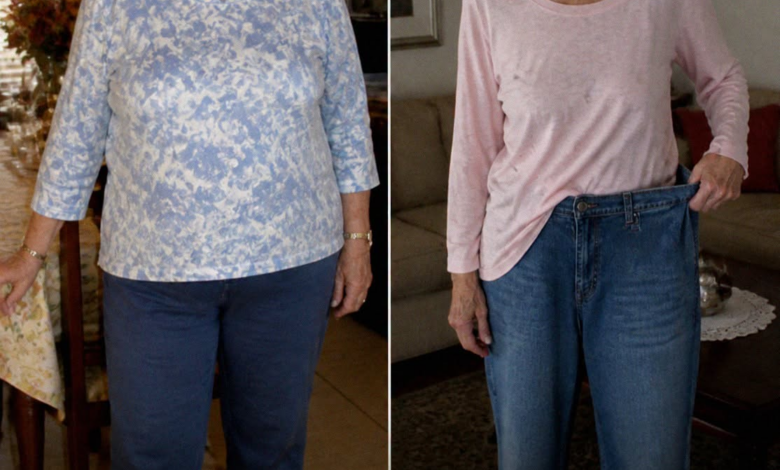
I almost walked past my own mother at the train station.
My 80-year-old mother, Evelyn, stood beside a bench, clutching an enormous black suitcase. Her gray hair was flattened against her forehead, and her cardigan hung loosely from her shoulders.
“Mom? What happened to you?”
“Nothing happened, sweetheart. I’m just tired.”
But she looked as if she’d lost half her weight in seven days.
A week earlier, she’d left to visit Margaret, her childhood friend whom she hadn’t seen in 20 years. She’d been cheerful and excited, carrying a small blue bag filled with clothes, medication, and homemade cookies.
Now her bag was gone.
And the woman standing in front of me looked like a stranger.
“Where’s your blue suitcase?” I asked.
“Margaret gave me this one. Mine broke.”
She tightened her grip on the handle.
“Can we please go home?”
I wanted to take her straight to the hospital, but she insisted she was fine. That evening, she barely touched her dinner and went to bed early.
Something was wrong.
After she fell asleep, I called the number she’d given me for Margaret.
A man answered.
“Margaret hasn’t lived here for eight years,” he said.
I checked the number twice.
Then I called my mother’s phone. I could hear it ringing upstairs, but she didn’t answer.
Why had my mother given me an outdated number? And where had she really spent the past seven days?
The following morning, I noticed a train ticket on the table beside her armchair. It was dated three days before I’d picked her up.
Beneath it lay a luggage tag bearing a name I’d never heard before: Ellen.
I looked toward the hallway.
The black suitcase stood beside my mother’s dresser.
I knew I shouldn’t open it, but I was frightened by how weak she’d become and how many questions she refused to answer.
Inside, I found folded clothes, a sealed brown envelope, an old digital camera, a faded yellow child’s sweater, and a small wooden rolling pin.
The rolling pin looked strangely familiar.
Then I checked the camera.
There were only four photographs.
The first showed my mother standing outside a modest brick house. The second showed her sitting beside a frail elderly woman. The third was a handwritten schedule of meals, medications, and reminders to help someone move safely.
The fourth photograph made my hands tremble.
It showed an old picture of a woman standing outside a little white house, holding a toddler in a yellow sweater.
The child was me.
And the woman was someone I hadn’t thought about in decades.
“Aunt Maggie,” I whispered.
When I was little, she’d helped care for me while my mother worked. I’d spent countless afternoons in her kitchen, baking tiny pies and sprinkling flour across the table.
But Mom had always said she was a family friend who’d moved away.
I’d assumed she’d disappeared from our lives forever.
At the bottom of the photograph was an address.
I recognized the street immediately.
I drove there, hoping someone might know where Margaret had gone. The little white house was still standing, though the porch had been replaced.
The new owner remembered Margaret but couldn’t tell me where she’d moved.
Then I examined the other photographs again.
The brick house in the first picture had an address beside its front door.
It was three hours away.
That was where my mother had gone.
When I returned home, Mom was sitting at the kitchen table beside the suitcase.
“You opened it,” she said quietly.
“I was worried about you. You wouldn’t tell me anything.”
She lowered her eyes.
“Who is Aunt Maggie, Mom? Why didn’t you tell me she was Margaret?”
My mother stared at the photograph for a long time.
“Because I didn’t think you’d remember her.”
“I remember her kitchen. I remember baking with her. Why did you let me believe she was just a family friend?”
Mom’s eyes filled with tears.
“Because you were so little.”
Then she finally told me the truth.
After my father left, she was raising me alone while working two jobs. She barely had enough time to sleep, let alone manage everything.
Margaret had lived nearby and offered to look after me.
For almost two years, she’d fed me, helped me learn my letters, and made sure I had somewhere safe to stay while Mom worked evenings.
“She never asked for anything,” Mom whispered. “But I started feeling ashamed of how much I depended on her.”
“So you stopped calling?”
“Not immediately. I missed visits. Then too much time passed, and I didn’t know how to fix it.”
I couldn’t understand.
“Mom, she helped raise me. Why would she judge you for needing help?”
My mother wiped her cheeks.
“I wanted you to remember a mother who managed everything on her own.”
I took her hand.
“Needing help doesn’t make you a bad mother.”
She nodded, but before she could say anything else, she suddenly became dizzy and struggled to stand.
This time, she didn’t argue when I insisted on getting medical help.
At the hospital, the doctor found that she was dehydrated and weak. Her weight loss needed further assessment, and she was advised to have follow-up appointments and get proper rest.
I sat beside her bed and asked what had really happened during her visit.
Mom sighed.
“Margaret hasn’t been well.”
Her old friend had recently returned home after a hospital stay. Margaret’s daughter, Ellen, had been trying to care for her while holding down a job.
Mom had gone expecting a peaceful reunion.
Instead, she found Margaret struggling with everyday tasks.
So she stayed to help.
She prepared meals, organized medication reminders, and stayed awake at night listening for Margaret in case she needed assistance.
By the fourth day, Mom was exhausted and experiencing stomach trouble.
She bought a ticket home but missed her train when Margaret had a difficult morning and Ellen was at work.
“I couldn’t leave her like that,” Mom explained.
“You’re 80 years old yourself!” I exclaimed.
“I know.”
“Why didn’t you call me?”
She looked embarrassed.
“Because I knew you’d tell me to come home.”
“Of course I would! I was terrified when I saw you at the station.”
Mom reached for my hand.
“I thought I could finally repay her for everything she did for us.”
That evening, she explained the suitcase.
Margaret had kept photographs, letters, and little reminders from the years she’d helped care for me. She wanted Mom to bring them home so I could have them.
I opened the brown envelope.
Inside were birthday cards, old photographs, and letters exchanged between the two women.
One letter from Mom, written when I was five, read:
I don’t know what I would do without you. Laura asks for you every morning. You have given her a safe place when I couldn’t always be there.
Margaret’s reply was even more moving:
You are there for Laura in every way that matters. Working to keep a roof over her head doesn’t mean you’ve failed her. Please stop apologizing for letting me love her.
I read those words twice.
Margaret had understood something my mother had spent decades struggling to accept.
Accepting help wasn’t failure.
It was love.
The next afternoon, I called Ellen. She was relieved to hear that Mom was recovering and admitted she’d been worried about how much work her mother needed.
We discussed ways to arrange reliable assistance so neither elderly woman would feel responsible for carrying everything alone.
Then I asked whether Margaret would like to see me.
Ellen laughed softly.
“She’s been hoping you’d come for years.”
Two weeks later, Mom and I drove to Margaret’s house together.
This time, I made sure my mother was rested, eating properly, and feeling strong enough to travel.
When we arrived, Margaret was sitting by the window beneath a knitted blanket.
The moment she saw me, her face brightened.
“Laura?”
I crossed the room and hugged her.
For a moment, I smelled something familiar—vanilla, the same gentle scent I remembered from childhood.
“My goodness,” she whispered. “Look at you.”
I laughed through my tears.
“You used to let me eat pie dough.”
“You used to steal it!”
Mom sat beside her, and Margaret took her hand.
“You gave us a terrible fright,” she said.
Mom smiled sheepishly.
“I’ve been told.”
We spent the afternoon looking through photographs and remembering the little moments that had shaped my childhood.
The day I lost my first tooth.
The yellow sweater Margaret had knitted for me.
The birthday cake I’d ruined by putting salt instead of sugar into the batter.
I listened in amazement as they recalled stories I’d forgotten.
Before we left, I thanked Margaret for everything she’d done for us.
She shook her head.
“Your mother worked very hard. I just made sure you had somewhere to go after school.”
“That wasn’t a small thing,” I told her.
She squeezed my hand.
“No,” she admitted. “I suppose it wasn’t.”
Over the following months, Ellen arranged additional support for Margaret. Mom visited again, but only for short stays, and never as her caregiver.
I checked in with both women regularly.
And every Sunday, Mom still came to dinner.
The difference was that I cooked.
One afternoon, I found her in my kitchen watching my daughter roll out pie dough with the little wooden rolling pin Margaret had saved.
“You’re pressing too hard,” Mom advised.
My daughter giggled.
“You sound like Grandma Maggie!”
Mom looked up at me.
I smiled.
We’d started calling Margaret that again.
For 20 years, my mother had believed the best way to honor her friend’s kindness was to repay it without ever asking for help.
But Margaret had never wanted repayment.
She’d wanted her friend.
And the black suitcase Mom carried home hadn’t contained a debt.
It contained proof that neither of us had ever been alone.