Everyone Told My Mother to Leave Her Husband After His Accident—She Stayed for 36 Years, Until His Hidden Letter Revealed a Secret
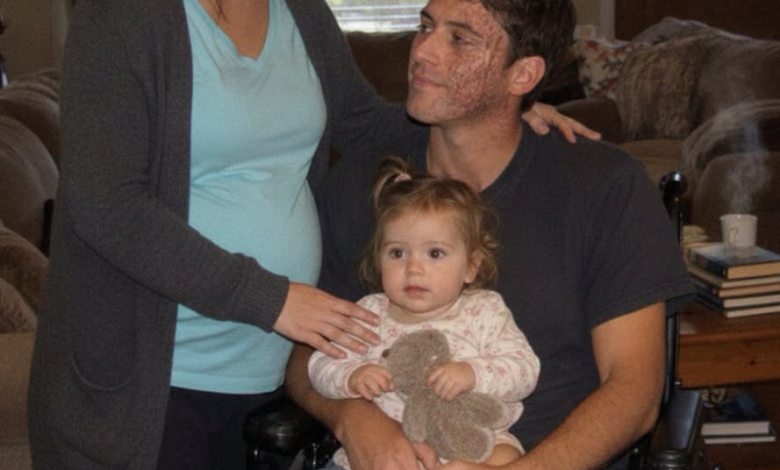
For nearly 36 years, my father called my mother “my angel.”
After a devastating accident left him in a wheelchair, everyone expected her to leave. Her parents begged her to start over, but she stayed, raised three children with him, and built a life together that lasted decades.
We thought we knew their love story.
Then, almost a year after Dad died, my sister and I discovered a letter hidden in the attic.
On the envelope, Dad had written:
“For my angel. I’m sorry I had to keep this from you for so long. Please open it on your first birthday without me.”
When we brought it downstairs, Mom went pale.
“Where did you find that?”
Inside the box were old photographs and a picture of our parents smiling outside their first apartment, before the accident.
On the back, Mom had written two words: “Before everything.”
For weeks, I couldn’t stop thinking about her reaction.
Then, on her 60th birthday, we finally opened the letter together.
At first, Dad’s words were loving and familiar. He wrote about how grateful he was to have lived far longer than doctors had expected.
Then we reached a sentence that changed everything.
“There’s something I should have told you long ago. I knew about the suitcase.”
Mom stopped reading.
“What suitcase?” my sister asked.
Mom lowered the letter.
“After your father’s accident, there was a time when I thought I couldn’t do it anymore.”
She took a shaky breath.
“I packed a suitcase. I wrote him a letter. I planned to take you to my parents’ house.”
My sister stared at her.
“You actually left Dad?”
Mom nodded.
“For three nights.”
I couldn’t believe it. I’d spent my entire life hearing how she’d never considered leaving him.
But the truth was more complicated.
After the accident, Dad needed help with almost everything. He struggled with pain, daily routines, and the loss of independence. Mom was only 23, caring for a baby while learning how to care for her injured husband.
Her parents repeatedly urged her to leave.
Dad, frightened that everyone would eventually abandon him, resisted outside help. Sometimes his fear came out as anger, and Mom carried more responsibility than she could manage.
“I cried on the bathroom floor because I hadn’t showered in two days,” she told us. “Then I felt guilty because I thought he had it worse.”
Eventually, she packed a suitcase and went to her parents’ house with me.
For the first time in months, she slept through the night.
Her mother encouraged her to start over. But after three days, Mom called Dad.
He told her everything was fine, yet he never asked when she was coming home.
She thought he was angry.
She didn’t realize he’d become convinced she might never return.
“What made you go back?” I asked.
Mom looked down at her hands.
“I still loved him. But I also knew things couldn’t continue the way they had.”
When she returned, she sat beside Dad and told him the truth. She needed help, time for herself, and a husband who understood that exhaustion wasn’t rejection.
For the first time, Dad admitted how frightened he was of being abandoned.
Their marriage didn’t magically become easy. But Dad began accepting assistance, learned to manage more tasks independently, and stopped expecting Mom to do everything alone. She returned to part-time work and began spending time with friends again.
Slowly, they built a marriage they could both live inside.
Then I continued reading Dad’s letter.
“When you returned, I thought you’d decided you couldn’t live with abandoning me. I heard everything you said about needing changes, but I couldn’t believe you still wanted me.”
He admitted that he had spent years trying to become a husband Mom wouldn’t regret staying with.
Whenever people called her a saint, he wondered whether they were right.
Whenever she told him she loved him, he sometimes wondered whether she was only saying it because he needed to hear it.
Then came the words that made Mom cover her face.
“I loved you so much that I forgot you were allowed to be human.”
Dad wrote that he’d allowed people to praise her sacrifice as though she had no needs of her own.
He apologized for thanking her for staying instead of asking what she needed.
“Please don’t spend your life trying to prove staying was the right choice. Be angry about the difficult years. Remember the happy ones. Make friends. Travel. Build a life of your own.”
At the bottom, he had written:
“You gave me a life I never expected. I hope you know I wanted you to have a life of your own, too. Happy birthday, my angel.”
Mom folded the letter and began to cry.
“I wish he’d just asked me,” she whispered.
We sat quietly beside her.
“I told him I loved him so many times. I thought he believed me.”
Then she explained something I’d never understood.
She hadn’t stayed because she felt sorry for Dad. She hadn’t stayed because leaving was impossible.
She had stayed because, even after the hardest years, she still wanted him.
“He could make me laugh when I was furious,” she said with a small smile. “He remembered everything I liked. When I started working again, he told everyone how proud he was.”
She looked toward the hallway where his wheelchair had once stood.
“He wasn’t just someone I cared for. He was my husband. I wanted him.”
For decades, Dad had called Mom his angel, and we’d assumed those words came from certainty.
Now we understood that some had come from fear.
He had spent years worrying that the woman he loved might have stayed out of obligation rather than choice.
And Mom had spent years reassuring him without knowing what he was afraid to ask.
A few weeks later, she showed me the real estate papers. She was considering selling the family home and moving into a smaller place near the park.
“Do you think your father would approve?” she asked.
I remembered his letter.
“I think he’d be happy you’re excited about something new.”
She laughed.
“He’d probably complain about the smaller kitchen.”
“He definitely would.”
We spent the evening choosing photographs to keep. Mom selected pictures from every stage of their marriage, including the difficult years after the accident.
I’d always thought their happiest photograph was the one taken before everything went wrong.
Now I understood that their real love story came afterward.
It came when their marriage nearly failed, when they learned to ask for help, and when they chose to build something better together.
My mother hadn’t stayed because leaving was impossible.
She stayed because, after everything, she still wanted to come home.