He Called Me “Barbie” and Mocked My Qualifications—30 Minutes Later, I Was the One Who Saved His Life
The scream came from the gym’s weight area.
Megan immediately rushed toward the commotion and found a man lying motionless on the floor, struggling to breathe. As she approached, she recognized him.
It was Brian—the same man who had mocked her appearance, called her “Barbie,” and questioned her qualifications less than half an hour earlier.
But Megan didn’t hesitate. Someone needed help, and she knew what to do.
She shouted for someone to call emergency services and bring the automated external defibrillator (AED). When Brian showed no signs of normal breathing, she began CPR. With another staff member assisting her, Megan continued chest compressions until the AED arrived.
The machine advised a shock. After they delivered it, they resumed CPR until Brian began breathing again. Paramedics arrived shortly afterward and rushed him to the hospital.
Megan had never imagined her first day at the new gym would unfold this way.
At 28, she had six years of personal training experience and current CPR and AED certifications. She understood exercise safety and knew that every client needed an approach suited to their individual needs.
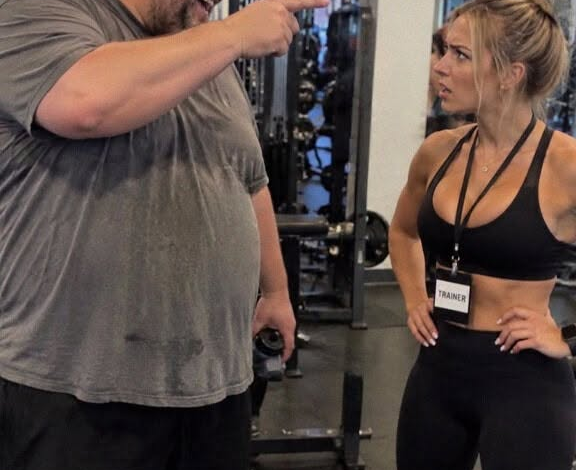
Brian, a man in his 40s weighing more than 300 pounds, had arrived for his first session with a very different attitude.
He immediately questioned why the gym had assigned him such a young, petite trainer. Then he mocked her appearance, dismissed her experience, and suggested she was better suited to taking selfies than teaching someone to lift weights.
Megan remained professional. She explained that she needed to understand his goals, medical history, and fitness needs before designing a training program.
Brian refused to cooperate.
He insisted he already knew what he was doing and didn’t need someone like her telling him how to exercise. When his disrespect continued, Megan calmly explained that she wouldn’t train someone who couldn’t treat her with basic courtesy.
Brian laughed, picked up his gym bag, and announced that he would train himself.
Megan walked away frustrated, determined not to let the encounter define her first day.
She had no idea that minutes later, her training would become essential.
The Warning Signs He Had Ignored
After Brian was taken to the hospital, Megan learned that he had been performing heavy bench presses before collapsing.
Witnesses said he had been unusually short of breath, grabbed his chest, and fallen to the floor. Megan couldn’t determine the exact cause of his collapse, but she later learned that he had experienced a serious heart rhythm problem.
According to the story, Brian had been experiencing warning signs for months, including chest pressure, fatigue, and shortness of breath. He had dismissed them as consequences of being overweight and had not completed additional medical testing recommended by his doctor.
His emergency had forced him to confront something he had spent months avoiding.
Two days later, Megan’s manager told her that Brian’s wife, Lisa, wanted to speak with her.
During their phone conversation, Lisa apologized for her husband’s behavior and explained that Brian had told her what happened before his collapse. She was deeply grateful that Megan had acted quickly.
Megan, however, didn’t take all the credit. She emphasized that CPR, the AED, and the paramedics had all played important roles in his rescue.
Lisa then asked whether Megan would be willing to visit Brian in the hospital.
Megan agreed.
The Apology He Finally Owed Her
When Megan entered Brian’s hospital room, she saw a different side of the man who had strutted into the gym with so much confidence.
He looked humbled and uncomfortable.
Brian apologized for the way he had treated her, but Megan wanted him to understand why his behavior had been wrong.
He admitted that he had assumed she couldn’t possibly know what he needed because she was younger, smaller, and a woman. He had judged her abilities by her appearance instead of considering her qualifications and experience.
Megan explained that a trainer’s responsibility was to assess a client’s health history, medications, symptoms, injuries, and medical clearance before recommending an exercise program. By refusing to cooperate, Brian had prevented her from doing her job properly.
Then he revealed something else.
He had been experiencing chest pressure but hadn’t wanted to mention it to a trainer. He was afraid of being treated as fragile.
He had become so determined to prove his strength that he ignored symptoms that needed medical attention.
Megan understood his fear of appearing weak, but she made one thing clear: ignoring your health isn’t strength.
As they continued talking, Brian admitted that his daughter was furious with him for insulting Megan. She had even joked that if he’d died after treating her that way, she would have mentioned his behavior in his obituary.
The comment briefly made them laugh.
But Brian soon became emotional as he considered how he would feel if someone treated his own daughters with the same disrespect.
Megan reminded him that women deserved respect regardless of whether they had daughters themselves.
This time, Brian didn’t argue.
For the first time, Megan began to believe that his apology was genuine.
A Second Chance at the Gym
After several more days in the hospital, Brian was discharged. He spent weeks under medical supervision before receiving clearance to begin a structured exercise program.
When he was ready to return to the gym, he specifically requested Megan as his trainer.
She agreed, but she established clear boundaries.
Brian needed medical clearance, had to follow a safe exercise plan, and could no longer dismiss her instructions or ignore concerning symptoms.
Their first sessions were far from the intense workouts he had imagined. They focused on gentle walking, mobility exercises, and light resistance training.
Brian frequently complained that the exercises were too easy.
Megan reminded him that they were training the body he had now—not the one he remembered having years earlier.
Slowly, his attitude began to change.
Over the following months, Brian became more consistent with his workouts and medical follow-ups. Six months later, the story says he had lost 38 pounds, improved his endurance, and gained better control of his blood pressure.
But the most significant change wasn’t physical.
He began openly acknowledging Megan’s expertise to other gym members. He no longer treated every workout as a test of masculinity or assumed that admitting he needed help made him weak.
Instead, he learned to listen.
He even began joking that Megan had kept him alive long enough to annoy him professionally.
Megan continued challenging him to become healthier and stronger, always emphasizing steady progress over reckless ambition.
The Lesson He Never Expected to Learn
A year after their first encounter, Brian gave Megan a card thanking her for teaching him that strength wasn’t simply about lifting the heaviest weights.
His daughter had added a humorous message thanking Megan for saving her father’s life before she’d had the chance to fix his personality herself.
Megan laughed, and Brian jokingly challenged her to give him a real workout.
When she handed him heavier dumbbells than he had used the previous week, he admitted that he probably deserved the playful payback.
Looking back, Megan didn’t see the incident as simple karma.
Brian hadn’t suffered a medical emergency because he insulted her, and she hadn’t saved him to prove she was better than him. She had acted because someone was in danger and she had the training to help.
The real lesson came from Brian’s willingness to change.
He had judged Megan by her appearance and dismissed the very qualifications that made her capable of responding during his emergency. When he could no longer help himself, the knowledge he had mocked became something he desperately needed.
In the end, Brian learned that genuine strength isn’t about proving you’re the strongest person in the room. It’s about respecting others, recognizing your limitations, and having the humility to accept help when you need it.