A Husband Spent a Year Helping His Wife Recover Her Memories — Then She Whispered Outside a Stranger’s House, “I Should Have Done This Sooner”
For almost a year, I had been helping my wife recover the memories she lost in a terrible car accident. I believed the hardest part was learning how to become a family again. But one unexpected visit to a small house in an unfamiliar neighborhood revealed a chapter of her life I had never known existed.
“Does Mom know we’re her children?”
My eight-year-old son, Sam, asked me that question after visiting his mother in the hospital.
I wanted to reassure him that everything would eventually return to normal, but I couldn’t promise something I wasn’t sure would happen.
“She knows your names, buddy. She’s just having trouble remembering things.”
“But she forgot my birthday,” he whispered.
I pulled him closer and explained that we were helping his mother remember, even if it took time.
Then he asked the question that broke my heart.
“Will she remember how to be my mom again?”
I held him tightly, wishing I had an answer.
I was 45 when my wife, Rachel, survived the accident that changed our lives. Although she recovered physically, many of her memories were gone. She recognized her own name and could hold conversations, but she couldn’t remember me or our three children.
We had been married for sixteen years. Our daughter, Grace, was fourteen, our son Ben was twelve, and Sam was eight.
When Grace first hugged her mother at the hospital, Rachel returned the embrace awkwardly.
“I’m sorry,” she whispered. “I’m trying.”
Grace pretended to be okay, but later she asked me why her own mother had looked at her like a stranger.
I had no answer.
When Rachel finally came home, we began rebuilding our lives from the beginning. I rearranged my work schedule around her medical appointments and covered the refrigerator with family photographs.
Every evening, I told her stories about our children: how Grace had broken her arm while learning to skate, how Ben refused to eat tomatoes, and how Sam used to fall asleep on her shoulder.
Sometimes she laughed at the stories. Other times, she asked me to repeat them.
“Tell me again, Michael. Please.”
Her doctors had warned us that some memories might never return, but I continued hoping that one day she’d remember the life we’d built together.
After nearly a year, Rachel had become comfortable with our routines. She knew where everything belonged and had started developing new connections with the children. Still, I often missed the woman who used to finish my sentences before I could speak.
One morning, Sam asked Rachel whether she remembered singing to him when he was little.
She paused before answering.
“I’m sorry, sweetheart. I don’t remember that.”
I immediately jumped in, telling Sam how he’d demanded the same song three times every night.
But after he left the room, Rachel turned toward me.
“Michael, could you let me answer sometimes? I want to get to know my own son, too.”
Her words made me realize that my constant attempts to help might also be preventing her from building new memories with the children.
A few days later, Rachel discovered an old photograph of herself as a young woman and asked whether she had any siblings.
I told her about her older sister, Bianca.
Rachel was surprised to learn that I didn’t know where Bianca lived. I explained that the sisters had stopped speaking years earlier, after a difficult period when Rachel’s mother was seriously ill.
According to Rachel’s previous accounts, Bianca had left her to handle everything alone.
“Was she unkind to me?” Rachel asked.
I admitted that I had never met Bianca and only knew what my wife had told me.
Rachel studied the photograph for a moment.
“Maybe I’d like to meet her.”
I wasn’t sure how to respond. I believed Rachel had good reasons for distancing herself from her sister, and I didn’t want to introduce more uncertainty into her already confusing world.
Then, one ordinary Saturday, everything changed.
Rachel and I had gone shopping for Ben’s birthday when she suddenly asked me to turn onto a different road.
“That’s not the way home,” I reminded her.
“I know. Please, just turn here. Something about this place feels familiar.”
She guided me through several streets until we reached a small house with green shutters.
“Stop here.”
I pulled over and watched as she stared at the front porch, pressing one hand against the window.
“Rachel, do you know who lives here?”
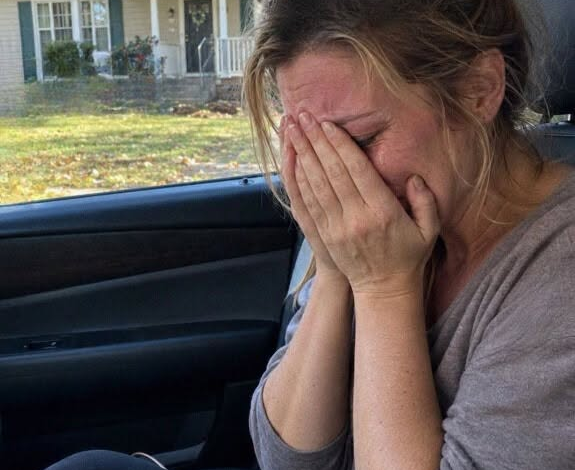
“I don’t know,” she whispered. “But I remember coming here.”
Tears began rolling down her cheeks.
Then she said something that sent a chill through me.
“I should have done this before.”
I reached for her hand and asked what she meant, but she couldn’t explain. She only knew that something important connected her to that house.
Before I could suggest returning another day, she opened the car door and walked toward the front entrance.
I followed her to the porch.
When a woman answered our knock, she froze.
“Rachel?”
Her face filled with disbelief and emotion.
“Oh, Rachel. You came back!”
My wife stepped closer to me.
“Do I know you?”
The woman’s expression changed.
“I’m Bianca. Your sister.”
I stood there in shock. Rachel had spent years telling me about the painful separation between them, yet her sister was welcoming her as though their relationship had already begun to heal.
Bianca invited us inside and led Rachel to a chair beside the kitchen window.
“You always loved sitting here,” she explained. “You used to say the afternoon sunlight made everything look romantic.”
Rachel smiled faintly.
“That sounds like something I might say.”
On a nearby shelf, I noticed a photograph of the sisters sitting together with cups of coffee. They looked happy and comfortable with each other.
I couldn’t understand it.
Rachel had never mentioned reconnecting with Bianca before the accident.
When I asked how long they had been seeing each other again, Bianca explained that they had started rebuilding their relationship several months before Rachel’s accident.
My wife stared at the photograph.
“I look happy.”
“You were,” Bianca replied. “You told me so many stories about your husband and children.”
I wanted to ask more questions, but Rachel surprised me by asking whether we could visit her sister again.
Bianca’s eyes filled with tears.
“I’d love that.”
On the drive home, I struggled to understand what I’d witnessed. My wife had apparently repaired an important relationship before losing her memory, and I hadn’t known anything about it.
That evening, I confronted Rachel gently.
“Why didn’t you tell me you’d started seeing Bianca again?”
She looked down at the photograph.
“I wish I could explain. I don’t remember everything that happened.”
I reminded her that she’d once told me she could never forgive Bianca for abandoning their mother during her illness.
Rachel studied the photograph again.
“But I went back to her,” she whispered.
It was clear that whatever had happened between the sisters, Rachel had eventually decided their relationship was worth another chance.
The following evening, our daughter Grace noticed Bianca’s phone number beside the telephone and immediately asked why we had contacted her aunt.
Grace remembered the family history differently. She believed Bianca had left Rachel to care for their grandmother alone and couldn’t understand why her mother would want her back in her life.
I admitted that I didn’t know the whole story.
Grace asked whether I trusted Bianca.
I told her I wasn’t sure, but I believed we needed to hear her side before making any judgments.
After spending almost a year helping Rachel recover her memories, I realized I had nearly made the same mistake as everyone else: assuming I already understood her past.
The next morning, I asked Rachel whether she’d mind if I visited Bianca alone.
She agreed, but only after asking me to promise that I’d tell her everything I learned.
When I arrived, Bianca welcomed me into her kitchen, where several family photographs and old letters were spread across the table.
She explained that Rachel had asked for copies of the photographs before the accident. She had also tried contacting Rachel after learning about the crash, but she didn’t want to arrive uninvited and risk frightening her sister.
I told Bianca that Rachel believed she had abandoned their mother.
Bianca lowered her eyes.
“I wasn’t there enough. Rachel carried most of the responsibility.”
I asked why she hadn’t done more to help.
Instead of answering immediately, she opened a drawer and brought out several letters written by their mother.
One thanked Bianca for sending money to help cover household expenses. Another described the arrangements Bianca had made to provide support during their mother’s illness.
There were also payment records and notes showing that Bianca had tried to help from a distance.
Rachel had never known about any of it.
Their mother had asked Bianca to keep the financial assistance secret because she didn’t want Rachel to feel embarrassed or worry about money.
I sat quietly, remembering all the times Rachel had returned from visiting her mother exhausted and convinced that Bianca didn’t care.
I’d believed her because I trusted my wife.
Now I understood that the truth was more complicated.
Bianca admitted that although she had helped financially, she had failed to provide the emotional support Rachel needed.
“I thought arranging things from a distance would be enough,” she explained. “But she needed me to be there.”
Then Bianca showed me a message Rachel had sent her before the accident.
In it, Rachel explained that she had discovered their mother’s letters and wanted the sisters to talk.
Bianca confirmed that Rachel had visited her shortly afterward. They had argued about the past, admitted their mistakes, and eventually apologized to each other.
They hadn’t repaired everything overnight, but Rachel had continued visiting.
“She wanted to make sure we could rebuild our relationship before introducing me to her family,” Bianca explained.
Before I left, I asked what she wanted now that Rachel couldn’t remember those conversations.
Bianca looked at the photographs on the table.
“I want to know my sister again. Even if we have to start by introducing ourselves.”
For the first time, I understood that Bianca wasn’t asking Rachel to remember or forgive her. She simply wanted another chance to build a relationship with her sister.
When I returned home, Rachel was helping Ben assemble a model airplane.
She asked how my visit had gone, and I explained everything I’d learned about the letters and the sisters’ reconciliation.
Rachel listened quietly.
“So Bianca was helping our mother?”
“Yes. But she also admitted that she should have been there more often.”
Rachel rubbed her thumb against her palm.
“Was I wrong about everything?”
I took her hand.
“You were hurt, and you needed your sister. But the truth is that she cared more than you realized.”
Rachel looked toward the window.
“I wish I could remember making things right with her.”
I asked whether she wanted to visit Bianca again.
“Yes,” she answered without hesitation.
And this time, I encouraged her.
When we discussed Ben’s upcoming birthday, Rachel suggested inviting Bianca to dinner.
The children had different reactions. Sam was excited to hear stories about his mother’s childhood, and Ben wanted to know whether his aunt knew what kind of cake he liked.
Grace remained cautious, worried that Bianca might hurt Rachel again.
I reminded her that we couldn’t control the past, but we could give Rachel the freedom to decide what kind of relationship she wanted with her sister.
Eventually, Grace agreed to meet Bianca while making it clear that she would form her own opinion.
Later that evening, Rachel called her sister herself and invited her to Ben’s birthday dinner.
Bianca sounded surprised and delighted.
Rachel smiled as she spoke, and for a moment, I saw something familiar in her expression.
On the day of the celebration, Rachel helped me prepare dinner. As I struggled to open a stubborn jar, she teased me about getting too old for kitchen duties.
I handed it to her, and she opened it effortlessly.
“Show-off,” I muttered.
She laughed.
Then she became serious and thanked me for helping her find Bianca again.
I told her the truth.
“You found her, Rachel. I just drove.”
When Bianca arrived, she brought a homemade dish and a wrapped present. She remembered that Rachel used to love cheesy bread and had made some especially for the occasion.
During dinner, Bianca entertained the children with stories about their mother’s childhood.
She described how Rachel used to insist that they dress alike, how she tried to teach Bianca to make her bed, and how she once practiced the same song for weeks until their mother finally hid the radio.
The children laughed, and Rachel joined them.
When Sam asked whether his mother had always been good at singing, Bianca assured him that she hadn’t.
Rachel protested, but then Sam proudly explained that she had sung the same song to him three times every night when he was little.
Rachel looked at him with curiosity.
“Did I?”
“Yes! Every night,” he replied.
Instead of answering for her, I stayed quiet and allowed Sam to tell her the story himself.
After dinner, Bianca brought out another childhood photograph showing the two sisters standing together in matching sweaters.
Rachel studied it carefully.
“That’s really us?”
Bianca nodded.
“You insisted we wear matching clothes.”
Rachel smiled.
“I must have been difficult.”
“You certainly kept me busy,” Bianca replied.
They both laughed.
Then Rachel reached across the table and gently took her sister’s hand.
“I’d like to hear more about us.”
Bianca squeezed her fingers.
“I’d love to tell you.”
I pulled up another chair beside them, realizing that helping my wife recover her memories wasn’t just about reminding her of the past. It was also about allowing her to discover it again in her own way.
For months, I’d tried to fill the gaps in Rachel’s memory with stories, photographs, and explanations. I’d believed that protecting her meant guiding her toward the life she’d lost.
But finding Bianca taught me something important: sometimes, the people we love need more than someone to tell them who they used to be. They need the freedom to rediscover their past, make their own choices, and rebuild the relationships that still matter to them.
Rachel might not remember every conversation or every apology she had shared with her sister, but she didn’t need to remember everything to begin again.
That evening, as I listened to the sisters laughing together, I realized we weren’t simply trying to recover the family we had been before the accident.
We were building a new one, one memory at a time. ❤️