My Husband of 64 Years Left Me Only a Rusty Toolbox and 64 Roses—But What I Found Hidden Inside Changed Everything
Part 1: A Toolbox and Sixty-Four Roses
My husband of sixty-four years left me a dented toolbox and a garden full of roses.
That is how it sounded, anyway, on the gray Friday in late March when an attorney named Lionel Cross finished reading Arthur’s will. We had buried Arthur two weeks earlier. I was eighty-seven years old, Arthur had been ninety-one, and I was sitting in a leather chair too big for me, listening to a stranger explain what my life was worth.
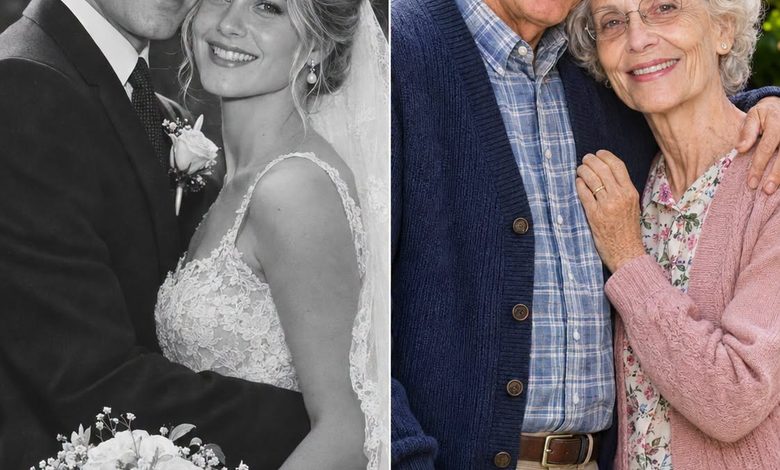
We married on June 11, 1960, in a small white church in Dayton, Ohio. I was twenty-two and Arthur was twenty-six, wearing a borrowed tuxedo that pinched at the shoulders. We raised two children in the house on Alder Lane, paid it off by 1994, and never once spent a night angry with the lights still on. At least, that was how I remembered it.
The will was short. Arthur’s investment accounts, and the proceeds from the sale of the Alder Lane house “within sixty days of my passing,” would be divided equally between our son Daniel and our daughter Claire. To my wife Ruth, Mr. Cross read, “I leave my workshop toolbox and the roses, which she knows the meaning of. The estate will also pay her first year of residence at Willow Pines Senior Living.”
Nobody spoke for a moment. Then Claire, who has always been the one to say the quiet thing out loud, set down her pen. “Mom, there has to be a mistake.”
“There isn’t,” said Gordon Pratt.
Gordon had been Arthur’s accountant for thirty-eight years. He had eaten at our table at Christmas, carried my casserole dishes to the car, and cried at the funeral harder than I did. Arthur had named him executor, and now Gordon folded his hands over the file in front of him and spoke in the soft voice people use around widows.
“Arthur changed these arrangements in January, Ruth. He was worried about you in that big house. The stairs. The yard. Willow Pines has nurses on every floor, three meals a day, and no snow to shovel.”
“I haven’t shoveled snow since 1998,” I said. “Daniel does it. Or the boy next door.”
Daniel shifted in his chair. He is sixty-one, with his father’s wide shoulders and a habit of agreeing with whoever spoke last. “Mom, Gordon says Dad was tired at the end. Maybe he just wanted to make sure you were safe.”
I looked at my son and then at the walker parked beside my chair. I have used it since my hip surgery two winters ago. Gordon had glanced at it more than once that morning, the way people glance at a ticking clock.
“I have a walker,” I said. “I don’t have a diagnosis.”
Gordon smiled kindly, which was worse than if he had argued. He told me there was no need to decide anything today. He told me a buyer was already interested in the property. A family-owned developer, Summit Row Homes, had offered two hundred eighty-nine thousand dollars in cash, with a fast closing, so I would never have to think about the house again.
Two hundred eighty-nine thousand. I did not know the exact value of our home, but I knew that the house across the street, with the same bones and a smaller yard, had sold the previous spring for well over four hundred thousand. I said nothing. Sixty-four years of marriage teaches you that sometimes the best question is the one you save.
On the drive home, Claire kept glancing at me in the rearview mirror. “Mom, you don’t have to agree to anything. We can get a second opinion.”
“Let’s not make Gordon feel unwelcome,” Daniel said. “He’s been good to us.”
I watched Dayton slide by the window. Arthur had not been a secretive man. He had been a machinist, then a shop foreman, then a man who whistled while he fixed things. In sixty-four years he had never made a significant decision without turning to me across the kitchen table and saying, “Ruthie, what do you think?” And in his last months, in a hospital bed set up in our living room, he had told me almost nothing about money or paper. He had only held my hand and asked me to read to him from the garden catalogs.
So why would he send me away to a place with nurses on every floor?
When everyone had gone and the house had gone quiet, I did what I always do when I cannot sleep. I went to the workshop. It sits behind the kitchen, a narrow room that still smells of oil and sawdust. Arthur’s toolbox, red once and rust-colored now, sat on the bench exactly where he had left it.
I lifted the lid. Wrenches, a tape measure, a coffee can of loose screws. I almost closed it again, but the top tray sat a quarter inch too high. Arthur had never in his life made a tray sit crooked. I lifted it out.
Underneath lay a single brass key on a paper tag stamped with a number, 318, and an envelope with my name on it in Arthur’s blocky capital letters.
I opened it with fingers that suddenly would not behave.
RUTH, the note said. IF GORDON OFFERS TO HELP WITH THE HOUSE, SAY YES. THEN COUNT THE ROSES. START AT THE FIRST. STOP AT THE ONE THAT DOESN’T BELONG.
Part 2: The Rose That Doesn’t Belong
I read the note four times, sitting on Arthur’s workshop stool with the key warm in my palm.
Count the roses. It sounded like one of the games Arthur used to invent when the children were small, treasure maps drawn on grocery bags, clues hidden in the clothes dryer. But this was not a game, and the handwriting was not steady. These were the capital letters of a man who had written them slowly, with effort, in a month when holding a pen cost him something.
The roses are the story of our marriage, though I have never said so aloud. On our first anniversary, in June of 1961, Arthur came home with a single pink rosebush in a bucket and planted it by the back fence without a word. The next June he planted another beside it. He never missed a year, through layoffs, through the winter Claire had pneumonia, through the year his father died. Sixty-four anniversaries. Sixty-four bushes. They run along the fence like a pink-and-green ribbon, and the neighbors call it Arthur’s Mile, though it is nowhere near that long.
I did not sleep much that night. In the morning I phoned my granddaughter.
Josie is Claire’s daughter, twenty-six, in the second year of law school at the University of Dayton. She has her grandfather’s stubborn chin. She arrived forty minutes later in a denim jacket, carrying two coffees, and listened to me read the note without once telling me I was being fanciful.
“Gram, can I see the key?” She turned it over. “This tag is from a bank. Harmon Valley Savings, I think. This is a safe deposit box number.”
“Then why the roses?”
“One thing at a time.” She pushed her hair up into its ponytail, the way she does before an exam. “Let’s count.”
The morning was cold and bright. I took my walker down the back steps, one careful rubber-footed stair at a time, and we began at the first bush, the oldest, thick as my wrist at the base. Josie counted aloud. Two. Three. By the tenth bush, my hands were stiff with cold, and she tucked them into her jacket pockets while she kept going.
All of them pink. All of them the same variety, a soft old-fashioned grandiflora Arthur called the Ruthie, though that is not its real name. He had chosen it because it was the color of the dress I wore on our first date.
Then, at the thirty-first bush, Josie stopped.
“Gram. This one is white.”
It was. It stood in the line like a single pale tooth among the pink, a smaller bush, with bare canes and a few tight buds. I stared at it, and a memory came up from nowhere, slow and clear, like a photograph developing.
June of 1991. Our thirty-first anniversary. Arthur had come in from the garden after dark, mud to his knees, and refused to explain. I had been irritated, I remember, because he had changed the pattern. I asked him why he’d planted a white one, and he said, “Because it’s for later.” I thought he meant for later in the summer. I let it go.
“This is the one that doesn’t belong,” Josie said quietly.
We fetched a spade from the shed. The ground was soft after weeks of thaw, and Josie dug while I held the walker and tried not to cry. A foot down, the blade struck metal.
It was a steel box, the size of a loaf of bread, wrapped in several layers of heavy plastic and sealed with tape that had gone brittle. Josie lifted it out like a surgeon. We carried it into the kitchen and set it on the table where Arthur and I had eaten some sixty thousand breakfasts.
Inside lay a green accountant’s ledger, a small spiral notebook, and a letter in Arthur’s handwriting, this time in his ordinary cursive from before his illness. The date at the top was September 19, six months before he died. Josie looked at me. I nodded, and she opened the letter and read it aloud, because my voice would not hold.
“My Ruthie. If you are reading this, you counted the roses, which means you are as stubborn as I always said. I am sorry to make you do this the hard way. I had my reasons.
“This past September, while looking for a tax receipt, I found something in Gordon Pratt’s paperwork that did not belong there. Over the last seven years, from 2017 through 2024, he has moved money out of my retirement accounts in small amounts under the label ‘advisory adjustments.’ I added it up three times. The total is two hundred twelve thousand, four hundred dollars. The ledger in this box shows every transfer, with dates and amounts.”
Josie’s voice slowed. I could hear her swallowing.
“I could have gone straight to the police, but I am an old man, and I know how this goes. Gordon would explain it. He explains everything. He would call it a misunderstanding. He would say that Arthur was confused. And while the lawyers argued, you would be the one living in the middle of it. So I went to a lawyer of my own, a woman named Naomi Feldman, whom Gordon has never met. With her help I moved everything I could into a trust with you as trustee. The house is in that trust. It has been since November.
“The will you heard is a stage prop, Ruthie. Gordon helped me draft it, or thought he did. I wanted to see what he would do if he believed the house was loose and you were alone. A man who has done nothing wrong would simply carry out my wishes. A man who has been taking money will want the house sold quickly, the old files cleared, and you somewhere far from the paperwork.
“Do not tell Daniel and Claire yet. They are good children. But Gordon has a talent for making the thing he wants sound like the reasonable thing, and I will not have our children become his instruments. Say yes to him. Smile. He will come for the house within the week. Let him.”
Josie lowered the page. Neither of us said anything.
Then, through the kitchen window, we both saw a long silver sedan turn into the driveway and stop with a soft, expensive sound. Gordon Pratt stepped out, buttoning his camel overcoat. In his hand was a leather folder, and beside him, with his shoulders hunched against the cold, walked my son.
Part 3: Say Yes, Smile
I have never moved so fast with a walker in my life.
Josie swept the ledger and the letter into a dish towel. I shoved the steel box into the pantry behind the flour. By the time the doorbell rang, my granddaughter was standing at the sink rinsing coffee cups, and I was settled at the table with my hands folded, wearing the face I used to wear when the children asked whether we were out of ice cream.
“Ruth.” Gordon crossed the threshold with both arms spread, as though to catch me. “I hope we’re not intruding. Daniel and I thought we’d bring you some good news.”
Daniel hugged me and smelled of cold air and car heater. He looked grateful to be doing something. He looked, God help him, relieved.
Gordon opened his folder on the kitchen table, beside the spot where the steel box had rested ten minutes earlier. He laid out a glossy brochure for Willow Pines, with a photograph of silver-haired people laughing around a table that looked suspiciously like a stock image. Beside it he placed two documents. One was a listing authorization for the Alder Lane property. The other was labeled a Limited Estate Power of Attorney.
“It’s simply for convenience, Ruth,” he said. “The estate has to sell the house, and I’d like to handle the showings and paperwork so you don’t have to be bothered. You sign here, here, and initial here.”
I looked at the pages. In the margin of the second one, a small box had been pre-checked, authorizing the ‘removal and disposal of household papers and files.’
Arthur had been right. A man who wished only to carry out a dead friend’s wishes would not need the power to throw away the paper.
“That’s very thoughtful of you, Gordon,” I said.
His shoulders loosened half an inch. Beside the sink, Josie dropped a spoon in the basin with a clatter.
“And the buyer?” I asked. “That Summit Row company?”
“Family-owned. Very respectful.” He brushed a nonexistent speck from his sleeve. “My brother-in-law, Vince Marlow, runs it. I wouldn’t want to hand you over to a stranger.”
So there it was, as easy as a coin dropped on a counter. Gordon’s brother-in-law was buying our house for two hundred eighty-nine thousand dollars, a hundred and forty thousand under what it was worth, and Gordon would hold the power to empty it of paper before anybody looked.
I could have thrown my teacup at him. Instead I did what Arthur had asked. I smiled. I felt it settle onto my face like a borrowed hat.
“I’d like to sign,” I said. “But Gordon, you know how I am. I’d like everyone here when I do it. Daniel, Claire, Josie. Arthur would have wanted us together for something this big. Let’s say Friday afternoon, at four o’clock. Here, in the kitchen.”
Gordon’s eyebrows rose a fraction. “Friday is when Vince’s offer expires, Ruth. Five o’clock.”
“Then four o’clock will give us an hour to spare.”
Daniel gave me a small, proud smile, as if I had passed an exam. Gordon hesitated. I could almost watch the arithmetic move behind his glasses: an old woman, a grieving family, three days, no obvious harm. He nodded.
“Four o’clock Friday, then. I’ll bring a notary.” He gathered his papers and patted my hand. “You’re doing the right thing, Ruth.”
At the door, he paused and looked out through the glass at the backyard, at the long ribbon of rosebushes bare against the winter fence. “Those will have to go before the closing, of course,” he said. “Summit Row wants to clear the lot.”
“Of course,” I said, and felt the words scrape.
When the silver sedan had disappeared down Alder Lane, Daniel lingered on the porch. “He’s really trying to help, Mom,” he said. I kissed his cheek and said that I knew he thought so. It was true that he thought so. It was also true that I was lying to my own son, and it sat in my stomach like a stone.
Josie closed the door, leaned against it, and let out a breath she must have been holding for ten minutes. “Gram. He wants to throw away the paper.”
“I noticed.”
“We need Naomi Feldman. Today.”
Naomi’s office was above a florist’s shop on Third Street, a small suite with a window full of African violets. She was in her mid-fifties, with short natural curls and a charcoal blazer, and she did not seem surprised to see me. “Mrs. Calloway,” she said, taking both my hands. “Arthur told me you would count the roses faster than he thought.”
I started to laugh, and then I was crying, there in her doorway with my walker wedged in the frame, and Naomi simply waited as though crying were part of the appointment.
She read the letter first, then went through the ledger page by page with a yellow pencil, tapping the figures. Josie sat beside her, taking notes. When she finished, Naomi took off her glasses.
“This is thorough,” she said. “Every transfer, every date, matched against account statements Arthur obtained himself. The trust is sound. The deed was recorded in November, and Gordon never checked, because Arthur told him he’d handle the title work. Your house is not part of the estate, Mrs. Calloway. Mr. Pratt has no authority to sell it, and Summit Row cannot buy it from him.”
“Then why didn’t Arthur just tell him?”
“Because Arthur wanted two things.” She held up a finger. “Proof of what Gordon took, which the ledger supplies. And proof of what Gordon would do next, which has now begun. Today he brought you a document that tries to give him control of papers he has no right to touch. That is intent. Arthur was a careful man.”
“He was an infuriating man,” I said.
“Yes,” Naomi said gently. “That, too.” Then her face changed. She reached for a notepad on her desk. “There’s something else you should know. The ledger is half of what Arthur left. The other half is in the safe deposit box, number 318, at Harmon Valley Savings. I called the bank this morning to confirm you could access it.”
“And?”
“Mrs. Okafor, the manager, told me that yesterday afternoon a woman phoned claiming to be Ruth Calloway. She asked who else had signature access to box 318, and whether it could be opened without the key.”
Part 4: What Was Waiting in Box 318
Harmon Valley Savings sits on a corner downtown, in a stone building with brass doors. Arthur and I opened our first joint account there in 1961 with sixty-two dollars and a promise to the teller that we would be good for it.
Josie drove. Naomi met us on the sidewalk, and the three of us went in together, me with my walker, the brass key zipped into my coat pocket where I could feel it against my ribs.
Mrs. Okafor greeted us in a burgundy suit, her braids pinned up in a neat crown. She had the unhurried manner of someone who has kept many secrets for many families. “Mrs. Calloway. I’m so sorry about Mr. Calloway.” Then, lower, “Thank you for coming in person. I’d like to ask about yesterday’s call.”
She told us what she’d told Naomi. A woman had phoned, polite and brisk, using my name and my birth date. She asked who else had access to box 318. Mrs. Okafor, who had been trained to be suspicious of exactly that kind of call, said she could only discuss the matter in person with photo identification. The woman thanked her and hung up.
“The number on the caller ID was a private line registered to a business,” Mrs. Okafor said. “I wrote it down.” She slid a slip of paper to Naomi. Naomi read it, and her mouth went thin. “That’s the main office line for Pratt and Associates.”
“His secretary,” I whispered. A young woman named Tessa, who had once brought me a fruitcake. I felt a flash of pity for her and an even larger flash of anger for the man who had put her on that telephone.
Mrs. Okafor led us down to the vault. Ten minutes later, in a small private room with a table and a single lamp, I opened box 318 with Arthur’s key and my own signature, in a hand that did not shake nearly as much as I expected.
Inside was a folder, a small silver digital recorder, and a sealed envelope addressed, in Arthur’s cursive, to Daniel and Claire.
The folder held certified copies of the recorded deed, dated November 8, and the Calloway Family Trust, with my name as trustee and sole beneficiary for my lifetime. After me, it said, everything would pass equally to Daniel and Claire. A letter from Arthur’s physician, Dr. Patel, attested that on the day he signed, Arthur had been entirely clear in mind. And a brief handwritten note, clipped to the front, in the cursive I would know anywhere.
“Ruthie, they will say I was confused. Here is the evidence that I wasn’t. Here, too, is the thing I could not bring myself to write down.”
I looked at the recorder. Naomi gently pressed the play button, and a young man’s voice, which turned out to be Arthur’s, though thinner than I remembered, filled the room. The recording was dated October 3.
“Seven years, Gordon,” Arthur said. “Two hundred and twelve thousand dollars.”
There was a long silence. Then Gordon’s voice, calm, almost amused. “Art, you’re confusing yourself. The adjustments were fees. If you’d like I can show you the engagement letter.”
“I’ve seen the engagement letter. It says nine thousand a year. You took thirty.”
Another silence, shorter. Then Gordon, differently now, with the false warmth gone. “I was going to put it back. Things got tight after the divorce, and the market turned, and I always meant to put it back, I swear to God.”
“You were my friend for thirty-eight years.”
“I am your friend. Don’t make this ugly, Art. You’re sick. Ruth will need looking after, and I can look after her. Put her somewhere comfortable. Let me handle the estate, and no one ever needs to know about any of this. Think about her. Think about what a trial would do to a woman her age.”
The recording clicked off. Nobody in the little room moved.
“Think about what a trial would do to a woman her age,” I repeated. My voice sounded like paper tearing. “He threatened me, using my husband’s dying breath.”
Naomi’s hand closed over mine. “He admitted the transfers, Ruth. On a recording Arthur made in a state where one-party consent applies. This does not rest on anyone’s interpretation anymore.”
I thought of Arthur in that bed in our living room, listening to the hospice nurse count his pulse, and the secret he had kept from me for six months so I would not have to carry it. I thought of the white rose and its blank bare canes. For later.
“There’s the envelope for the children,” Josie said softly.
The seal was thick. Naomi suggested we hold it until the right moment, and I agreed. I tucked it into my purse, beside the recorder, and for the first time in two weeks I felt something other than grief. I felt the cold, clear weight of a decision.
We came back out into the afternoon light. Naomi laid out a plan: the ledger, the recording, the trust documents, and Gordon’s own pre-checked ‘disposal of papers’ form would all be present on Friday at four o’clock, in my kitchen, exactly as I had promised. She would bring a court reporter and a senior colleague from her firm as witnesses. The state board that oversees licensed accountants had been quietly notified by letter that morning.
“All we need,” Naomi said, “is for you to keep the appointment and let him walk in with his folder.”
That should have been the end of the day. It was not. When Josie pulled into Alder Lane, Daniel’s blue truck was already parked at an angle across the driveway, and my son was standing on the porch with his arms crossed and his jaw working.
He did not wait for me to get out of the car. “Mom, I just got off the phone with Gordon.” His voice was thick. “He says you’ve been digging holes in the backyard in the middle of the night. He says Dad left debts you’re hiding, and that you took something out of the bank. He says you’re not well. Mom, I’m not going to stand by while you wreck Dad’s name. I’m calling Dr. Patel tomorrow.”
Josie moved to speak. I put a hand on her arm.
Sixty-four years of marriage had taught me many things, and one of them was this: you cannot argue a person out of the story he has been handed. You can only walk him to the place where the story stops.
“Daniel,” I said, “come into the garden with me. I want to show you what your father planted.”
Part 5: Sixty-Five
Daniel stood in the cold at the end of the rosebush line with his hands jammed in his windbreaker pockets, listening to the recorder. He listened to the whole thing. Then I handed him the ledger, and he turned the pages with his thumb, his lips moving as he read the figures. By the fourth page, he had stopped reading and was simply looking at the ground.
“He used Dad’s own voice,” my son said finally. “On the phone. He said Dad was hiding things.”
“He needed you to believe it.”
“I defended him.” Daniel’s voice cracked. “I sat in that office and told you he was only trying to help. I told Claire not to push.” He looked at the white rosebush, the one Josie had dug around, its earth turned dark in the pale light. “Mom, I’m so sorry.”
“You were the person he used best,” I said. “You wanted so badly to do right by us. That’s not a fault, Daniel. It just needs a better pair of eyes.”
He cried then, the broad-shouldered man who had never cried at his father’s funeral, and I held on to my walker with one hand and put the other on his back until it was over.
Friday came with weak spring sun and a wind that smelled of wet dirt. By half past three, the kitchen was full. Naomi sat at the head of the table with her senior colleague, a calm man named Mr. Brandt, and a court reporter with a small machine. Claire sat beside me, her reading glasses swinging on their chain. She had listened to the recording in silence, then gone out to the porch and stayed there for ten minutes, and when she came back in her face had been scrubbed clean of everything but resolve. Daniel stood at the counter, still pale. Josie leaned in the pantry doorway with her arms folded.
At four o’clock exactly, the silver sedan pulled into the driveway.
Gordon came in first, in the camel overcoat, with his leather folder under his arm and a notary behind him, a nervous young man with a stamp. After them came a heavier man in a golf vest, whose restless hands told me he was Vince Marlow. Gordon’s smile faltered when he saw the room. He recovered quickly.
“Ruth, I didn’t realize we’d have such a crowd.”
“You said everyone should be here,” I replied. “I took you at your word. Please, sit.”
He did not sit. His eyes went to Naomi, to the court reporter, to Daniel, who would not look at him. I watched the arithmetic start up again behind the silver-rimmed glasses, and for the first time it did not add.
“Mr. Pratt,” Naomi said pleasantly, “I represent Mrs. Calloway, in her capacity as trustee of the Calloway Family Trust. You may want to read the recorded deed before you place any documents on this table.” She slid a certified copy across to him.
He read it. I saw him get to the date, November 8. I saw a pulse jump in his throat.
“This is irregular,” he said. “Arthur’s will clearly states—”
“Arthur’s will governs the estate,” Naomi said. “This house is not in it.” She nodded to Vince Marlow. “Mr. Marlow, you’ll want to confirm that with your title company before closing on a property that, as of this afternoon, the seller has no authority to convey.”
Vince looked at his brother-in-law. “Gordon. What is she talking about?”
“Nothing. A technicality. We’ll fix it.”
“There’s more,” I said.
I set the silver recorder in the center of the table, and I pressed the button. Arthur’s voice filled the kitchen. Seven years, Gordon. Two hundred and twelve thousand dollars.
Nobody breathed. The notary stared at the floor as if it might open. When Gordon’s own voice came through, I was a little surprised at how small it sounded. I was going to put it back. And later: Think about what a trial would do to a woman her age.
The recording clicked off.
“You were going to throw away Arthur’s files,” Claire said, in the flat voice she once used on teachers who underestimated her. “You had my mother sign away the right to do it. And you had your secretary impersonate her on the phone.”
“Claire, listen. Everything I did, I did for this family.”
“No,” Daniel said, finally turning. “You did it to us.”
Vince Marlow had already stepped back toward the door. “I never saw any of this,” he said. “I want it on the record I was told this was a clean sale.” The court reporter, to her credit, did not look up from her keys. Vince left with his keys in his fist and did not shut the door behind him.
Gordon sagged. For a few seconds, he looked exactly as old as he was, seventy, a man in an expensive coat with nothing left to carry. Then he looked at me, and I saw something I had not expected. It was not rage. It was exhaustion.
“Ruth,” he said. “I did love him. I want you to know that.”
“I believe you,” I said. “That is the saddest part.”
What happened next took less than an hour, and it was the quietest ending to a long ruin that I could have asked for. Naomi laid out the terms. Gordon would resign as executor at once. He would repay the full two hundred twelve thousand four hundred dollars, with interest, according to a schedule Mr. Brandt would draft and the trust would enforce. He would cooperate with the state board’s review of his license. And in return, the trust, through its trustee, would not seek to have him prosecuted.
The decision was mine. Naomi had told me so, and I knew it, and I took a long time to give it.
I thought about Arthur, who had never wanted revenge. He had wanted protection. I thought about Tessa, who would have to find another job, and about Gordon’s wife, who had done nothing at all. And I thought about Daniel and Claire, who deserved to inherit a family and not a feud.
“Repay every cent,” I said. “Resign today. And stay away from this house and from my children.”
“Done,” Gordon whispered. The notary, who had been holding his stamp like a talisman, quietly put it back in his pocket and followed Gordon out. The silver sedan reversed out of the driveway slowly, as if it were afraid of waking someone.
When the kitchen was empty of strangers, I took Arthur’s sealed envelope from my purse and handed it to Claire. She opened it with her thumbnail. She read it to herself first, her glasses fogging, and then she passed it to Daniel, who read it and passed it back.
“Read it aloud, Mom,” Daniel said.
So I did.
“My dear Daniel and Claire. If your mother has put this in your hands, then something went wrong, and I am sorry for the part I played in it. I built a puzzle because your mother is the strongest person I have ever known, and a person like that does her best work when she is allowed to find the truth herself. I did not want to take that from her, or from you. Do not be hard on yourselves for believing Gordon. He was good at it. Be gentle with each other. The house is not the point. The point is the long table in the kitchen, and the people who come to it. Keep that table full. All my love, Dad.”
Nobody spoke. Josie wiped her face with the heel of her hand. Claire reached across the table and took mine, and then Daniel’s, and there we were, the four of us, with the ledger and the recorder and a pot of lukewarm tea, as ordinary and as unbroken as the day we had first sat down in that room.
In the weeks that followed, the house on Alder Lane stayed ours. I did not go to Willow Pines. Daniel came every Saturday to fix whatever was loose. Claire brought her famous lemon bars and sat with me on the back steps while Josie, now a permanent fixture, pruned the roses with a seriousness that would have made Arthur proud. We left the thirty-first bush alone. It had finally begun to leaf.
On June 11, our sixty-fifth anniversary, a florist’s van stopped in front of the house. A young man carried a pot up the walk and set it on the porch. It held a small rosebush with a card tied to its stem, in Arthur’s blocky capitals, which the florist said had been written and paid for in January.
I opened it with the same unsteady hands that had opened the toolbox.
NUMBER 65, RUTHIE. PLANT IT WHERE YOU CAN SEE IT FROM THE KITCHEN WINDOW. I HID A LOT OF THINGS FROM YOU THIS YEAR. I NEVER HID THIS ONE: I WOULD MARRY YOU AGAIN TOMORROW.
I stood on the porch holding that pot for a long time. Then Daniel took the spade, and Claire held my elbow, and Josie carried the watering can, and together we planted the sixty-fifth rose where I could see it from the sink.
Arthur had not left me nothing. He had left me the whole garden, and the proof that I had never been alone in it.
This afternoon, I stood at the kitchen window and watched the pink and the white and the new green catch the light. And I whispered, to nobody and to everybody, “Yes, my love. I would too.”
Disclaimer: This story is a work of fiction inspired by real-life themes. Names, characters, places and events are fictionalized, and any resemblance to real persons is purely coincidental. Images are for illustration purposes only.