Identical twins share shock results after one used Botox for 20 years and the other didn’t
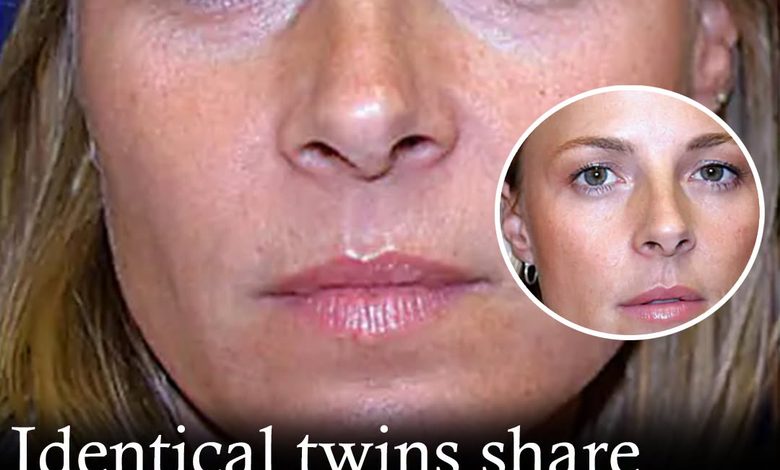
Identical Twins Reveal Striking Differences After One Uses Botox for 20 Years and the Other Avoids It
Two identical twin sisters became part of a fascinating medical comparison after one received Botox treatments for approximately two decades while the other chose not to have the injections.
The results attracted attention because the sisters shared the same genetic background, yet photographs taken over several years showed noticeable differences in their facial appearance.
The comparison offered an unusual opportunity to examine how long-term Botox use may affect visible signs of aging. However, experts have also pointed out that factors beyond cosmetic treatments can influence how a person’s face changes over time.
One twin started Botox at age 25
The sisters participated in a long-running comparison involving cosmetic Botox treatments.
One twin began receiving injections at approximately 25 years old, while her identical sister did not undergo the procedure.
The treated sister reportedly received injections two to three times a year, primarily targeting her forehead and the area between her eyebrows. She also occasionally received treatment around her eyes to reduce crow’s feet.
Botox is a brand name for botulinum toxin, a prescription medicine that temporarily relaxes targeted muscles. It is widely used to soften facial wrinkles, although it also has medical applications, including treatment for certain muscle disorders, migraines, and excessive sweating.
Dr. William Binder, who performed the injections, began documenting the sisters’ appearances in 2006, when they were 38 years old.
The photographs already showed differences. The sister receiving Botox had a smoother forehead and fewer visible lines around her eyes.
The differences became more noticeable over time
Six years later, additional photographs showed a more pronounced contrast between the sisters.
The untreated twin had developed deeper facial lines, while her sister’s forehead remained noticeably smoother.
The comparison also showed differences in the appearance of their jawlines and facial features. However, researchers could not establish that every visible change was directly caused by Botox.
Both women reportedly maintained healthy lifestyles and regularly used sunscreen. Even so, their living environments were different.
The untreated twin lived in Munich, while her sister lived in Los Angeles, where exposure to sunlight can be greater. Differences in sun exposure and other environmental factors may therefore have influenced their appearance.
This is an important limitation of the comparison: identical genetics do not mean two people experience exactly the same aging process.
What the doctor observed
Dr. Binder concluded that regular Botox treatments could help prevent certain wrinkles from becoming permanently visible.
These are known as static wrinkles, meaning lines that remain noticeable even when the face is relaxed.
Botox works by temporarily reducing muscle activity in targeted areas. Because repeated facial movements contribute to the formation of some wrinkles, relaxing those muscles can make certain lines less pronounced.
The study also reported that the treatment was well tolerated during the observation period, with no adverse effects reported after 13 years of continuous use.
That finding should not be interpreted as proof that Botox is risk-free for everyone. Results and side effects can vary depending on the individual, treatment area, dose, and medical circumstances.
Another doctor demonstrated Botox on one side of her face
The twin comparison is not the only example that has drawn attention to the effects of Botox.
California-based physician Dr. Bita Farrell also demonstrated the effects of injectable treatment by treating only one side of her face.
She focused on muscles that naturally pull parts of the lower face downward.
After approximately two weeks, she shared the results on social media. The untreated side showed stronger muscle contractions, while the treated side appeared smoother and more lifted.
Farrell explained that facial muscles can pull in different directions. When muscles responsible for downward movement are relaxed, the muscles that lift the cheeks may become more visually prominent.
The demonstration attracted interest because it allowed viewers to compare treated and untreated areas on the same face.
Can Botox create a more lifted appearance?
Botox is best known for softening wrinkles, particularly on the forehead, between the eyebrows, and around the eyes.
Depending on the injection site, relaxing certain muscles may also change the appearance of the lower face.
Some practitioners use carefully targeted injections to soften the appearance of marionette lines, reduce the prominence of certain downward-pulling muscles, and create a more balanced facial appearance.
However, Botox does not produce the same results for everyone, and it cannot replace surgical procedures or reverse every aspect of aging.
The treatment requires medical assessment and should be administered by a qualified healthcare professional who understands facial anatomy.
What the twin comparison really tells us
The sisters’ photographs provide an interesting illustration of how Botox may influence the appearance of facial wrinkles over time.
Because they are identical twins, their comparison offers a useful starting point for discussing the effects of cosmetic treatments.
Still, it was not a perfectly controlled experiment. Differences in location, sun exposure, lifestyle, and other environmental influences make it difficult to attribute every change to Botox alone.
The broader takeaway is that Botox can help reduce the appearance of certain expression-related wrinkles, but its effects depend on the individual and the way the treatment is used.
For anyone considering cosmetic injections, the most important step is to understand the potential benefits, limitations, and risks before making a decision.