A Simple Change in Sleeping Position That May Improve Your Comfort and Health!
The pursuit of a restful night is often treated as a quantitative challenge. We track our hours, obsess over our “deep sleep” percentages on wearable devices, and calculate the exact moment we must drift off to ensure we meet the golden standard of eight hours. However, in this quest for duration, we frequently overlook the qualitative foundation of rest: the physical orientation of the body. Sleep is far from a passive state; it is a period of intense biological labor. While the mind wanders through the theater of dreams, the body is busy repairing cellular damage, circulating vital fluids, and processing the remnants of the day’s nutrition. The efficacy of these systems is profoundly influenced by the simple physics of our sleeping posture. Among the various orientations the human body can take, sleeping on the left side has emerged as a particularly effective way to align our biological needs with the unrelenting force of gravity.
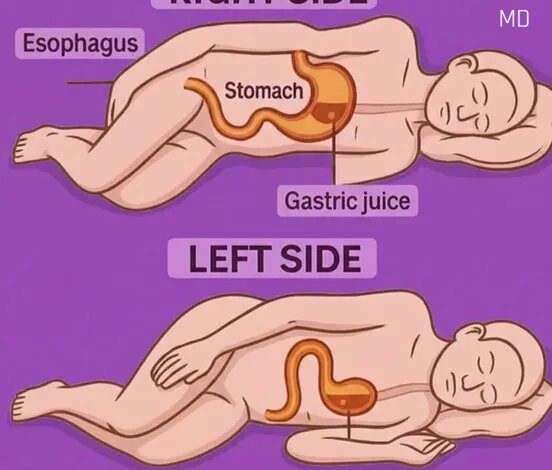
To understand why a simple shift to the left can be so transformative, one must first look at the internal architecture of the human torso. Our organs are not symmetrical; they are arranged in a complex, overlapping layout that favors specific orientations. The stomach, for instance, is naturally positioned on the left side of the abdomen. When we sleep on our left side, the stomach and its gastric juices remain lower than the esophagus. This uses gravity as a natural barrier, preventing stomach acid from migrating upward. For those who suffer from the persistent, burning discomfort of gastroesophageal reflux disease (GERD) or occasional nighttime heartburn, this minor adjustment can be the difference between a night of agony and a night of uninterrupted peace. On the contrary, sleeping on the right side raises the stomach above the esophagus, creating a downhill slope that encourages acid to leak into the sensitive tissues of the throat, often resulting in “silent reflux” that can damage the respiratory system over time.
Beyond the immediate relief of digestive discomfort, the left-side position acts as a facilitator for the body’s waste management systems. The transition from the small intestine to the large intestine—specifically the ileocecal valve—is located on the right side of the body. By lying on the left, we allow gravity to assist in the movement of food waste from the small intestine into the ascending colon. From there, the waste travels toward the descending colon on the left side. This natural “downhill” progression can significantly improve regular bowel movements and reduce the sensation of morning bloating or heaviness. For individuals with sluggish digestive tracts, this postural shift serves as a passive, non-invasive way to support the metabolic rhythm that is so often disrupted by the sedentary nature of modern life.
The benefits of the left side extend deep into the body’s filtration and circulatory networks. The lymphatic system, which serves as the body’s secondary circulatory system and primary defense against pathogens, is heavily weighted toward the left. The thoracic duct, the largest lymphatic vessel in the body, drains into the left subclavian vein. By positioning ourselves on the left, we provide the path of least resistance for the drainage of lymph fluid, which carries proteins, glucose, and waste products that need to be filtered through the lymph nodes. This is particularly crucial for brain health. Recent research into the glymphatic system—the brain’s unique waste-clearance mechanism—suggests that side-sleeping, in general, is more effective at clearing metabolic “trash” like beta-amyloid than sleeping on the back or stomach. When combined with the left-side orientation, the body’s ability to detoxify during the night is maximized, potentially leading to clearer cognitive function and a more refreshed mental state upon waking.
Cardiovascular health also finds a quiet ally in the left-side position. The heart is the hardest-working muscle in the body, and its primary artery, the aorta, arches to the left as it leaves the heart to deliver blood to the rest of the organism. When we sleep on our left side, the heart pumps blood “downhill” into the descending aorta, reducing the mechanical workload on the cardiac muscle. Furthermore, the inferior vena cava, the large vein that carries deoxygenated blood back to the heart, sits on the right side of the spine. Lying on the left side keeps the weight of the heavy internal organs—particularly the liver—from pressing down on this vital vessel. By keeping the vena cava unobstructed, we ensure an optimal return of blood to the heart, which stabilizes blood pressure and improves overall circulation to the extremities.
This circulatory advantage is most famously documented in prenatal care. For pregnant women, especially as the pregnancy progresses into the second and third trimesters, the left-side position is often cited as the gold standard for safety and comfort. As the uterus grows, it can exert significant pressure on the liver and the inferior vena cava. Lying on the left side alleviates this pressure, ensuring that the placenta receives a steady, rich supply of oxygenated blood. This doesn’t just benefit the developing baby; it also helps the mother by reducing the likelihood of edema—the swelling of ankles and feet caused by poor fluid return—and preventing the dizzying drop in blood pressure that can occur when lying flat on the back.
Despite these clear advantages, the human body is a creature of deep-seated habits. If you have spent decades as a “back sleeper” or a “stomach sleeper,” the prospect of spending eight hours on your left side can feel like a daunting physical chore. The transition requires more than just intent; it requires an environmental strategy. For many, the most effective tool is the use of “prop pillows.” Placing a long, firm body pillow along the back can prevent the subconscious roll onto the spine during the middle of the night. Simultaneously, placing a smaller pillow between the knees helps to keep the hips and pelvis aligned, preventing the lower back strain that can sometimes occur when the top leg pulls the spine out of its neutral position.
It is important to acknowledge that the body is not a statue. Even the most dedicated side-sleeper will shift positions dozens of times throughout the night. The goal is not to remain perfectly motionless on the left side from dusk until dawn, but rather to begin the night in that position and return to it whenever one becomes conscious of a shift. Over time, the subconscious mind learns to associate the left-side orientation with higher levels of comfort and lower levels of internal friction. The “adjustment period” usually lasts about two weeks, after which the body often naturally gravitates toward the position that allows its internal systems to function with the least amount of resistance.
Ultimately, the way we sleep is a reflection of how we treat our body’s most basic needs. In a culture that often views sleep as a luxury or a nuisance to be minimized, reclaiming the quality of our rest through mindful positioning is an act of profound self-care. By making this simple, gravity-assisted change, we transform our bed from a mere place of unconsciousness into a sophisticated recovery chamber. We provide our heart, our gut, and our immune system with the optimal conditions they need to thrive. While we may not be able to control every stressor we encounter during our waking hours, we can certainly control the orientation of our bodies in the dark, turning every night into a quiet revolution of health and restorative energy. When we wake up without the burn of reflux, the fog of poor drainage, or the heaviness of stagnant circulation, we realize that the smallest changes—sometimes just a few inches to the left—can lead to the most significant improvements in how we face the world.