Zoo Responds to Viral Claims of Monkey ‘Punch’ Being Bullied
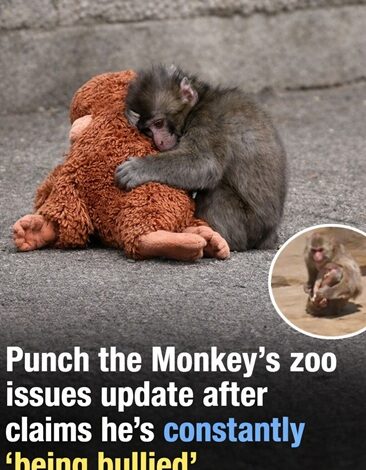
Punch, the baby Japanese macaque who captured global attention with his heartwarming videos online, continues to be closely monitored by zookeepers at the Ichikawa City Zoological and Botanical Garden in Japan.
Born in July last year, Punch faced a difficult start in life. His mother rejected him shortly after birth, leaving the tiny primate without essential maternal care, a situation that required immediate intervention by zoo staff.
In the absence of maternal attention, zookeepers provided Punch with a stuffed toy roughly the size of his own body, which he began to hug and cling to as a surrogate source of comfort and security.
Videos of Punch holding the oversized toy went viral, captivating audiences worldwide. Viewers were touched by his vulnerability, seeing the monkey use the toy as a substitute for a mother’s warmth, earning him global fame.
Despite his growing popularity online, Punch’s life in the macaque troop posed new challenges. Japanese macaques live in strict social hierarchies, and young or low-ranking monkeys often face dominance behaviors from older members of the group.
Recently, concerns arose when a video surfaced showing Punch being dragged across the enclosure by an adult monkey. Viewers feared the behavior indicated bullying or mistreatment by his troop mates.
In response, the Ichikawa City Zoological and Botanical Garden issued a detailed statement on social media platform X, clarifying that such interactions are part of normal macaque social behavior, not abusive acts.
According to zookeepers, dominant monkeys often discipline younger or lower-ranking members as part of establishing and maintaining hierarchy. Such behavior, while appearing rough to human observers, is a standard aspect of macaque troop dynamics.
The zoo emphasized that Punch has been scolded or disciplined multiple times, but no single monkey has exhibited aggressive behavior severe enough to harm him physically, ensuring his safety remains a priority.
Zookeepers also highlighted that macaque interactions differ significantly from human concepts of bullying. Discipline within the troop serves social and developmental purposes and is essential for teaching younger monkeys appropriate behaviors.
Staff explained that removing Punch from his group could negatively affect his development. Social integration is critical for learning communication, foraging, and other survival skills necessary for Japanese macaques in both wild and captive environments.
The zoo added that Punch’s interactions with his troop have been gradually improving. More monkeys have started playing and grooming him, and he now relies less on his stuffed toy for comfort than he did initially.
Observing these changes, zookeepers note that Punch is slowly becoming a socially integrated member of the troop, showing signs of bonding and trust with several adult and juvenile macaques.
On March 8, staff removed a few particularly aggressive monkeys from the enclosure as a precaution. This decision aimed to reduce stress for Punch while maintaining the integrity of the troop’s social structure.
Zoo officials clarified that complete isolation would be detrimental, emphasizing that careful monitoring and minor adjustments to group composition can balance social interaction with safety for vulnerable individuals like Punch.
Daily routines include supervised playtime, nutritional assessments, and behavioral observations. Staff track interactions meticulously to ensure that Punch can engage safely with the troop while developing essential social skills.
Zookeepers also provide enrichment activities, such as puzzle feeders and climbing structures, to stimulate Punch’s cognitive development and physical coordination, promoting resilience and confidence within the social hierarchy.
Punch’s diet is carefully managed to support growth, with a combination of fruits, vegetables, and macaque-specific supplements. Nutrition plays a vital role in both physical and mental health for the young primate.
In addition to physical health, the staff monitors stress indicators, including vocalizations, posture, and interactions. Any signs of distress trigger immediate intervention to ensure Punch remains safe and emotionally supported within the troop.
The zoo’s approach emphasizes gradual integration rather than abrupt separation. Punch learns social cues from peers while zookeepers provide guidance, ensuring he gains confidence without experiencing undue harm from more dominant monkeys.
Visitors to the zoo have expressed concern after watching clips online. However, staff have explained that what may appear harsh to humans often reflects natural teaching behaviors that help younger monkeys adapt to complex social environments.
Educational programs at Ichikawa Zoo now incorporate Punch’s story, helping the public understand Japanese macaque social structures, the challenges of maternal rejection, and the importance of troop integration for infant primates.
Staff also use these programs to highlight the emotional lives of primates, emphasizing that surrogate care, enrichment, and attentive monitoring are critical for young animals who have been rejected by their mothers.
Punch’s viral fame has also helped raise awareness about the welfare of Japanese macaques in captivity. The zoo encourages donations and support to improve living conditions, social enrichment, and veterinary care for all primates in their care.
Daily behavioral logs show that Punch is gradually gaining independence. He begins to explore the enclosure alone for short periods, observing peers and learning climbing and foraging techniques essential for his long-term development.
Interactions with his stuffed toy are decreasing, though he occasionally returns to it during moments of stress or uncertainty, indicating that he still relies on familiar comfort while navigating complex social dynamics.
Zookeepers stress that his attachment to the toy is normal for monkeys who experience early maternal deprivation. It provides reassurance and a sense of security while they acclimate to new social environments.
Monitoring includes video surveillance, ensuring staff can respond immediately if any interactions escalate beyond acceptable social behaviors, balancing safety with natural troop dynamics that teach essential skills.
In addition to physical and social monitoring, veterinary staff perform regular health checks. These include weight assessments, fur condition, dental care, and monitoring for any signs of illness or injury that could compromise Punch’s well-being.
The zoo has also developed protocols for gradual social exposure, introducing Punch to more dominant monkeys under supervision to prevent intimidation while encouraging learning through observation and interaction.
Staff have observed that some adult macaques initially aggressive toward Punch have softened over time. Grooming sessions, gentle play, and structured interactions foster bonds and reduce tension within the troop.
While Punch’s life began with maternal rejection, the careful combination of surrogate care, enrichment, and troop integration demonstrates how human intervention can facilitate resilience and adaptation in infant primates.
The zoo reports that Punch is now actively participating in group activities, including climbing, chasing games, and vocal communication exercises, which indicate his growing confidence and acceptance within the troop.
Public interest in Punch remains high. The zoo continues to post updates, explaining behavioral observations, safety measures, and milestones to provide transparency and educate the global audience following his story.
Zookeepers emphasize that social learning, rather than isolation, ensures long-term psychological health for Punch. Early separation or removal from the group could stunt his social skills and impair natural behaviors crucial for adulthood.
Volunteers and staff also rotate through observation shifts, documenting interactions and noting both positive behaviors and areas requiring intervention, creating a detailed record of Punch’s ongoing adaptation and growth.
The zoo has received messages from international primatologists offering advice and support, emphasizing enrichment techniques, nutritional strategies, and behavioral monitoring for infant macaques facing early maternal rejection.
Punch’s story has inspired discussions about animal welfare, the importance of social integration, and the balance between intervention and allowing natural learning processes to occur within captive environments.
Even as Punch navigates the challenges of living among more dominant monkeys, he displays resilience, curiosity, and a growing sense of confidence that reflects both his intrinsic abilities and the careful support of zookeepers.
Visitors continue to marvel at his interactions with peers, noting moments of playfulness, gentle grooming, and attempts at communication that signal cognitive development and successful adaptation to troop life.
Zookeepers are cautiously optimistic. While challenges remain, Punch’s trajectory demonstrates that with thoughtful care, attention to social dynamics, and enrichment, infant primates rejected by their mothers can thrive within a group.
The zoo encourages responsible online engagement, reminding followers that viral content may misrepresent complex social behaviors, and that understanding macaque social hierarchies is essential for accurate interpretation.
As Punch continues to grow, staff remain vigilant in monitoring not only his interactions but also the broader troop dynamics, ensuring that dominant monkeys model appropriate behavior and support the young macaque’s development.
Long-term goals for Punch include full integration into adult social hierarchies, continued cognitive enrichment, and the eventual ability to navigate independent social interactions essential for healthy adulthood in Japanese macaques.
Through ongoing observation, veterinary care, and careful troop management, Punch’s caregivers aim to ensure he develops physically, emotionally, and socially, ultimately preparing him for a long, healthy, and fulfilling life among his peers.
The story of Punch serves as a unique example of how human care, social understanding, and attentiveness can mitigate the challenges faced by infant primates rejected by their mothers.
It also emphasizes the complexity of macaque societies, showing that behaviors which appear aggressive to human observers may, in fact, be critical lessons that teach discipline, cooperation, and social understanding.
By providing context, updates, and detailed explanations, the Ichikawa Zoo has fostered a greater public appreciation for the intelligence, emotional depth, and social learning processes of Japanese macaques like Punch.
The combination of surrogate care, troop integration, careful observation, and enrichment has allowed Punch not only to survive but gradually to thrive, demonstrating resilience in the face of early-life adversity.
Through this ongoing effort, Punch has become a symbol of hope and adaptability, illustrating that with attentive care and social support, infant animals can overcome early challenges and grow into healthy, socially competent adults.
The zoo continues to share milestones, encouraging followers to celebrate progress while understanding the importance of patient, informed, and compassionate care for young primates facing social and developmental obstacles.