Woman With Rare Condition Causing Thousands of Tumors Reveals Remarkable Change After Medical Treatment
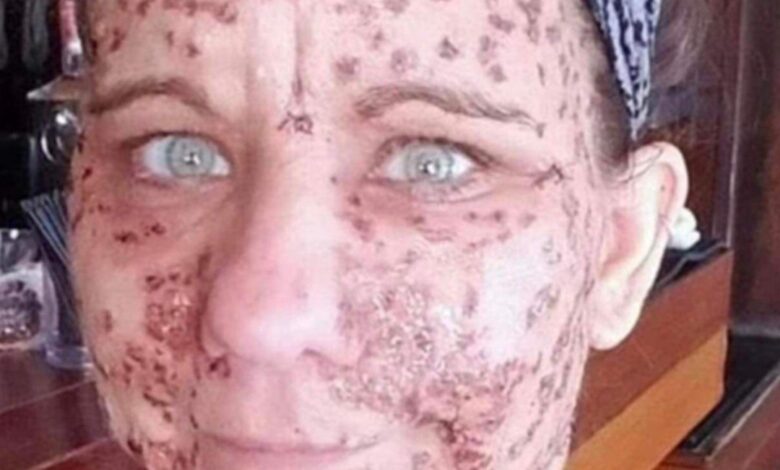
Libby Huffer, a 45-year-old woman, has spent most of her life living with a rare genetic condition known as Neurofibromatosis Type 1. The disorder causes tumors to grow along nerves throughout the body, often leading to visible changes in appearance.
Neurofibromatosis Type 1, often shortened to NF1, is a condition people are born with. It can be inherited from a parent or occur as a spontaneous genetic mutation, affecting roughly one in every 3,000 people worldwide.
For Libby, the condition was something she had known about since childhood. However, as she grew older, the symptoms became more severe. Over time, thousands of small tumors developed across her body.
Doctors describe these growths as neurofibromas. They are typically non-cancerous, but they can grow on or under the skin wherever nerves exist. In many cases, they also appear on the face.
Sadly, Libby’s condition eventually led to an overwhelming number of tumors. According to her own account, more than 6,000 tumors formed across different areas of her body, affecting both her physical comfort and emotional well-being.
Living with such a visible medical condition was not easy. From an early age, Libby experienced bullying and harsh comments from others who did not understand what she was going through.
Children at school often singled her out because of her appearance. Some called her cruel names, while others avoided interacting with her entirely. These experiences deeply affected her confidence during her formative years.
Among the hurtful insults she remembers hearing were nicknames like “toad” and “lizard breath.” Words like these left lasting emotional scars, reminding her how difficult it can be to live with a misunderstood condition.
Despite these painful experiences, Libby tried to build a normal life. She continued her education and eventually began focusing on building relationships and creating a future beyond the judgment she faced daily.
Her life took another major turn when she became pregnant. During pregnancy, the hormonal changes in her body caused a dramatic increase in the number of tumors associated with Neurofibromatosis Type 1.
Medical experts have noted that hormonal shifts, particularly during puberty or pregnancy, can sometimes trigger the growth of additional neurofibromas in people living with the condition.
After giving birth to her daughter 23 years ago, Libby noticed that the tumors had multiplied significantly. What had once been dozens or hundreds became thousands, spreading across her arms, back, legs, and face.
The physical effects were only part of the challenge. Many of the tumors also caused chronic pain, making everyday activities far more difficult than they would be for most people.
Even simple actions could trigger discomfort. Something as gentle as a hug, the pressure of clothing, or the stream of water from a shower could irritate the sensitive growths and cause painful sensations.
Libby explained that the tumors on her back caused constant aching pain. At the same time, the nerves in her feet often produced a persistent tingling sensation that made it difficult to sleep comfortably.
Sleep deprivation became another struggle she had to manage. Restless nights caused by pain and discomfort affected her energy levels, making everyday responsibilities more challenging over time.
Yet despite the difficulties, Libby remained determined to continue moving forward. She wanted to create a stable and loving environment for her daughter while also searching for ways to improve her own health.
As the years passed, she began researching possible medical treatments that could help reduce the number of tumors and ease her pain. One procedure eventually stood out as a promising option.
The treatment was known as electrodessication, a medical technique used by dermatological surgeons to remove certain types of skin growths by using controlled electrical energy.
The procedure can be effective for removing neurofibromas from the surface of the skin. However, the treatment is often expensive and may require multiple sessions depending on the number of tumors.
For Libby, the cost of surgery was a significant obstacle. The estimated price of treatment was approximately $23,500, a figure that was far beyond what she could easily afford.
Determined not to give up, Libby decided to take an unusual step. In 2016, she launched a public fundraiser and shared her story in hopes that people would understand her struggle.

Opening up about her condition was not easy. She had spent years trying to hide from the attention that her appearance often attracted, but she knew honesty was her best chance at receiving help.
In her fundraiser description, Libby explained that she simply wanted a chance to feel comfortable in her own skin. She hoped the surgery could remove some of the most visible and painful tumors.
Her story quickly began to reach people who were moved by her courage and resilience. Donations slowly began coming in, allowing her to move closer to the medical treatment she needed.
After months of fundraising, Libby was finally able to gather enough support to proceed with the long-awaited surgery. The moment represented a major turning point in her life.
In June of the following year, she underwent the electrodessication procedure. Surgeons carefully removed a large number of tumors from her face and other areas of her body.
During the operation, doctors successfully removed approximately 1,000 tumors. The change in her appearance was significant, giving her a sense of relief she had not experienced for many years.
Although the surgery was successful, the healing process was not simple. The removal of so many growths left behind scars that required additional treatment to improve their appearance.
To address the scarring, Libby later underwent CO₂ laser therapy. This type of treatment is commonly used in dermatology to smooth the skin and reduce the visibility of surgical marks.
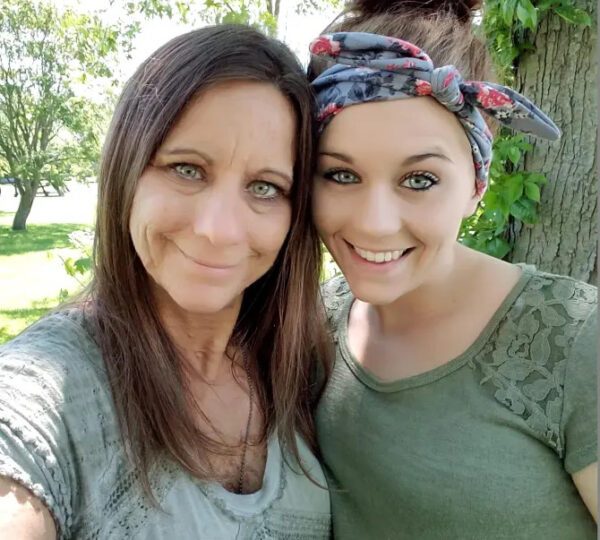
The recovery process required patience. Healing both physically and emotionally after years of living with such a condition was something that would take time and continued support.
Libby openly admitted that the emotional impact of bullying and isolation could not disappear overnight. However, she believed each surgery and each improvement would help restore her confidence.
She explained that removing the larger tumors from her face had already made a noticeable difference in how she felt about herself and how others reacted to her in public.
For the first time in decades, she noticed that people were staring at her less frequently. While occasional curious glances still happened, the intensity of public reactions had decreased significantly.
This shift, though small, meant a great deal to Libby. It allowed her to walk through public spaces with a little more peace of mind and a little less fear of judgment.
Reflecting on her childhood, she described how painful the bullying had been. Being targeted repeatedly by classmates left her feeling isolated during years that should have been filled with friendship.
She hopes that sharing her story will encourage people to treat others with greater kindness and empathy, especially when they encounter someone living with a visible medical condition.
Libby often reminds others that people with conditions like Neurofibromatosis Type 1 are still individuals with feelings, dreams, and hopes just like anyone else.
She believes that conversations and understanding are far more helpful than staring or making comments. Compassion, she says, can make an enormous difference in someone’s life.
Today, Libby continues to focus on her recovery and personal growth. While additional treatments may still be necessary, she remains hopeful about the future.
Her journey has become a powerful example of resilience. By speaking openly about her experiences, she has helped raise awareness about Neurofibromatosis Type 1 and the challenges it can bring.
At the same time, her story highlights the importance of medical research and support for people living with rare genetic disorders around the world.
For Libby, the surgery represented more than just a physical change. It symbolized a new chapter in which she could reclaim confidence that had been shaken by years of misunderstanding.
Though the road ahead may still include challenges, she now approaches life with renewed optimism and the belief that change is possible with determination and support.
Above all, Libby hopes her story reminds others that everyone deserves dignity, respect, and compassion—regardless of how they look or what medical challenges they face.