Trump Hosts Pastors From Across the US for a Prayer Gathering
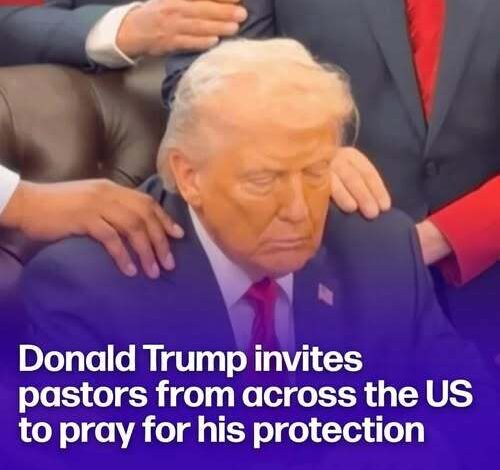
In a digital age where the intersection of the sacred and the secular is frequently broadcast in high definition, a video currently saturating social media feeds provides a rare, somber glimpse into the spiritual life of the executive branch. The footage, captured within the storied confines of the Oval Office, depicts a group of prominent Christian pastors gathered in a tight circle around Donald J. Trump. The scene is one of profound solemnity, occurring against a backdrop of escalating geopolitical instability and “saber-rattling” in the Middle East.
The video’s journey into the public consciousness began on X (formerly Twitter), where it was shared by Dan Scavino, the White House Deputy Chief of Staff. Scavino’s post quickly transformed into a lightning rod for national discourse, as he clarified the impetus for the gathering: a group of faith leaders had been invited to the White House specifically to intercede for the President and the United States as the military situation regarding Iran reached a fever pitch.
A Ritual of Intercession at the Resolute Desk
The imagery is striking. President Trump is seen seated at the Resolute Desk, his eyes closed in a moment of quiet reflection, while the religious leaders stand shoulder-to-shoulder around him. The audio captures a singular voice rising above the hush—a pastor petitioning the divine for wisdom, guidance, and protection. The prayer explicitly addresses the “complex decisions” and “international pressures” weighing on the Commander-in-Chief, framing the political crisis through a lens of spiritual warfare and divine providence.
Central to the footage is the visible practice of the “laying on of hands.” Several pastors are seen placing their hands gently on the President’s shoulders and back, a traditional Christian gesture intended to confer a blessing or signify the transmission of spiritual authority and support. This was not merely a private moment of reflection; it was a communal act of fortification.
The intercession extended beyond the walls of the West Wing, with the leaders praying for the safety of U.S. military personnel and allied forces deployed in the volatile regions of the Middle East. This inclusion underscored a deep-seated concern for the human cost of the brewing conflict.
The Faces of the Faith Advisory
While many pastors in the circle remained unnamed in the initial clip, subsequent reporting has identified several “heavy hitters” within the evangelical community. Among them was Rev. Samuel Rodriguez, President of the National Hispanic Christian Leadership Conference. Rodriguez, a frequent visitor to the Trump White House, later characterized the encounter as a moment of “powerful spiritual unity.” He noted that the goal was to provide the President with a sense of “wisdom beyond worldly understanding”—a clear nod to the belief that the current crisis required more than just diplomatic maneuvering.
A Geopolitical Powderkeg
The timing of this spiritual intervention was hardly coincidental. The prayer occurred during a week defined by kinetic military action. The United States and Israel had recently conducted strikes against Iranian-backed forces and facilities, maneuvers described by Western officials as necessary “counter-measures” to neutralize threats against regional security and stymie Tehran’s nuclear ambitions.
The response from the Islamic Republic was swift, involving missile launches directed at bases housing American and allied troops. This “tit-for-tat” exchange has left international observers and global markets on edge, fearing that a single miscalculation could ignite a broader, uncontrollable regional conflagration. In this context, the Oval Office prayer functioned as a spiritual “war room” session, seeking a peaceful resolution to an increasingly violent stalemate.
A Divided Public Square: Reaction and Precedent
The circulation of the video has, predictably, fractured public opinion along familiar fault lines:
- The Proponents: Supporters of the President viewed the footage as a heartening display of humble leadership. For many Americans, seeing a leader turn to faith during a national crisis provides a sense of comfort and moral clarity.
- The Critics: On the opposite side, civil libertarians and secular advocates argued that such a blatant display of religious ritual within the seat of government blurs the line of separation of church and state. They questioned the optics of blending sectarian prayer with high-level military strategy.
- The Diplomats: A third group of observers focused less on the prayer and more on the policy, arguing that while spiritual support is a personal right, the administration’s primary focus must remain on the de-escalation of violence and the pursuit of diplomatic channels, as urged by various international leaders.
Interestingly, the video also found its way into the global “meme economy.” In international circles, the footage was frequently recontextualized through a satirical lens, with social media users creating parodies that reflected their own cultural or political skepticism of American “civil religion.”
The Long Shadow of Tradition
Historians and political analysts are quick to point out that while the Trump administration has been particularly public about its ties to evangelical leaders, the practice of presidential prayer is as old as the Republic itself. From Lincoln’s fast days to the private “prayer breakfasts” of the Cold War era, U.S. presidents have frequently leaned on the clergy during times of “national peril.”
While analysts suggest that such gatherings rarely move the needle on specific policy initiatives—like the placement of a carrier strike group or the nuances of a trade embargo—they serve a vital sociological and psychological function. They offer a sense of “emotional scaffolding” for a leader under duress and signal to a specific, influential constituency that their values are represented at the highest levels of power.
Conclusion: A Snapshot of a Presidency Under Pressure
As the situation in the Middle East remains fluid, the video of the pastors praying over Donald Trump serves as a permanent digital record of a presidency in the midst of a storm. It is a document that captures the intersection of personal faith, public optics, and global crisis. Whether viewed as a sincere plea for peace or a controversial political gesture, the scene highlights the enduring role of religion in the American public square and the complex ways in which modern leaders navigate the heavy burden of command.