What is this great innovation benefiting our daily lives?
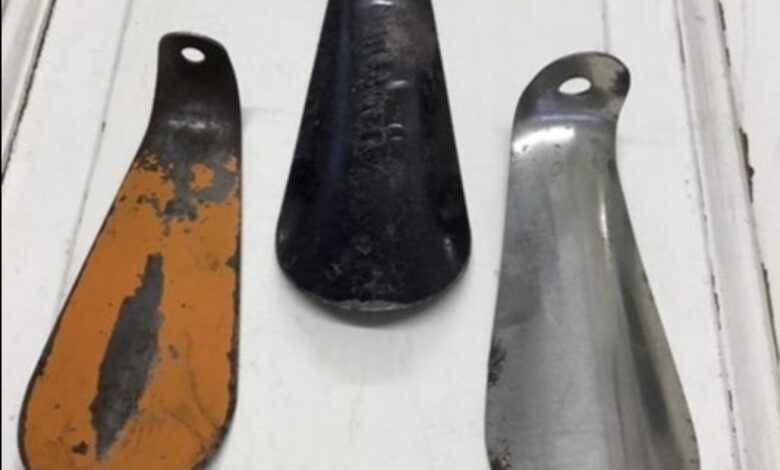
In an era of smart technology and high-tech fabrics, it is a curious irony that a simple, curved implement from the 15th century recently managed to leave the internet in a state of collective bewilderment. The object in question, which sparked a viral wave of speculation, is none other than the shoehorn—a tool so ubiquitous that it has faded into the background of modern life, yet remains one of the most effective inventions in the history of footwear. Far from being a mere relic, the shoehorn is a masterpiece of functional design. To understand why this humble tool has endured for over five hundred years, one must look past its simple silhouette and into its rich history of craftsmanship and utility.
A Pedigree of Bone and Brass: The Evolution of the Horn
The history of the shoehorn is a narrative of material evolution. Emerging in the late 1400s, the earliest versions were born of necessity and crafted from what was close at hand: animal horn, bone, or wood. These initial iterations were strictly utilitarian, designed to survive the rigors of daily wear while protecting the fragile heel counters of early leather shoes.
The Industrial Revolution fundamentally altered the tool’s DNA. As metalworking became more sophisticated, artisans turned to brass and steel, offering a level of durability that natural materials could not match. By the 19th and 20th centuries, the introduction of synthetic plastics democratized the shoehorn, making it an affordable staple in every household. Yet, for the elite, the tool remained a status symbol; historians have documented ornate versions cast in sterling silver and adorned with intricate engravings, effectively elevating a bathroom-closet staple to a piece of high art.
Form Meets Function: The Mechanics of the Slide
At its core, the shoehorn exists to solve a singular mechanical problem: the friction between the human heel and the stiff back of a shoe. By providing a smooth, low-friction ramp, the tool allows the foot to glide into place without crushing the heel counter.
This preservation of the shoe’s structural integrity is vital for extending the life of high-quality footwear, particularly those with narrow openings or rigid leather. Today, the market offers two primary designs to solve this problem:
- The Travel Variant: Short, handheld models designed for portability and quick use on the go.
- The Long-Handled Model: An ergonomic essential for those with limited mobility. These extended versions allow a user to don their footwear while standing, removing the need to bend over and providing a significant boost to personal independence.
A Collector’s Legacy: From Utility to Artifact
Beyond the closet, the shoehorn has carved out a niche in the world of antiquities. For collectors, vintage shoehorns are prized as historical artifacts that offer a tangible connection to the aesthetic tastes of the past. Pieces featuring ornate handles, elaborate filigree, and precious metal inlays are highly sought after, representing a time when even the most mundane household objects were expected to possess beauty.
In the modern era, the shoehorn maintains a dual identity. For many, it remains a daily necessity, used with little thought but high appreciation. For others, it is a window into a bygone era of craftsmanship. Whether it is a plastic giveaway from a local cobbler or a silver-plated heirloom, the legacy of the shoehorn is a testament to the idea that a truly great invention never truly goes out of style.