My Wife Kept Our Attic Locked for over 52 Years – When I Learned Why, It Shook Me to My Core!
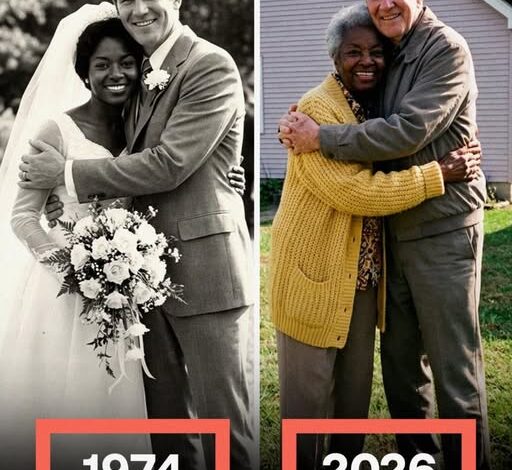
For fifty-two years of marriage, my wife kept the attic door in our house locked. I never questioned it much. Whenever I asked, she would smile and say it was full of nothing but dusty boxes and old family junk. I trusted her completely.
But the day I finally forced that lock open, everything I thought I understood about our life together changed forever.
My name is Gerald, though most people just call me Gerry. I’m seventy-six now, a retired Navy man who thought he had already seen most of what life could throw at him. Martha and I spent more than half a century together in our old Victorian house in Vermont. We raised three children there and later watched seven grandchildren run through those same halls.
I believed I knew my wife better than anyone.
What I didn’t know was that she had been hiding a secret since 1972.
At the top of the staircase in our house was the attic door, always closed and secured with a heavy brass lock. Over the years I asked about it a few times. Martha always brushed it off easily, saying it only held old family items from her parents’ estate.
I never pushed the issue. Everyone deserves a little privacy, even in a long marriage.
But two weeks ago, something happened that changed everything.
Martha slipped on the wet kitchen floor while baking a pie and broke her hip badly. She had to be moved to a rehabilitation center while she recovered. Suddenly the house felt enormous and empty without her.
During those quiet evenings alone, I started hearing something strange.
Late at night, faint scratching noises came from above—up in the attic.
At first I thought it might be a squirrel or some other animal. But the sound was too steady, too deliberate. It almost sounded like something being dragged across wooden floorboards.
After years in the Navy, ignoring strange sounds isn’t really in my nature.
So I decided to check it out.
I searched Martha’s large ring of keys but couldn’t find one for the attic. That alone struck me as odd. Finally I grabbed a screwdriver and forced the old lock off the door.
The attic smelled of dust, old paper, and something faintly metallic. In the far corner sat a large oak trunk with greened brass corners. It was locked too, with an even heavier padlock.
The next day I visited Martha at the rehab center and casually mentioned the attic and the trunk.
The reaction on her face frightened me.
The color drained from her cheeks and she grabbed my arm, asking in a shaky voice if I had opened it.
When I said no, she begged me not to.
That night I couldn’t sleep.
Curiosity eventually won.
Around midnight I returned to the attic with bolt cutters and broke open the trunk.
Inside were hundreds of letters.
They were carefully organized by date and tied together with faded ribbons. Each one was addressed to Martha.
Every letter was signed by the same man.
Daniel.
I opened the earliest one.
It was dated 1966.
The year Martha and I got married.
By the time I finished the first handful of letters, it felt like someone had punched the air out of my lungs.
Every single letter ended the same way:
“I’ll come for you and our son when the time is right.”
Our son.
As I kept reading, the truth slowly came together.
Daniel had been writing to Martha about a child for years.
He wrote about secretly watching “little James” grow up.
James—my eldest son. The boy I raised, coached in baseball, and guided through life.
The next morning I drove straight to the care center with the letters in my pocket.
When Martha saw them, she broke down immediately.
Through tears she finally told me everything.
Before she ever met me, she had been engaged to Daniel.
In 1966 he was drafted and sent to Vietnam. Shortly after he left, she discovered she was pregnant.
Then his plane went down over Cambodia. The military declared him missing in action, and everyone assumed he was dead.
A few months later, Martha and I met.
Seven months after our wedding, James was born. I never questioned the timing. I simply accepted him as my son.
Martha believed Daniel had died in the war.
But he hadn’t.
According to the letters, Daniel had been captured and held as a prisoner of war for years. He was finally released and returned home in 1972.
By then Martha was married and raising a family with me.
Daniel saw that.
And instead of trying to take his place back, he chose to step aside.
In 1974 he wrote that he had seen us together and realized Martha was happy. He decided he would stay out of our lives.
From that moment on, he became a silent observer.
He lived in the same town for decades, watching his son grow up from a distance.
I needed answers, so I went to the address listed on the newest letters.
The house was boarded up.
A neighbor told me the man who lived there—Daniel—had died three days earlier.
The very same night I first heard the strange scratching in the attic.
When I told Martha, she confessed something else.
Three weeks earlier Daniel had visited her.
He knew he didn’t have long left. He wanted to leave something behind for James.
That was what she had hidden in the trunk.
At the bottom, wrapped in cloth, I found three things.
A Purple Heart medal.
A leather-bound diary.
And an old photograph of Daniel and Martha holding a baby.
James.
The resemblance between them was unmistakable.
But the final surprise came from James himself.
When I showed him everything, he admitted he had known the truth since he was sixteen.
After one of his baseball games, Daniel had approached him and explained everything.
But he made James promise never to tell Martha or me.
For thirty-four years, my son kept that secret.
Last Sunday, James sat with me and told me something I will never forget.
He said Daniel may have been his biological father.
But I was the man who raised him.
The one who taught him how to throw a ball, how to stand up for himself, how to be a good man.
And to him, that mattered more than blood.
Now, at seventy-six years old, I realize something I didn’t understand before.
Families aren’t defined only by biology or last names.
They’re built through choices.
Through love.
Through the sacrifices people make quietly, often without recognition.
And sometimes the deepest love stories are the ones lived in silence.
Our old house isn’t just full of creaking floors and dusty corners.
It holds a story of love so complicated that it took more than fifty years for me to finally see it clearly.