World’s Oldest Woman, 116, Shares the Secret to Her Remarkable Longevity
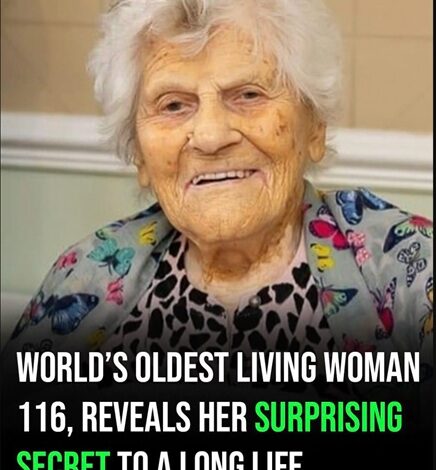
Ethel Caterham was born in 1909 in rural England, a period marked by social change, technological progress, and the lingering shadow of the Edwardian era. Her upbringing instilled resilience, curiosity, and self-reliance.
From an early age, Ethel displayed remarkable observation skills. Growing up amidst farmland and small villages, she learned to adapt to her surroundings, noticing subtleties in human behavior that would shape her approach to life.
In her teenage years, Ethel ventured abroad as an au pair in British India, a challenging environment that demanded independence, cultural sensitivity, and adaptability. She immersed herself in local customs, learning to navigate cross-cultural dynamics with grace.
Her experience in India exposed her to a complex social hierarchy and political turbulence, yet she maintained a quiet composure. These formative years taught her the value of discretion, patience, and strategic thinking.
Returning to England, Ethel married army officer Norman Caterham. Their partnership reflected mutual respect, shared values, and an adventurous spirit, as military postings took the family to diverse locations across the globe.
Together, they raised two daughters while stationed in Hong Kong, Gibraltar, and Surrey. Each relocation presented unique challenges, from language barriers to adapting to different educational systems and social norms.
In Hong Kong, Ethel founded a nursery that combined care, discipline, and play, blending practices from multiple cultures. Her approach reflected progressive educational ideas and a deep understanding of child development.
Ethel’s nursery became a safe and nurturing space for children of expatriates and locals alike. Her meticulous attention to routine, fairness, and kindness helped foster early learning and emotional growth among her pupils.
She witnessed dramatic historical events firsthand, including the Second World War and post-war reconstruction. These experiences strengthened her resilience, patience, and ability to remain calm under pressure, traits that would define her life.
In 1976, Ethel endured the loss of her husband, a profound personal tragedy. She managed grief with quiet dignity, continuing to support her daughters and maintain her household without complaint or public display of sorrow.
Her capacity for adaptation and self-determination was evident throughout her life. Even in advanced age, Ethel maintained personal routines, engaged socially, and pursued interests that enriched her intellectual and emotional well-being.
Remarkably, she survived Covid-19 at the age of 110. Her recovery illustrated both her physical resilience and disciplined approach to health, including consistent self-care and attention to mental and emotional stability.
Ethel’s guiding principle remained consistent: “Never arguing with anyone. I listen and I do what I like.” This philosophy emphasized autonomy, emotional intelligence, and prioritization of personal contentment over conflict.
Her long life has been formally recognized by Guinness World Records, honoring her as one of the oldest living individuals in the world. Such acknowledgment celebrates not only her age but her vitality and engagement.
King Charles III also paid tribute to Ethel, reflecting societal recognition of her extraordinary longevity, contributions to her community, and the quiet inspiration she provides to multiple generations.
Ethel’s life demonstrates that true longevity is influenced by lifestyle choices, mindset, and resilience. Daily habits, emotional balance, and a sense of purpose appear as critical factors alongside physical health and nutrition.
Through decades of social, political, and personal upheaval, Ethel remained steadfast, calmly observing circumstances and responding with pragmatism and dignity rather than fear or complaint.
Her experiences during wartime, including rationing, evacuation, and social uncertainty, demanded courage, adaptability, and self-restraint, qualities that would underpin her long and fulfilled life.
Ethel’s family life was marked by travel, cultural exchange, and education. She fostered curiosity in her daughters while instilling values of respect, discipline, and kindness, preparing them for success in diverse environments.
Her nursery work exemplified early childhood education principles, emphasizing structured play, emotional support, and cross-cultural understanding, long before such concepts were widely accepted in mainstream pedagogy.
As the world changed around her, Ethel adapted gracefully. She witnessed the rise of modern technology, shifts in gender roles, and global conflicts, all while maintaining her core values and routines.
Ethel’s approach to conflict avoidance—listening attentively, acting decisively, and prioritizing personal satisfaction—reflects emotional intelligence that likely contributed to her enduring relationships and societal respect.
Even in her later years, she maintained sharp cognitive faculties, demonstrating memory, reasoning, and humor that belied her chronological age, suggesting that mental engagement is a key component of longevity.
Her daily habits combined physical activity, moderate nutrition, and social interaction, all of which likely supported her remarkable lifespan, complementing her philosophical approach to life and calm temperament.
Friends and family describe her as gently stubborn yet kind, a combination that enabled her to navigate decades of personal and global challenges while maintaining autonomy and dignity.
Ethel’s survival through major global crises, including two World Wars and the Covid-19 pandemic, underscores her resilience and adaptability, illustrating the interplay of genetics, lifestyle, and mental fortitude in long-term health.
She has been celebrated not merely for her age but for the life she led, characterized by curiosity, cultural engagement, service to children, and personal integrity, leaving a lasting impact on those who knew her.
Through her experiences abroad, she gained a nuanced perspective on human behavior, culture, and societal norms, which she applied both in family life and in her professional endeavors in early childhood education.
Her life reflects the value of independence and self-direction. By listening carefully but following her own judgment, Ethel cultivated a life free from unnecessary conflict and rich in personal satisfaction and agency.
The recognition from Guinness World Records and royal honors emphasizes societal admiration for individuals who demonstrate resilience, adaptability, and grace across extraordinary lifespans.
Ethel’s philosophy and lifestyle may provide insights into longevity. Factors such as social connection, engagement in purposeful activities, emotional regulation, and adaptation to change appear crucial to maintaining vitality into advanced age.
Her commitment to observation and reflection allowed her to navigate complex social and personal landscapes without succumbing to stress or external pressures, maintaining equilibrium and a sense of control throughout her life.
Ethel’s ability to balance personal freedom with social responsibility exemplifies emotional maturity and wisdom, demonstrating that autonomy need not conflict with empathy or communal engagement.
Her story inspires both admiration and practical reflection. Lessons from her life highlight the importance of resilience, curiosity, cultural awareness, and mindfulness in creating a meaningful and enduring existence.
Ethel continues to engage with her community, family, and admirers, sharing insights and embodying the values of respect, dignity, and calm determination that have guided her for more than a century.
By surviving diverse challenges—ranging from personal loss to global pandemics—Ethel exemplifies the interplay of physical health, emotional intelligence, and mental resilience in promoting longevity and quality of life.
Her approach to living—quietly assertive, independent yet considerate, flexible yet principled—illustrates that personal philosophy can be as important as material conditions in sustaining well-being across decades.
Ethel Caterham’s life, spanning over 110 years, offers a blueprint for integrating independence, adaptability, and mindfulness into everyday living, demonstrating that longevity may be as much about attitude as physiology.
She remains a source of inspiration to family, friends, and the wider public. Her ability to live fully, think critically, and navigate life’s unpredictability offers enduring lessons on human resilience.
Ethel’s story emphasizes that longevity is not merely the absence of illness but the presence of purpose, engagement, social connection, and emotional stability maintained throughout life.
Even after remarkable public recognition, she continues to embody her principles: listening, observing, and choosing her path with calm defiance, illustrating the timeless relevance of her approach to life.
Her experiences demonstrate that a fulfilling life requires adaptability, cultural awareness, and the courage to make autonomous decisions, even amidst social expectations, personal loss, and historical upheaval.
In summary, Ethel Caterham’s life is a testament to resilience, independence, and the quiet power of self-directed living. Her experiences, spanning continents and centuries, suggest that true longevity lies in mind, heart, and spirit.