What the Bible Says About Cremation! Understanding Different Perspectives
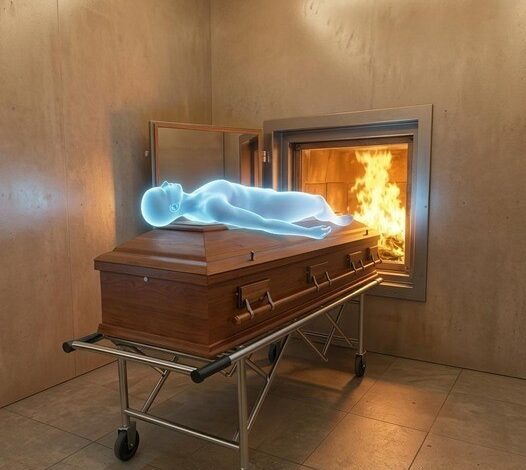
The transition from life to the afterlife is one of the most profound journeys a human being can undertake, and for centuries, the rituals surrounding that transition have been anchored in deep religious tradition. In the Christian faith, these rituals have historically leaned toward the earth—the literal “returning to the dust” from which humanity was formed. However, as we navigate the complexities of 2026, a significant shift is occurring. Across the Western world, cremation has transformed from a fringe alternative into a mainstream choice, driven by a combination of practical necessity, economic pressure, and shifting environmental ethics. This transition has prompted a deep, theological re-examination of what the Bible actually says—and what it does not say—about the disposition of the human body.
To understand the current debate, one must first look at the historical precedent. For two millennia, burial was the undisputed hallmark of Christian practice. This wasn’t merely a matter of habit; it was a symbolic act of faith. The biblical narrative is populated with meticulously described burials: Abraham purchasing a cave for Sarah, Joseph’s bones being carried out of Egypt, and, most pivotally, the burial of Jesus Christ in a stone tomb. For the early Church, the body was not a mere vessel to be discarded, but a “temple of the Holy Spirit.” Burial was viewed as the planting of a “seed,” a metaphor used by the Apostle Paul in his letters to the Corinthians to describe the mystery of the resurrection. Just as a seed is placed in the earth to eventually burst forth into new, transformed life, the body was laid to rest in anticipation of a future restoration.
In this context, cremation was often viewed with suspicion, partly because it was associated with the pagan rituals of the surrounding Roman and Greek cultures. For early Christians, who were often defined by their distinctiveness from the world, burial was a silent sermon—a public declaration of their belief in the physical resurrection of the dead. It was an act of defiance against the finality of death, suggesting that the story of the individual was not over just because their breath had ceased.
However, as we analyze the scriptures with a modern theological lens, a more nuanced perspective emerges. One of the most striking realizations for many believers is that the Bible contains no explicit prohibition against cremation. While there are instances in the Old Testament where burning is mentioned—often in the context of judgment or the desecration of an enemy—these are specific historical narratives rather than universal moral mandates. There is no “thou shalt not cremate” in the Decalue or the teachings of the New Testament. This silence has led many modern theologians to conclude that the method of body disposal is a “matter of liberty”—a personal or family decision rather than a salvific one.
The core of the Christian hope is the resurrection, but the theological understanding of that resurrection has evolved. The promise of a “new body” does not depend on the biological preservation of the old one. If it did, the faith of those who perished at sea, were consumed by fire, or whose remains have long since returned to the elements over centuries would be in jeopardy. The consensus among most contemporary Christian denominations is that God, who created the universe ex nihilo (out of nothing), is certainly capable of reconstituting a person regardless of the state of their earthly remains. The resurrection is understood as a divine, supernatural act of transformation—a spiritual “upgrading” of the person’s essence into a glorified state that transcends the limitations of physical decay or incineration.
This theological flexibility has allowed families to address the very real practical challenges of the modern era. The soaring costs of traditional funerals, which include caskets, vault fees, and the purchase of increasingly scarce cemetery plots, have made burial a financial burden for many. In an era of high inflation and economic uncertainty, cremation offers a more modest path that allows families to focus their resources on the living and on meaningful acts of memorialization. Furthermore, the environmental impact of traditional burial—which often involves embalming fluids and non-biodegradable materials—has led many “green” conscious believers to view cremation, or even newer methods like alkaline hydrolysis, as a more responsible way to steward the earth even in death.
Today, the vast majority of Christian traditions—including the Catholic Church, which softened its stance in the mid-20th century, and most Protestant denominations—view cremation as a permissible and respectful option. The emphasis has shifted from the mechanics of the funeral to the motivation of the heart. The focus is no longer on how the body is handled, but on how the person is remembered and how the promise of Christ is proclaimed. A cremation service can be just as solemn, just as reverent, and just as filled with the hope of the Gospel as a graveside burial.
The true meaning of a Christian funeral lies in the liturgy of remembrance and the communal support of the grieving. Whether a family gathers around a casket or an urn, the central message remains unchanged: that death has lost its sting and the grave has been defeated. The rituals we perform are for the benefit of the living—to provide a space for grief, a moment for reflection, and a communal affirmation of a life well-lived. In this light, cremation becomes a vessel for the same grace that burial has carried for centuries.
As we look toward the future, it is likely that the diversity of practices will only continue to grow. Some families may choose a hybrid approach, such as a traditional viewing followed by cremation, or the interment of ashes in a columbarium that provides a permanent place of pilgrimage. Regardless of the logistics, the enduring truth for the believer is that the physical body is but a temporary dwelling. The “renewal” promised in the scriptures is not a restoration of the old life, but an invitation into a new one.
Ultimately, understanding the different perspectives on cremation allows for a more compassionate and informed approach to the end of life. It frees families from the guilt of breaking tradition and allows them to make choices that align with their circumstances and their values. The method of laying a loved one to rest does not change the weight of the promise given in the scriptures. Faith is not found in the ashes or the earth, but in the love shared during life and the hope held for what lies beyond. In a world that is constantly changing, the peace found in that eternal perspective remains the one constant that neither time, nor fire, nor the earth can diminish.