Octomom Children Reach 16 – What Their World Looks!
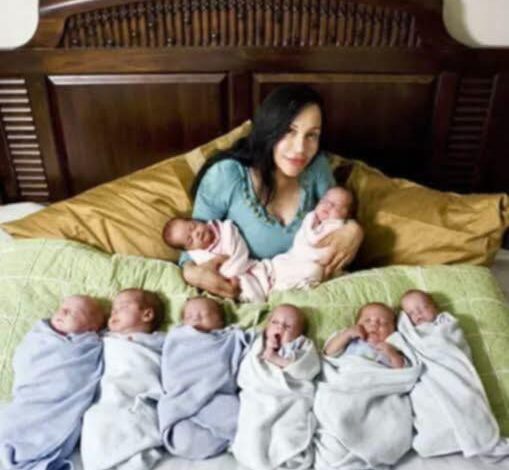
The arrival of the January 2009 octuplets remains one of the most singular events in modern medical history, marking the first time a woman successfully delivered eight surviving infants in a single birth. Natalie Denise Suleman, the woman behind the headlines, became an overnight global fixation, though the moniker “Octomom” bestowed upon her by the media would eventually become a source of both notoriety and personal struggle. While the world viewed the event through a lens of spectacle and ethical debate, the reality for Suleman was far more grounded in the immediate, overwhelming demands of raising a family that had expanded in an instant from six children to fourteen. Her life since that day has been a study in resilience, shaped by a relentless media cycle, profound financial hardship, and an unwavering commitment to her children’s well-being.
Born on July 11, 1975, in Fullerton, California, Natalie was the only child of Angela Victoria Stanaitis and Edward Doud Suleman. Her upbringing was rooted in the values of education and service; her mother was a schoolteacher and her father a restaurant owner of Palestinian-American descent. This background influenced her academic pursuits, leading her to earn a bachelor’s degree in child development. Before her name became synonymous with a medical miracle, Suleman worked as a psychiatric technician in a state mental facility. This professional experience provided her with a unique perspective on human psychology and the patience required to support individuals with complex needs—skills that would later prove indispensable in her own home.
The journey toward her historic pregnancy was paved with years of fertility treatments. Under the care of Dr. Michael Kamrava, Suleman underwent several cycles of in vitro fertilization (IVF), which resulted in her first six children: Elijah, Amerah, Joshua, Aidan, Calyssa, and Caleb. The controversy that defined her public image erupted in 2008 when, during a subsequent round of treatment, Suleman requested the transfer of all her remaining frozen embryos. Despite medical guidelines that typically advise a much smaller number of transfers to avoid high-risk pregnancies, twelve embryos were implanted. When eight of those embryos successfully developed, Suleman faced a high-stakes pregnancy that tested the limits of neonatal medicine.
On January 26, 2009, the octuplets were born prematurely but alive. Noah, Maliyah, Isaiah, Nariyah, Jonah, Makai, Josiah, and Jeremiah defied the odds, surviving their early weeks in the neonatal intensive care unit to eventually come home to a household already buzzing with six older siblings. The media coverage was instantaneous and often ruthless. Suleman found herself the subject of intense public scrutiny, with observers questioning everything from her financial stability to the ethics of her reproductive choices. She was frequently reduced to a caricature, a tabloid figurehead rather than a mother attempting to navigate a situation for which there was no precedent.
The financial reality of providing for fourteen children was staggering. Contrary to popular belief, Suleman did not receive a windfall of wealth following the births. Without a stable income and facing the astronomical costs of food, healthcare, and housing for a massive family, she was forced into survival mode. This led her down a path of unconventional and often regretted career choices, including celebrity boxing, modeling, and appearances in the adult entertainment industry. These ventures were born of desperation, a means to put food on the table when traditional employment was no longer an option due to her public infamy. Even with these efforts, the weight of her debt became untenable, leading her to file for bankruptcy in 2012 with liabilities totaling approximately one million dollars.
Legal challenges followed her financial ones. In 2014, she was charged with welfare fraud for failing to disclose certain earnings while receiving state assistance. She eventually pleaded no contest to a misdemeanor, fulfilled her community service requirements, and repaid the funds. This period marked a turning point for Suleman. Realizing that the “Octomom” persona was damaging her family and her own mental health, she began a process of reclamation. She stepped away from the spotlight, focused on her sobriety and fitness, and returned to a more private, structured life centered on the growth and education of her children.
By 2025, the octuplets reached their sixteenth birthday, a milestone that highlighted the relative normalcy Suleman had managed to cultivate despite the chaotic beginnings of their lives. In her reflections on this period, she has spoken with pride about the young adults they are becoming. Her parenting style is notably disciplined, emphasizing a “back-to-basics” approach that limits the influence of social media and digital devices. She has been open about the specific challenges of raising her son Aidan, who is profoundly autistic and requires significant daily support. This transparency has helped shift the public narrative from one of judgment to one of appreciation for her dedication as a caregiver.
Suleman has also expressed growth through her reflections on the past. She has admitted to wishing she had pursued legal action against the fertility specialist who transferred the twelve embryos, recognizing in hindsight the unnecessary risk that decision posed to her and her children. However, rather than dwelling on the “what ifs,” she has channeled her energy into fostering a household built on compassion, humility, and internal motivation. Her older children have also begun to find their voices, sharing their unique perspectives on growing up in a household of fourteen and the bond they share as a massive, tight-knit unit.
Today, the story of Natalie Suleman is no longer just about a medical record or a tabloid scandal. It is a narrative of human endurance and the complexities of modern motherhood. She has moved from being a subject of public consumption to an individual who manages her own story on her own terms. The octuplets, now in their mid-teens, are a testament to her perseverance. They are described by those who know the family as polite, focused, and deeply connected to one another. The family’s lifestyle—largely plant-based, physically active, and education-focused—reflects Suleman’s desire to provide them with a foundation of health and discipline.
Ultimately, Natalie Suleman’s journey serves as a reminder of the human being behind the headline. While her choices sparked national debates on reproductive technology and media ethics, her daily life has been defined by the quiet, repetitive work of parenting. The resilience required to navigate bankruptcy, public shaming, and the logistical nightmare of a fourteen-child household is significant. As her children continue to age out of childhood and into their own lives, the legacy of “Octomom” is being replaced by the reality of a mother who, against all odds, kept her family together and saw them through to the threshold of adulthood. Her story remains a complex tapestry of sacrifice, hard-learned lessons, and a fierce, protective love that has remained constant through nearly two decades of extraordinary circumstances.