With heavy hearts, we report the tragic news about this multi-talented actor!
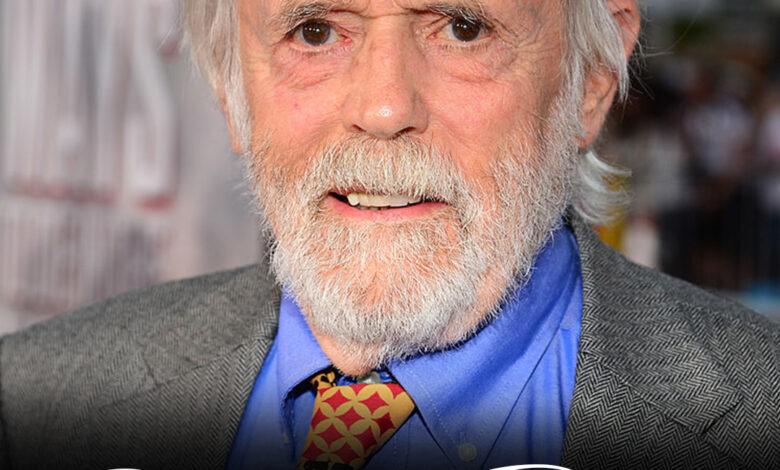
The passing of Matt Clark at the age of 89 marks the departure of one of the most reliable and resonant character actors to ever grace the American screen. While his name may not have topped the marquee in flashing neon lights, his face was a cornerstone of the cinematic landscape for over fifty years. To see Matt Clark in a film was to feel a sense of immediate grounding; he brought a rugged, weathered authenticity to every role, whether he was tending a bar in the Old West, navigating the complexities of a modern sitcom, or standing toe-to-toe with the giants of Hollywood’s Golden Age. He died on a Sunday morning at his home in Austin, Texas, leaving behind a legacy defined not by the pursuit of fame, but by an unwavering commitment to the craft of storytelling.
Clark’s career was a masterclass in the art of the character actor—those vital performers who populate the world of a story, providing the texture and believability that allow the stars to shine. He appeared in more than 120 roles across film and television, building a filmography that reads like a history of the industry’s most influential decades. He was a staple of the Western genre, a man whose natural grit and easy manner with a horse made him a favorite of directors like Clint Eastwood, Sam Peckinpah, and John Huston. From the dusty, morally ambiguous trails of The Outlaw Josey Wales and Pat Garrett and Billy the Kid to the eccentric energy of The Life and Times of Judge Roy Bean, Clark was the quintessential frontiersman. He understood the rhythm of the Western—the weight of a silence, the meaning of a glance beneath the brim of a hat, and the specific music of spurs jingling on a wooden floor.
However, Clark was far from a one-dimensional performer. His versatility allowed him to transition seamlessly between genres and eras. Younger audiences or fans of 1990s television knew him as a steady presence on the sitcom Grace Under Fire, while cinephiles cherished his memorable turn as the bartender in Back to the Future: Part III. In every instance, Clark approached the work with the same level of intensity and preparation. He was often described as an “actor’s actor,” a title reserved for those who are respected by their peers for their technical skill, their professional reliability, and their ability to elevate every scene they enter.
Director Brian Helgeland, who worked with Clark on the 2013 Jackie Robinson biopic 42, offered a poignant reflection on what it was like to have an artist of Clark’s caliber on set. Helgeland noted that Clark did not just play his specific part; he understood the architectural structure of the entire film. He knew exactly where his character fit into the emotional arc of the story and how to best serve the narrative. This level of insight is rare, born from decades of experience and a genuine love for the medium. Helgeland recalled that Clark was always eager to improvise, staying perfectly in character until the very moment the cameras stopped rolling. He wasn’t there for the trailers or the catering; he was there for the “Action.”
That passion for the work never dimmed, even as the decades passed. Clark often spoke about his enduring affection for the Western genre with the wide-eyed enthusiasm of a child. For him, putting on the boots and the chaps wasn’t just a job; it was the fulfillment of a lifelong dream. He managed to maintain that sense of wonder throughout a long and sometimes grueling career in a notoriously fickle industry. This longevity was fueled by a perspective that prioritized the quality of the collaboration over the size of the paycheck or the height of the billing. He valued the relationships built on set and the collective effort required to bring a script to life.
Beyond the soundstages and the location shoots, Matt Clark lived a life that mirrored the integrity of the characters he so often portrayed. He was a man of tangible skills and deep loyalties. His family shared that he built his own home with his own hands, a physical testament to his belief in craftsmanship and hard work. This same dedication applied to his personal life; he maintained his closest friendships for over sixty years, a feat almost unheard of in the fast-paced, often superficial world of show business. He was described as a man of strong character—tough, occasionally gruff, and fiercely complex, but always guided by a moral compass that never wavered.
In an industry that often obsesses over youth and the “next big thing,” Clark’s career is a reminder of the power of the long game. He didn’t need to be the center of attention to be essential. He understood that a film is an ecosystem, and every part, no matter how small, contributes to the health of the whole. His presence brought a layer of reality to every project, a sense that the world on screen existed long before the cameras started and would continue long after they stopped. He worked with the titans—Eastwood, Wayne, Redford—and held his own because he possessed a quiet confidence that came from knowing exactly who he was and what he brought to the table.
Matt Clark’s passing is a significant loss to the acting community, but his influence remains. He leaves behind a body of work that serves as a blueprint for aspiring actors on how to build a meaningful, lasting career through dedication and humility. He is survived by a large and loving family, including his wife, children, grandchildren, and a great-grandchild. To them, he was far more than a familiar face on a screen; he was a pillar of strength and a source of enduring love.
As the credits roll on a life exceptionally well-lived, the words of his family ring true: “He lived. He lives, forever.” Through the flickering light of a projector or the glow of a television screen, Matt Clark will continue to walk those dusty trails, pour those drinks, and deliver those lines with the grit and grace that became his trademark. He was a reminder that excellence doesn’t always require a spotlight—sometimes, it just requires showing up, doing the work, and staying true to the craft. The “actor’s actor” has taken his final bow, but the stories he helped tell will resonate for generations to come.