What Coins on Gravestones Really Mean—A Tradition Many Don’t Know About
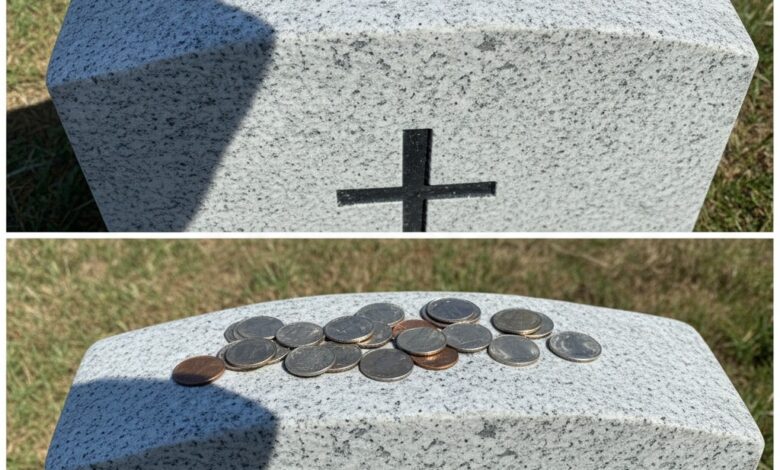
If you’ve ever visited a cemetery and noticed coins resting on a gravestone, you might have thought they were left behind by accident. But in many cases, those small coins carry a powerful and meaningful message.
This tradition is especially common at the graves of military veterans.
Each coin isn’t just spare change—it’s a quiet way of showing respect, remembrance, and connection. It’s a gesture that speaks without words, often left by fellow service members, friends, or even strangers who want to honor someone’s life.
The meaning can change depending on the coin.
A penny is the most common. It simply means that someone visited and took a moment to remember the person. It’s a small sign, but for families, it can mean everything.
A nickel carries a deeper message. It shows that the person who left it went through basic training with the fallen service member, sharing those early and challenging experiences together.
A dime represents an even stronger connection. It means the visitor served alongside that person, likely sharing real-life moments, challenges, and experiences during their time in service.
Then there’s the quarter.
This one holds the most emotional meaning. It indicates that the person who left it was there when the service member passed. It represents a final moment shared—something deeply personal and unforgettable.
What makes this tradition so powerful is its simplicity.
There are no speeches, no long messages—just a coin, placed with intention.
Over time, some gravestones collect many coins. Each one tells its own story, representing a different person, a different memory, and a different connection to the life being honored.
For families, seeing these coins can be comforting.
It shows that their loved one hasn’t been forgotten. That others still remember, still care, and still take the time to visit.
In a world where everything moves fast, this tradition remains quiet and meaningful.
It reminds us that respect doesn’t always need words.
Sometimes, even the smallest gesture can carry the deepest meaning.