Everyone Enjoyed Elvis Presley in This Film—But Did You Notice the Strange Hair Detail?
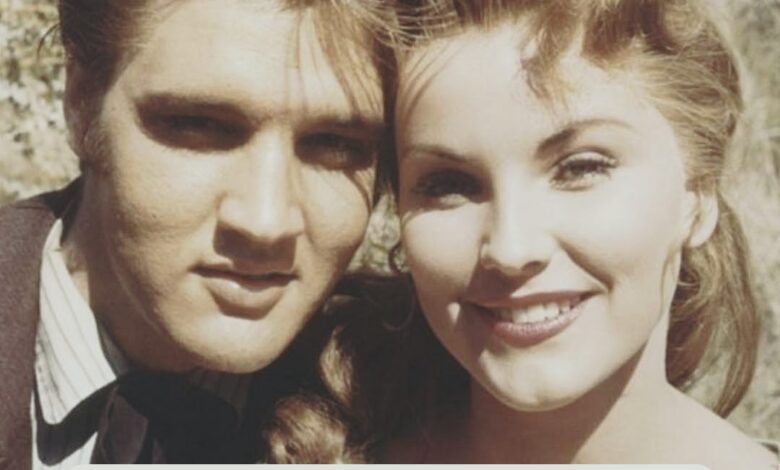
Revisiting Love Me Tender gives both longtime fans and first-time viewers a chance to witness Elvis Presley stepping into Hollywood for the very first time, blending music, charisma, and raw acting potential effortlessly.
The film, released in 1956, wasn’t just a debut—it was a cultural phenomenon. Audiences flocked to theaters, eager to see the King of Rock ‘n’ Roll perform on screen for the first time.
Originally titled The Reno Brothers, the movie’s name was changed to capitalize on the success of Elvis’s song “Love Me Tender,” which had already begun dominating radio waves and captivating teenagers nationwide.
Set just after the Civil War, the storyline follows the Reno family, exploring themes of love, loyalty, conflict, and redemption while giving Elvis a dramatic, historically rooted role as Clint Reno, the youngest brother.
Clint Reno, unlike most fictional characters, is based loosely on a real figure from American history, specifically a member of the infamous Reno Gang, known for pioneering train robberies in the 1860s Midwest.
Elvis’s casting as Clint was not initially considered; actors Jeffrey Hunter and Robert Wagner had declined the role, leading producers to see potential in Elvis as both a singer and a charismatic screen presence.
Premiere night at the Paramount Theater in New York City was legendary, with over 1,500 fans lining up beneath a massive 40-foot cutout of Elvis. The screams during his scenes were deafening, almost drowning out dialogue entirely.
Elvis’s background in film was limited before this point. He had once worked as a cinema usher, observing stars like James Dean and Tony Curtis, hoping to emulate their serious approach to acting rather than just perform musical numbers.
While his manager, Colonel Tom Parker, envisioned movies as extensions of Elvis’s musical career, the young Presley committed fully to the craft, memorizing all lines, learning his co-stars’ cues, and respecting the filmmaking process deeply.
Producer David Weisbart noted that Elvis was “humble, polite, and very serious about acting,” often arriving early on set and demonstrating patience and dedication far beyond his years or prior experience.
Interestingly, Elvis hadn’t planned to sing extensively in the film at first. But after initial takes, producers recognized the magnetic effect of his performances and quickly incorporated additional songs and musical sequences.
The soundtrack, particularly the title track “Love Me Tender,” became an instant sensation. Adapted from the Civil War-era song “Aura Lee,” the lyrics were officially credited to Vera Matson, though her husband Ken Darby wrote the music.
Elvis debuted “Love Me Tender” on The Ed Sullivan Show before the film’s release. Preorders for the single exceeded a million, and it achieved gold status even before the records were physically available in stores.
Elvis’s live performances of the song would continue for the next two decades, cementing it as a timeless piece in his repertoire, demonstrating both his vocal talent and emotional resonance with audiences.
Co-star Debra Paget, only 22 at the time, had established herself in Hollywood, but meeting Elvis introduced her to a new kind of celebrity energy, blending charm, humility, and intensity rarely seen in performers of his age.
Paget described him as polite and respectful, even toward her mother, which contrasted sharply with media portrayals of Elvis as a rebellious and uncontrollable teen idol, revealing a more personal, human side.
The chemistry between Elvis and Paget was undeniable. Reports suggest he was deeply enamored, even proposing at one point, though Paget declined due to parental and personal considerations, focusing instead on her career and other relationships.
Despite the romantic tension on set, their professional collaboration was seamless. Paget and Elvis rehearsed scenes diligently, ensuring emotional beats landed authentically while balancing the musical components of the film effectively.
Clint Reno’s fate in the film is famously tragic. His on-screen death, cradled in the arms of Debra Paget’s character, shocked audiences, particularly because Elvis’s youthful charm and magnetic screen presence had created a deep emotional attachment.
Elvis’s mother, Gladys, was reportedly distressed by the ending. She urged producers to add a softer conclusion, which resulted in a silhouette of Elvis singing “Love Me Tender” over the closing credits, creating a sentimental, yet historically inconsistent, ending.
Bloopers and anachronisms abound throughout the film, adding to its nostalgic charm. From zippers appearing before their invention to 1950s cars in the background, these minor details are endearing rather than distracting for modern viewers.
In one memorable scene, Elvis strums a guitar while the sound of strumming continues even when he pauses. Continuity errors like these reflect the era’s production limitations but also the film’s spontaneous energy.
The role of Clint Reno also expanded during production to highlight Elvis’s natural charisma. Additional scenes, dialogue, and musical numbers were included to ensure audiences saw both his acting and performing abilities.
Elvis’s transition from singer to actor is evident throughout. His timing, expression, and ability to convey subtle emotion impressed co-stars, directors, and audiences, showing he was more than just a musical phenomenon.
The Civil War backdrop adds both tension and depth. Conflicts between family loyalty, societal expectations, and post-war reconstruction create drama, giving Elvis opportunities for serious acting moments beyond the musical sequences.
Elvis’s performance is layered, balancing humor, vulnerability, and charm. Scenes where he interacts with family, defends his honor, or demonstrates bravery reveal dimensions of his personality rarely seen outside interviews or live performances.
While not universally praised by critics initially, Love Me Tender has endured as a cultural artifact, illustrating the early days of a performer who would define American pop culture for decades.
Fans watching today on YouTube or classic channels can appreciate both the historical context and the entertainment value, recognizing Elvis’s on-screen growth alongside the development of 1950s cinema and music culture.
The soundtrack’s influence cannot be overstated. Songs like “We’re Gonna Move” complement the narrative while providing insight into the era’s musical style and Elvis’s ability to blend storytelling with vocal performance seamlessly.
Elvis’s wardrobe and styling contributed to his iconic image. While subtle by modern standards, costume choices highlighted his physique, youthfulness, and charisma, subtly enhancing his appeal without overwhelming the storyline.
The film also offers a glimpse into 1950s production techniques. Camera angles, lighting, and set design reflect the period’s technological capabilities, giving today’s audience insight into the craft of mid-century Hollywood filmmaking.
Behind the scenes, cast and crew recall Elvis as serious yet approachable. He was eager to learn from more experienced actors while maintaining the humility and discipline expected of any dedicated performer on set.
The film’s editing created memorable sequences that balance musical performance with narrative tension. Songs are integrated naturally, ensuring that even for viewers unfamiliar with Elvis, the story progresses smoothly.
Elvis’s debut in Love Me Tender also helped solidify his multi-platform appeal. Success in both music and film established him as a pioneering figure in cross-media celebrity culture, influencing generations of performers.
Even small production anecdotes contribute to the film’s charm. Improvised lines, subtle facial expressions, and interactions with extras reveal Elvis’s adaptability, his quick instincts, and natural screen magnetism.
The historical inaccuracies, from costume to props, serve more as a nostalgic backdrop than as educational flaws. They emphasize the film’s focus on entertainment and Elvis’s personal charisma rather than documentary precision.
Fan hysteria was intense throughout production and release. Reports from theaters describe crowds fainting, screaming, and shouting during Elvis’s musical scenes, highlighting the transformative impact he had on popular culture at the time.
Elvis’s early Hollywood work also informed his later career. Lessons in timing, audience engagement, and blending performance with narrative carried through into subsequent films, concerts, and televised appearances.
The film demonstrates Elvis’s versatility. While remembered primarily as a singer, his ability to convey nuanced emotion, deliver comedic timing, and perform action sequences in Love Me Tender foreshadowed a multifaceted career.
Watching today, it’s clear the movie balances historical drama, musical entertainment, and youthful charisma. This combination, along with its minor quirks and nostalgic moments, ensures its enduring appeal to fans and historians alike.
In retrospect, Love Me Tender represents more than a debut. It’s a window into 1950s culture, a showcase of Elvis’s early talent, and a reminder that even legends must start somewhere, often with surprising dedication and heart.
Whether you are watching for the music, historical setting, or early glimpses of Elvis’s persona, the film offers layers of entertainment, charm, and insight that remain timeless, capturing the essence of his initial foray into Hollywood.
From the premiere crowds to the enduring soundtrack, Love Me Tender highlights Elvis’s capacity to captivate audiences, convey emotion, and blend music with narrative, establishing the foundation for his iconic, decades-long career.
For anyone curious, the full film is available for free on YouTube. Watching it allows both new and old fans to appreciate Elvis’s debut, the historical context, and the beginning of a journey that transformed American entertainment forever.