It Spread in Seconds: Massive Fire Destroys Pamplona Alta, Hundreds of Homes Gone in Minutes
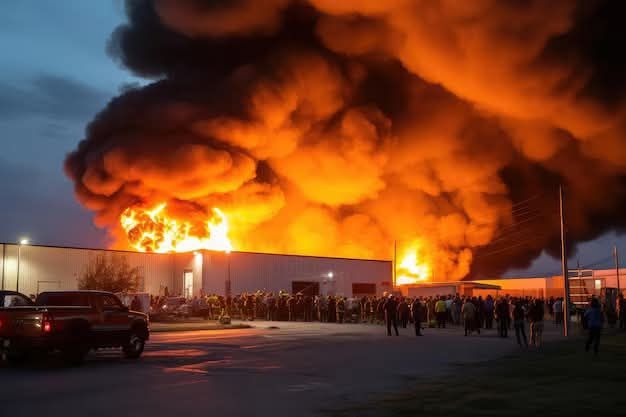
What started as a single spark quickly turned into a nightmare that tore through an entire community, leaving destruction on a scale few residents could have imagined. In the densely packed hillside neighborhood of Pamplona Alta, panic set in almost instantly as flames raced across rooftops with terrifying speed.
Those who were there say the fire didn’t behave like a typical blaze. It moved fast—too fast—jumping from one structure to the next, feeding on the materials and layout of the area. Within moments, what had been a normal Saturday afternoon became a desperate scramble for survival.
Pamplona Alta, located in San Juan de Miraflores, is known for its steep terrain and tightly constructed homes. Many of the structures are built close together, often sharing walls or separated by only a few inches. In conditions like these, fire doesn’t need time to grow—it only needs a path. That day, it found one.
Thick black smoke rose over the southern districts of Lima, visible from miles away. Sirens echoed through the hills as emergency services rushed to the scene, but narrow roads, uneven ground, and limited access points slowed their response at the moment every second mattered most. By the time firefighters could fully engage, entire rows of homes had already been consumed.
Residents fled with whatever they could carry—some clutching small bags, others holding children, many leaving everything behind. Years of hard work, memories, and personal belongings were lost in minutes. For most, there was no time to process what was happening. Survival came first. Everything else came later.
Witnesses described chaos and disbelief: people shouting warnings, neighbors trying to help each other, and the constant crackle of flames spreading from house to house. Some attempted to return for valuables, only to be pushed back by the intensity of the heat.
Then came another alarming element. Videos captured by residents showed bursts of small explosions erupting within the fire. These flashes added a new level of danger, forcing civilians and emergency responders to keep their distance. Authorities later confirmed the fire may have reached an illegal fireworks workshop hidden within the neighborhood. If verified, this could explain the explosive activity and the blaze’s rapid acceleration. Fireworks, especially stored improperly, can act as powerful fuel in an already perilous situation.
Investigators are now focusing closely on this potential origin, though officials emphasize that the exact cause remains under review.
By the time the flames were brought under control, the damage was extensive. Preliminary estimates suggest up to 300 homes were either severely damaged or completely destroyed. Entire sections of the neighborhood were left unrecognizable, reduced to charred remains and debris. Hundreds of residents were displaced.
For them, the immediate concern isn’t just what was lost—it’s what comes next. Emergency teams and local authorities are coordinating relief efforts, providing temporary shelter, food, and medical assistance. Makeshift aid centers have been set up, and support organizations are working to meet urgent needs. But the scale of the disaster means recovery will be long and difficult.
Beyond the immediate aftermath, the fire has reignited discussions about safety in informal settlements. Areas like Pamplona Alta often develop rapidly, with homes built using available materials rather than standardized construction. While this allows communities to grow, it also creates conditions where risks are significantly higher. Flammable materials, limited spacing, and unregulated activities can turn a small incident into a disaster. In this case, those factors aligned in the worst possible way. The fire’s speed wasn’t just unfortunate—it was predictable.
Experts now stress the need for better oversight, improved infrastructure, and increased awareness of hazards. While immediate recovery is essential, long-term prevention is critical to ensure similar tragedies do not occur.
For the families affected, however, those conversations are secondary. Right now, they are facing the reality of starting over: standing where their homes once were, sifting through debris, and trying to salvage what remains. The emotional impact is as significant as the physical loss, and it will take far longer than weeks to fully process.
Communities have begun coming together, offering support, sharing resources, and helping one another navigate the aftermath. In moments like this, resilience becomes visible—not as a concept, but as lived experience through action and solidarity.
Still, the scars left behind will not fade quickly.
The fire in Pamplona Alta is more than a single event. It is a stark reminder of how fragile stability can be in environments where safety measures are limited and risks are ever-present. While the flames have been extinguished, the consequences remain: displacement. Loss. Uncertainty. And a question that now hangs over the community: how many warnings does it take before prevention becomes a priority rather than a reaction?
As recovery begins, the focus will shift from emergency response to rebuilding—physically and emotionally. It will require resources, coordination, and sustained attention. But for those who lived through it, one thing is already clear: life can change in an instant. And when it does, everything that once felt permanent can disappear faster than anyone is prepared for.