He Thought It Was Just Freshers Flu, Five Days Later, He Was Gone
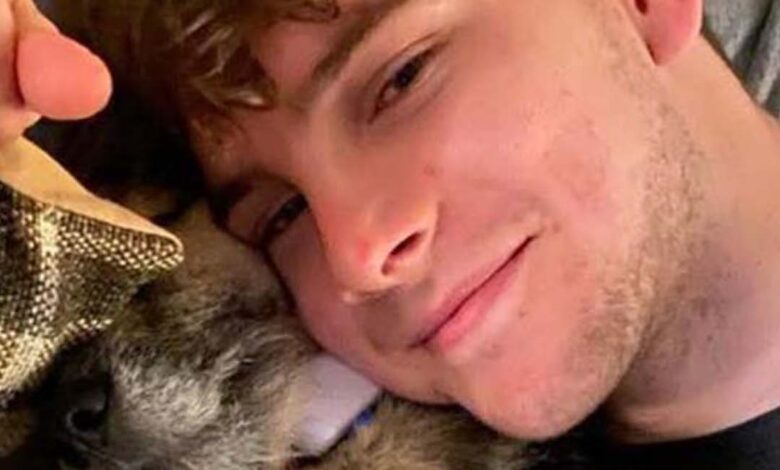
At 21 years old, you don’t think a headache means anything serious. You don’t assume a fever is life-threatening. You don’t imagine that feeling run down for a few days could be the beginning of the end.
That’s exactly why what happened to Lucas Martin is so unsettling.
Because nothing about it seemed urgent—until it was too late.
In September 2023, Lucas, a recent graduate from the University of Liverpool, started feeling unwell. It wasn’t dramatic at first. No sudden collapse. No alarming symptoms that would immediately trigger panic. Just the kind of illness most students brush off without thinking twice.
A headache. Fatigue. A fever.
The kind of thing people casually label as “freshers’ flu,” especially around universities where illness spreads easily among large groups of students adjusting to new environments.
That’s what Lucas and his family believed it was.
A bad virus. Nothing more.
There was no reason, at least on the surface, to suspect something far more dangerous was developing underneath.
And that’s what made it so devastating.
Because meningitis doesn’t always announce itself clearly. It doesn’t always follow the textbook signs people are told to watch for. Sometimes, it hides behind symptoms that look completely ordinary.
That’s exactly what happened here.
Lucas didn’t have the classic warning signs many associate with meningitis. No rash. No extreme sensitivity to light. Nothing that would immediately set off alarm bells.
Instead, the illness moved quietly, progressing in the background while everything still seemed manageable.
For several days, it looked like something his body would fight off.
But it wasn’t.
Over the course of five days, his condition began to deteriorate. Slowly at first, then more noticeably. The shift wasn’t instant, but it was enough that something eventually felt wrong.
Not just unwell—but different.
On September 10, that difference became impossible to ignore.
Lucas’s father noticed a change that couldn’t be brushed off. His speech wasn’t right. He struggled to form sentences. Words didn’t come together the way they should. He was mumbling, disoriented, not fully present.
That’s when everything changed.
The family acted quickly. They took him to the hospital, hoping for answers, expecting treatment, believing there was still time.
Doctors diagnosed him with meningitis and immediately placed him into an induced coma.
It was a critical situation—but even then, there was still hope.
That hope didn’t last.
Lucas never regained consciousness.
Just two days later, on September 12, he passed away.
Five days from the first symptoms to the end.
That’s how fast it happened.
For his family, the loss wasn’t just sudden—it was incomprehensible. A young man who had just completed a degree in international business, who had plans, ambitions, and momentum in his life, was gone before anyone fully understood what they were dealing with.
His brother Connor later described him as a force of nature. Not in a dramatic or exaggerated way, but in the sense that Lucas had energy, drive, and presence. He was the kind of person who moved forward with purpose, who had ideas, goals, and the personality to match them.
Someone people expected to do something with his life.
Someone who had time.
That’s what makes stories like this hit harder. It’s not just the loss—it’s the contrast between what was expected and what actually happened.
Because nothing about Lucas’s situation looked like a medical emergency at the start.
That’s the point his family keeps coming back to.
If they had known. If they had recognized the signs. If meningitis had even crossed their minds as a possibility.
But it didn’t.
And they don’t blame themselves for that. They understand now what most people don’t realize in the moment—meningitis can look like something far less serious, especially in its early stages.
That’s why they’re speaking out.
Not to assign blame. Not to dwell on what can’t be changed. But to make sure others don’t overlook what they couldn’t see at the time.
The term “freshers’ flu” gets used casually, almost as a joke. It refers to the wave of minor illnesses students often experience when they first enter university life—new environments, new people, shared spaces.
But it’s not an official diagnosis. It’s a label people use when they don’t think something is serious.
And that’s where the danger lies.
Because sometimes, what looks like a mild virus isn’t mild at all.
Lucas’s story is a clear example of how quickly things can escalate. A few common symptoms turned into a life-threatening condition in less than a week. No dramatic warning signs. No obvious signals that something severe was unfolding.
Just a steady decline that only became undeniable when it was already critical.
In the aftermath of his death, Lucas’s family made a decision. They turned their grief into action.
They created Looky’s Aid, a charity named in his memory. It focuses on supporting young people facing illness, offering help through scholarships and community programs. It’s a way to carry forward something positive from something that should never have happened.
But beyond that, the message they’re trying to send is simple and direct.
Don’t dismiss symptoms too quickly.
If something feels off—if the illness seems worse than usual, lasts longer than expected, or changes in a way that doesn’t make sense—take it seriously. Get it checked. Ask questions. Push for answers.
Because time matters more than people think.
Lucas’s story has reached far beyond his immediate circle. Families, students, and communities have connected with it not because it’s rare, but because it feels possible.
Too possible.
A headache and a fever don’t sound like a crisis. But in the wrong context, they can be the beginning of one.
That’s the reality his family now lives with.
And that’s the warning they’re trying to make sure others hear before it’s too late.