The Movie Hollywood Almost Rejected Became A Cultural Explosion Nobody Saw Coming
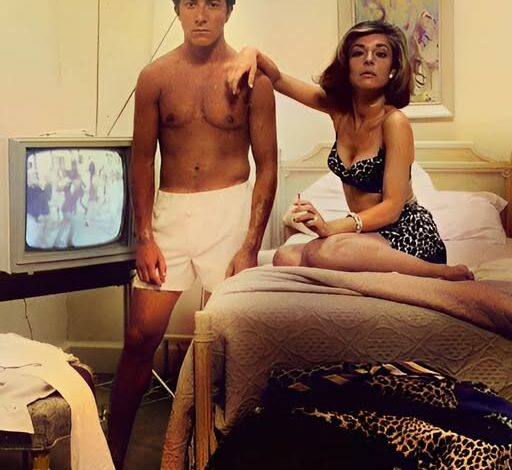
Before it became one of the most talked-about films of its era, The Graduate was far from a guaranteed success. There was no certainty behind it, no industry confidence backing it as a safe hit. It was a calculated risk built on instinct, creative tension, and a director willing to ignore nearly every established rule of Hollywood at the time.
At the center of that risk was Mike Nichols, a filmmaker who understood that safe choices rarely produce something unforgettable. The studio system had its expectations. They wanted a leading man who fit the mold—polished, confident, effortlessly charming. On paper, the obvious choice was Robert Redford.
He had the looks, the charisma, and the natural ease that audiences immediately trusted. In most productions, casting him would have been the straightforward decision that minimized risk and maximized predictability.
But Nichols didn’t want predictable.
Instead, he chose Dustin Hoffman.
At the time, Hoffman was not the traditional Hollywood leading man. He didn’t project effortless confidence. He didn’t fit the industry’s visual ideal. In many ways, he felt uncertain, awkward, and inward-looking—and that was exactly what made him compelling.
That discomfort became the point.
The character at the heart of the story wasn’t meant to feel heroic or larger than life. He was meant to feel lost, uncertain, and deeply human. Nichols saw something in Hoffman that others missed: authenticity that couldn’t be manufactured. That vulnerability became the emotional foundation of the entire film.
But casting Hoffman was only the beginning of the risk.
The film’s tone itself broke convention. It didn’t stay in one emotional lane. It shifted between humor and unease, between silence and tension. It refused to guide the audience toward clear emotional cues. Instead, it allowed ambiguity to exist, letting moments breathe in ways mainstream cinema often avoided.
That unpredictability made the project feel unstable on paper.
But it also made it alive.
Then there was Anne Bancroft.
Her role became one of the most iconic elements of the film, but it carried complexity behind the performance. On screen, she embodied contradiction—confidence mixed with emptiness, seduction layered with emotional distance. She represented something provocative and unsettling for audiences at the time.
What made it even more striking was how the role reshaped perception.
Bancroft’s performance became so iconic that it began to define how she was remembered, often overshadowing the broader range of her career. It became an image that stayed with audiences long after the film ended, locking her into a cultural impression that was difficult to separate from the role itself.
That is one of the strange realities of film success.
The role that elevates an actor can also narrow how they are seen.
Behind the scenes, the production was far from smooth. There was uncertainty at nearly every stage. Choices were made not because they were guaranteed to work, but because they felt right in the moment. Scenes evolved, pacing shifted, and performances were shaped through instinct rather than strict planning.
It was a constant balancing act.
Too much control would have drained the film of its edge. Too little would have caused it to collapse.
Nichols managed that tension carefully, trusting instinct even when it went against industry logic. He allowed silence to linger, discomfort to remain, and emotional moments to unfold without forcing resolution. That openness to imperfection became one of the film’s defining strengths.
When The Graduate was finally released, it didn’t just succeed commercially.
It connected.
Audiences recognized something in it that felt unfamiliar yet honest. It captured uncertainty in a way mainstream films rarely did. The characters didn’t offer clean answers or neat resolutions. Instead, they existed in emotional limbo—messy, unresolved, and human.
That honesty resonated deeply.
What began as a risky experiment quickly became a cultural landmark. It sparked discussion, interpretation, and debate. It wasn’t just a film anymore—it became a reference point in cinema history.
Looking back, it can feel inevitable.
But it wasn’t.
At every stage, different choices could have changed everything. A safer casting decision. A more conventional tone. A structured emotional arc. Any of those would have made the film more predictable—and far less memorable.
What made it endure was the willingness to resist safety.
Choosing an unconventional lead. Allowing discomfort to remain unresolved. Trusting instinct over formula. These decisions created something that felt alive in a way most films never achieve.
And that is what gave it lasting power.
Because in the end, it didn’t succeed by following a formula.
It succeeded by refusing one.
And that is why it still matters.