I Took Care of My Elderly Neighbor for Years… The Day After Her Funeral, Police Knocked on My Door — What I Found Out Left Me Shaking
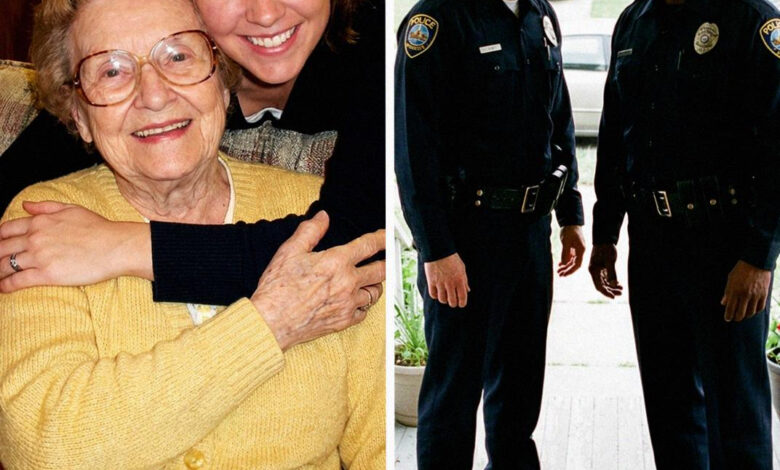
I thought I was doing something simple.
Just helping a neighbor.
I never imagined it would end with police standing on my porch… and me being treated like a criminal.
My name is Claire. I’m 30, and I live alone in a small, quiet house with a narrow porch and a mailbox that leans slightly to the left—something I always meant to fix but never did.
Three years ago, something small caught my attention.
My neighbor’s mailbox.
It was overflowing.
At first, I didn’t think much of it. A day or two of missed mail happens to anyone. But days turned into a week. Bills, catalogs, handwritten letters—just sitting there, untouched.
Every morning on my way to work, I noticed it.
Every evening, it bothered me more.
Until one day, I couldn’t ignore it anymore.
I walked up to her door… and knocked.
She opened it slowly.
An elderly woman, wrapped in a cardigan despite the warm weather. Her hair was neatly brushed, her posture careful, but her eyes… her eyes carried something heavier than age.
Embarrassment.
“I’m sorry to bother you,” I said gently. “I’m Claire. I live next door. I noticed your mail…”
She glanced down, almost ashamed.
“It’s just been… overwhelming lately.”
There was a pause.
Then I asked, “Would you like some help sorting through it?”
She hesitated.
Then stepped aside.
“That would be very kind of you, dear.”
That moment changed everything.
Her name was Mrs. Whitmore. She was 82 years old and lived alone with her ginger cat, Pumpkin.
What started as sorting mail turned into something much bigger.
I began stopping by after work.
At first, just to help organize things. Then to bring groceries. Pick up prescriptions. Fix small things around the house.
Slowly, without either of us saying it out loud… I became part of her life.
And she became part of mine.
We built routines.
Tea at exactly four minutes steep time—no more, no less.
Evenings on the porch with chipped cups and quiet conversations.
She told me stories about her husband, long gone now. About raising three children. About a life that, in her words, had been “full, even if it ended quieter than expected.”
I didn’t talk much about my own life.
Not at first.
One afternoon, she stood in my kitchen helping me bake a pie.
Her eyes drifted to my fridge.
To a small drawing, faded at the edges.
A child’s drawing.
My daughter’s.
The last thing she ever made before illness took her from me.
Not long after, my marriage collapsed under the weight of that loss.
Mrs. Whitmore didn’t ask questions.
She just placed her hand over mine.
And in that silence… she understood everything.
We filled each other’s emptiness without needing to explain it.
For the first time in years… I didn’t feel alone.
Her children, though, were a different story.
She had two daughters and a son. They lived in another state and visited rarely.
But when they did come…
The house changed.
Their voices were loud. Sharp. Impatient.
They didn’t walk through the house—they evaluated it.
Like they were already dividing it.
I once saw one of the daughters standing in Mrs. Whitmore’s bedroom, staring at a jewelry box for far too long.
They argued about money.
About the house.
About “what happens when the time comes.”
As if she wasn’t still there.
Still listening.
Still alive.
I stayed quiet.
I wasn’t family.
But I saw everything.
And it made something in me burn.
Then, last month… things changed.
Mrs. Whitmore grew weaker.
Slower.
More tired.
Until one morning, I walked in with groceries and knew immediately something was wrong.
The house was too still.
Pumpkin paced near the hallway, restless.
And there she was…
In her bed.
Peaceful.
Gone.
Planning her funeral felt like the last thing I could do for her.
I chose the hymns she loved.
The simple flowers.
Even the cookies from her favorite bakery.
I wanted everything to feel like her.
Her children arrived dressed in black, wearing grief like a costume.
By evening… they were already discussing paperwork.
I went home feeling empty.
And angry.
The next morning, there was a loud knock at my door.
I was still in yesterday’s clothes when I opened it.
Two police officers stood there.
And beside them…
One of her daughters.
“Were you taking care of Mrs. Whitmore?” an officer asked.
“Yes.”
Before he could continue, the daughter stepped forward.
“It’s her,” she snapped. “She stole it.”
My stomach dropped.
“Stole what?”
“My mother’s diamond necklace. A family heirloom.”
I stared at her.
“I didn’t take anything.”
The officer spoke calmly. “Ma’am, we need to search your house.”
I stepped aside immediately.
“Go ahead.”
They searched everything.
Drawers. Closets. Couch cushions.
I stood there, trying to understand how helping someone had turned into this.
Then one officer opened my purse.
The same one I had taken to the funeral.
Inside…
A small velvet pouch.
And inside that…
A diamond necklace.
My heart stopped.
“That’s not mine,” I said immediately. “I’ve never seen that before.”
But it didn’t matter.
It was in my bag.
And suddenly… I was the suspect.
At the station, the questions came fast.
“You had access to her home.”
“You were alone with her.”
“People do desperate things.”
Desperate.
After three years of caring for her.
Then something clicked.
My purse.
The funeral.
I remembered leaving it unattended multiple times.
And I remembered something else.
One of the daughters…
Watching.
“The funeral home has cameras,” I said.
Everything went quiet.
We watched the footage.
And there it was.
Clear as day.
While I stepped away…
She walked over.
Looked around.
Reached into her coat.
And slipped something into my purse.
Silence filled the room.
The detective turned to her.
“Do you want to explain this?”
She didn’t.
Because she couldn’t.
The truth came out soon after.
Mrs. Whitmore had changed her will.
She left me a significant part of her estate.
Not as payment.
As gratitude.
Her children were furious.
And their plan?
If I was arrested for theft… they could claim I manipulated her. That she wasn’t in her right mind.
They tried to erase me.
By destroying me.
She was arrested.
I was cleared.
But something inside me had changed.
That evening, I sat on Mrs. Whitmore’s porch.
The house felt emptier than ever.
The silence was heavier.
Later, her lawyer handed me a letter she had written.
I opened it at home.
And before I finished the first line… I was crying.
“Dear Claire,
You gave me something I thought I had lost forever—companionship.
You showed up when no one else did.
This isn’t payment.
It’s gratitude.
And please… don’t let my children make you feel guilty.
They stopped seeing me as a person.
But you never did.
With love,
Mrs. Whitmore.”
I folded the letter slowly.
Pumpkin curled beside me, purring softly.
And for the first time since everything happened…
I felt something peaceful.
She didn’t just leave me money.
She left me proof.
That love doesn’t need blood.
That kindness isn’t wasted.
And that sometimes…
The people who show up for us…
Are the ones who matter most.